- Home >
- Ossau Valley >
- Explore >
- Our 18 villages >
- Aste-Béon
Discover the 18 villages of Ossau Valley
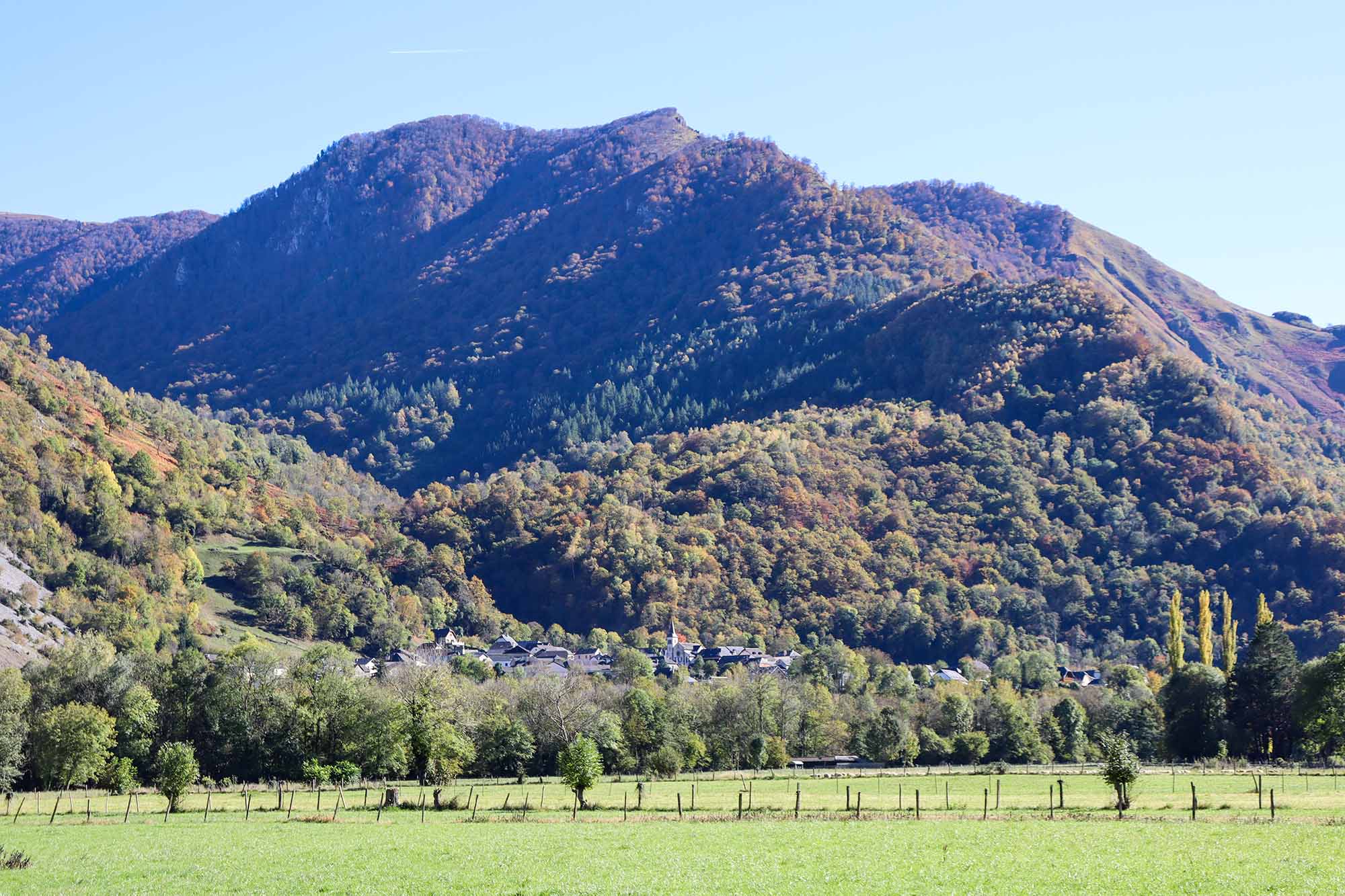
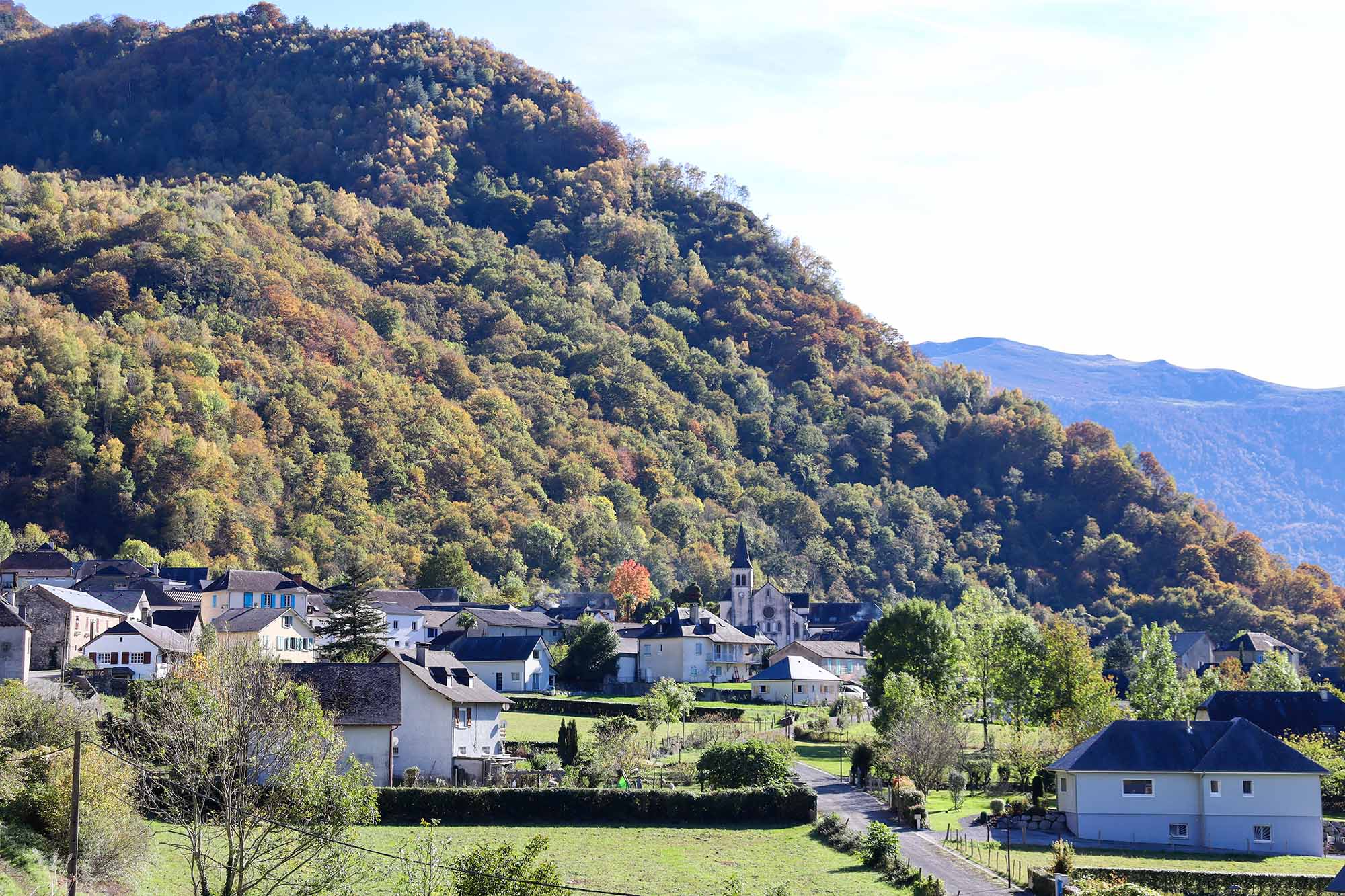
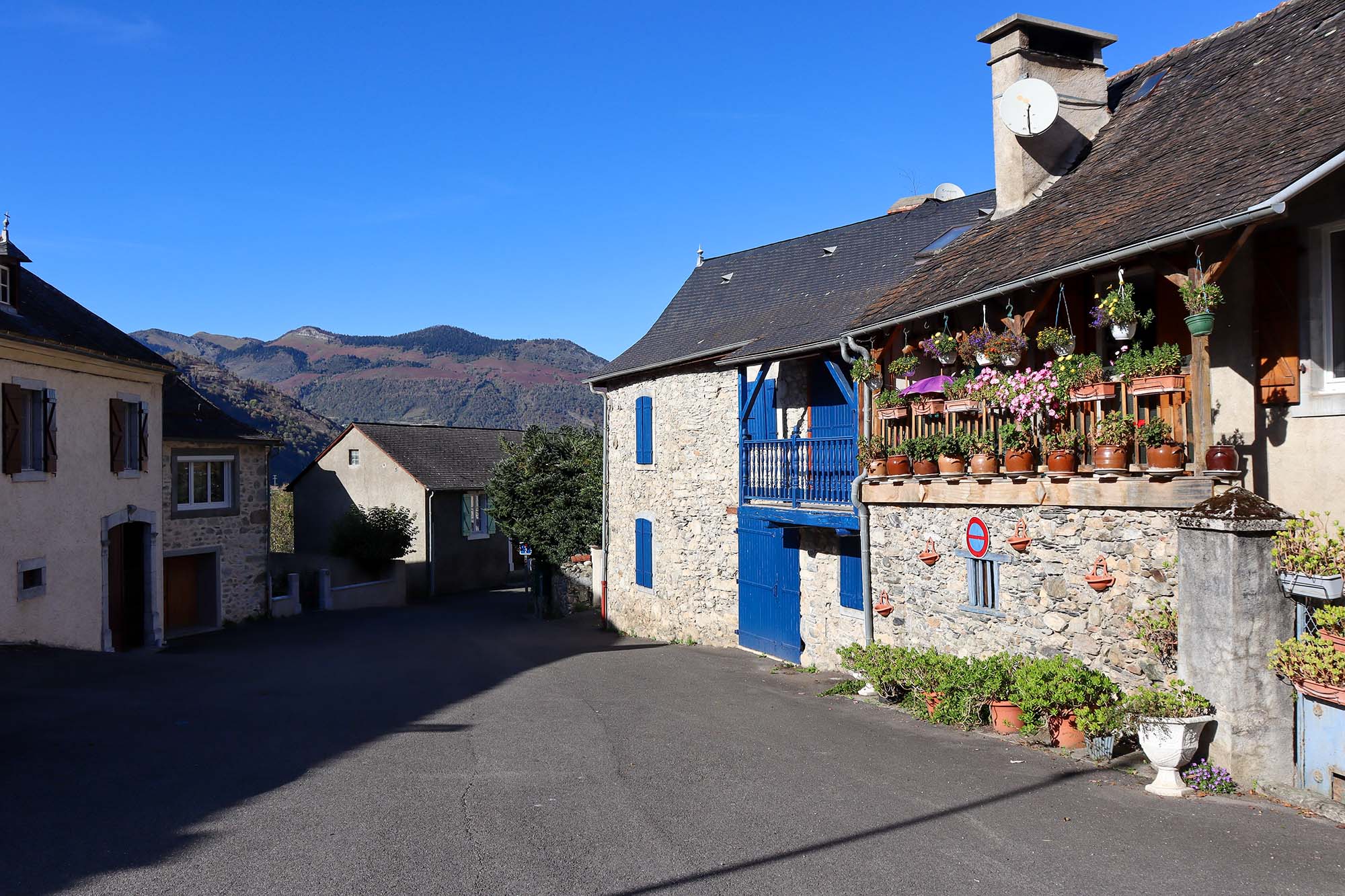
Aste and Béon reveal two complementary sides: one faces the mountain pastures and high peaks, whilst the other is defined by its history and cliffs inhabited by vultures.
Between pastoral heritage and spectacular natural scenery, these villages offer an authentic glimpse into the soul of the Ossau region.
Nestled at the foot of the mountains, Aste offers a privileged view of the surrounding landscapes.
In the heart of the village, the facade of the town hall catches the eye, displaying the valley’s emblematic symbols: the bear, from which the name Ossau may derive, and the cow, a figure of the pastoral world.
Aste is also a summer pasture district, facing the mountains, with the Port d’Aste, a natural passageway to the heights, dotted with traditional barns.