Bilhères, an important pastoral district A village nestled between valley and mountain
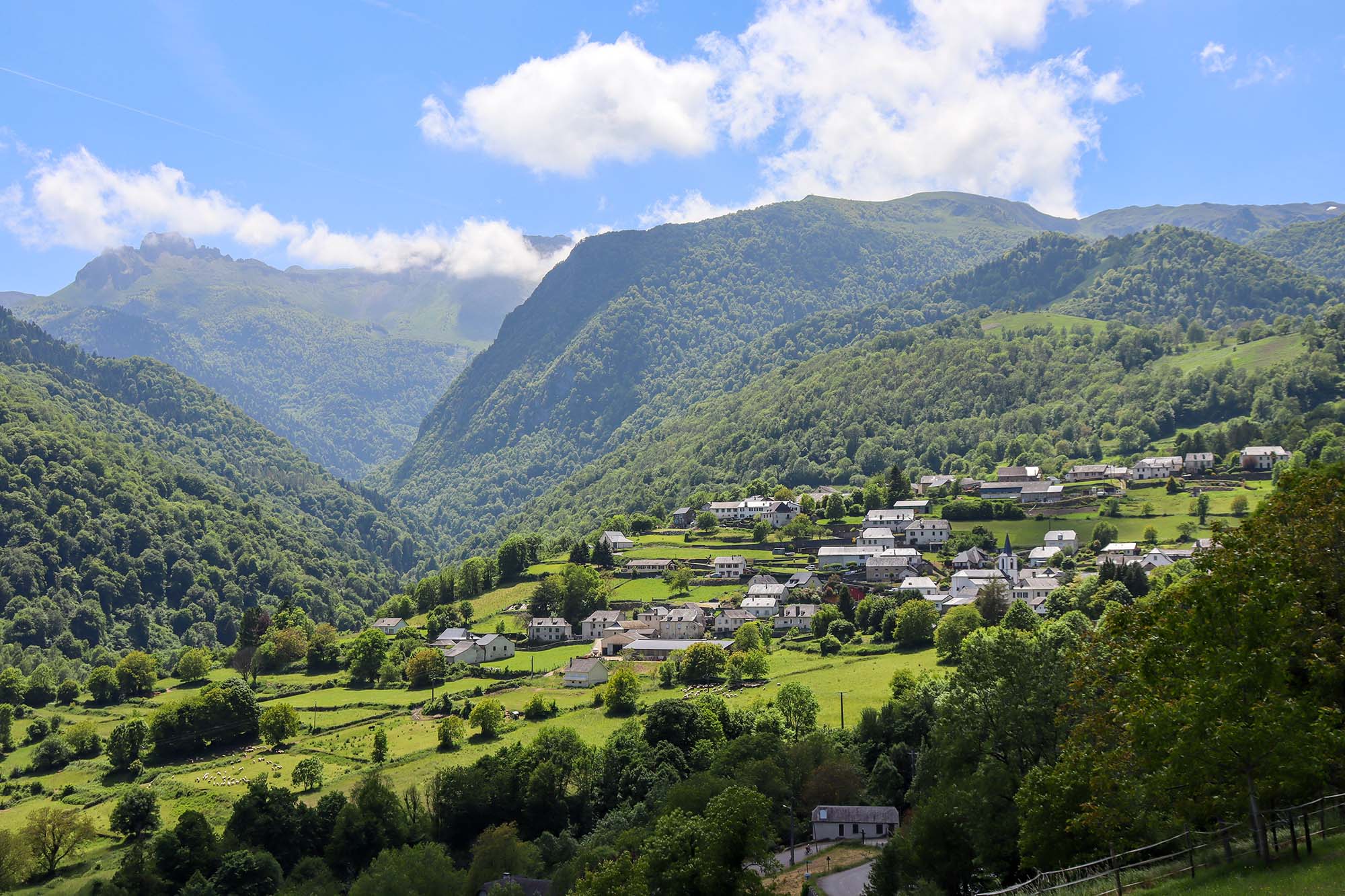
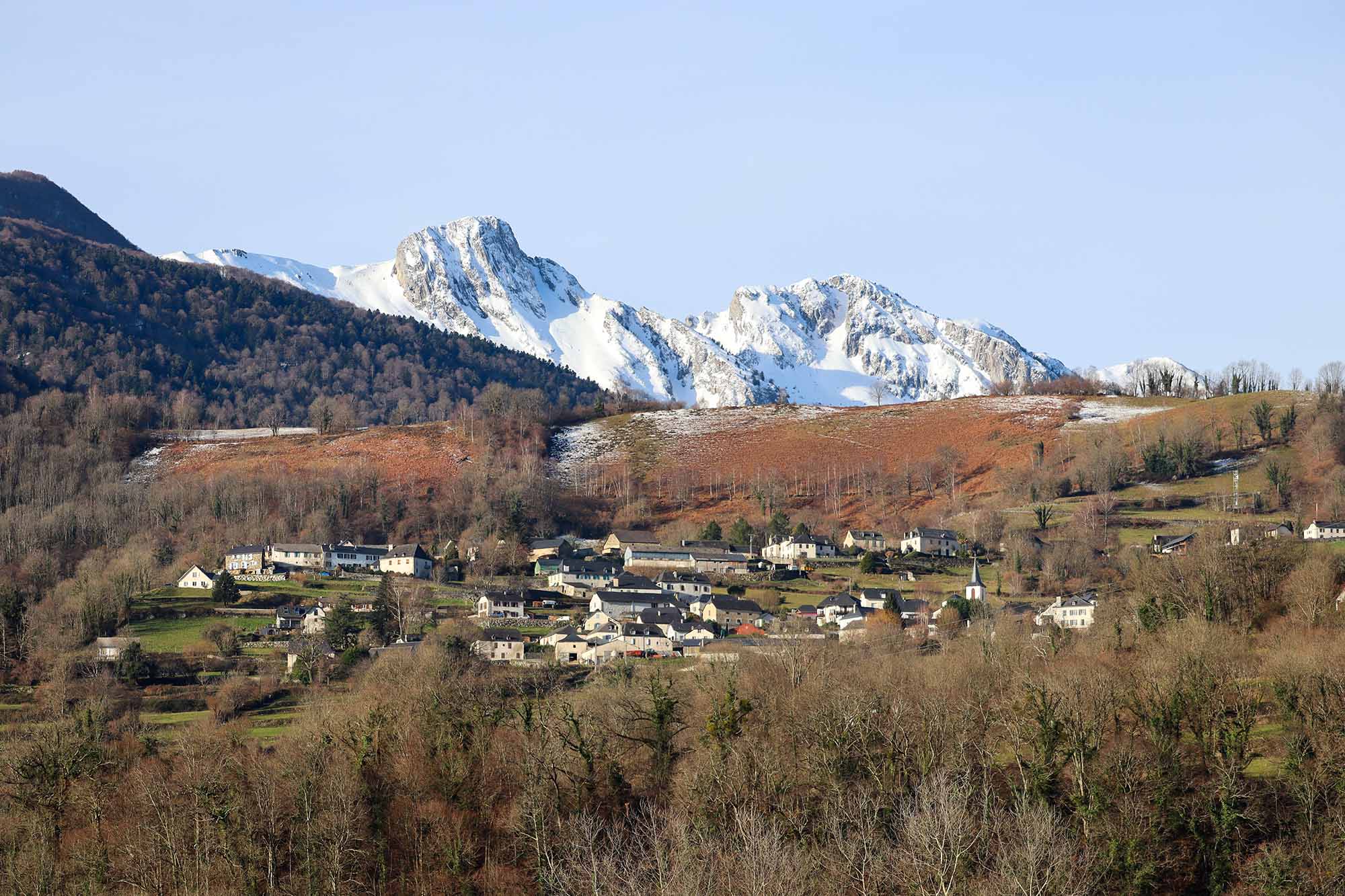
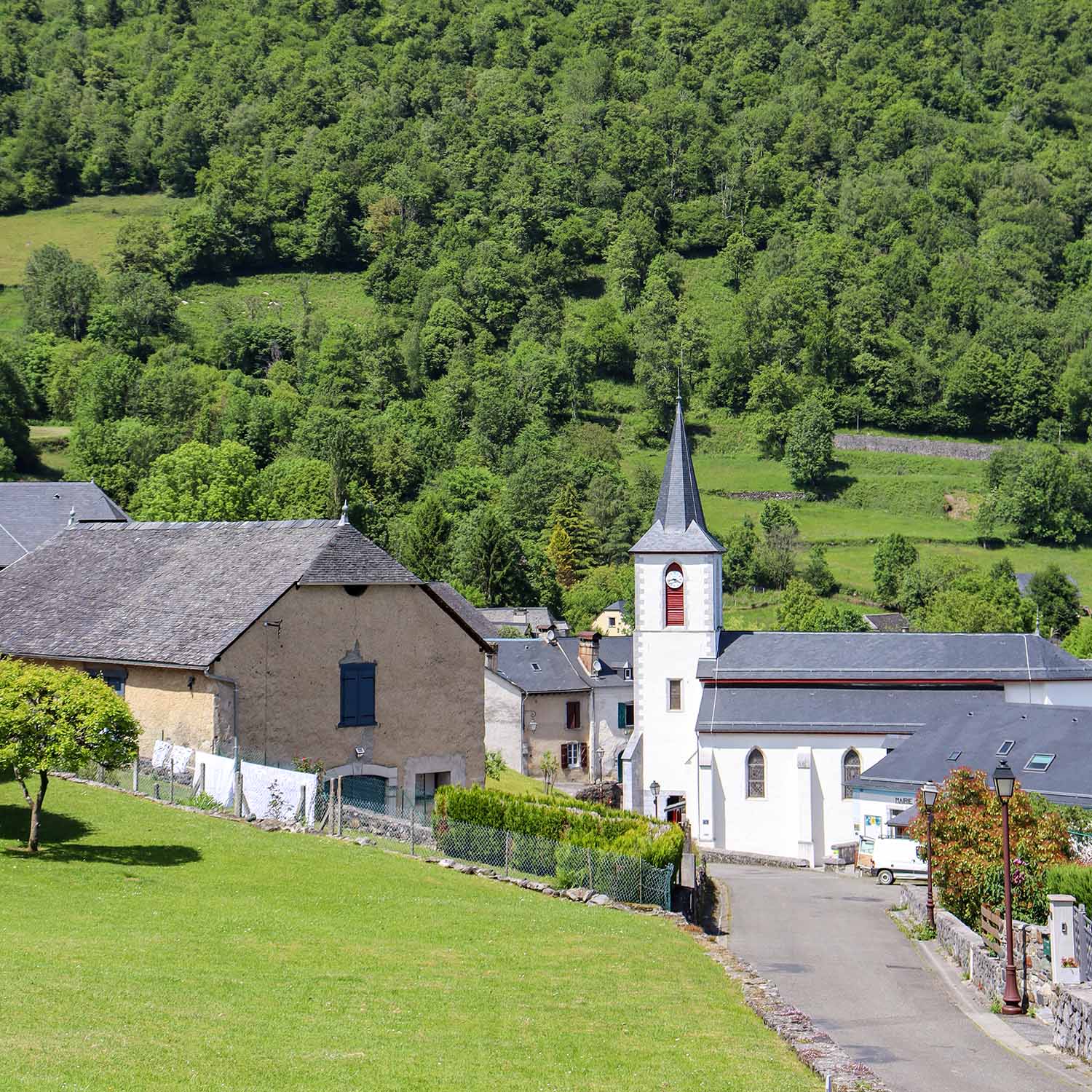
Perched halfway up the slope at an altitude of between 650 and 750 metres, the village of Bilhères-en-Ossau offers a remarkable panorama; it is a veritable viewpoint overlooking the valley.
Nearby, the road leads to the Bénou Plateau and then to the Marie-Blanque Pass, an iconic pass in the valley linking the Aspe and Ossau valleys, which has regularly been crossed by the Tour de France.
An authentic architectural heritage
This area bears traces of human settlement dating back to ancient times. On the Bénou plateau, the cromlechs (stone circles) bear witness to a presence dating back to 3,000 years before our era.
In the Middle Ages, the 1385 census, carried out by Gaston Fébus, provides a picture of the village (albeit incomplete) with 58 houses and two secular abbeys.
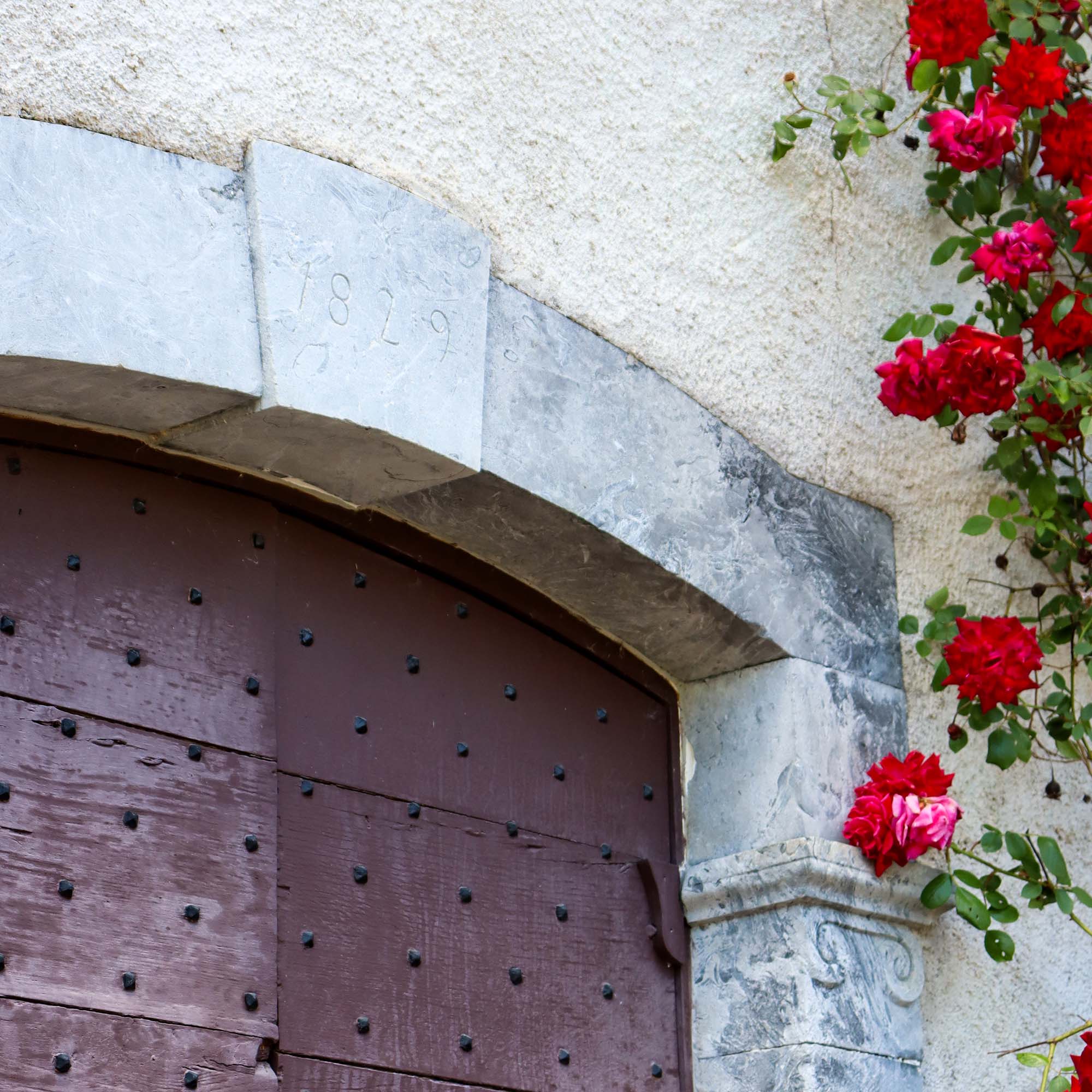
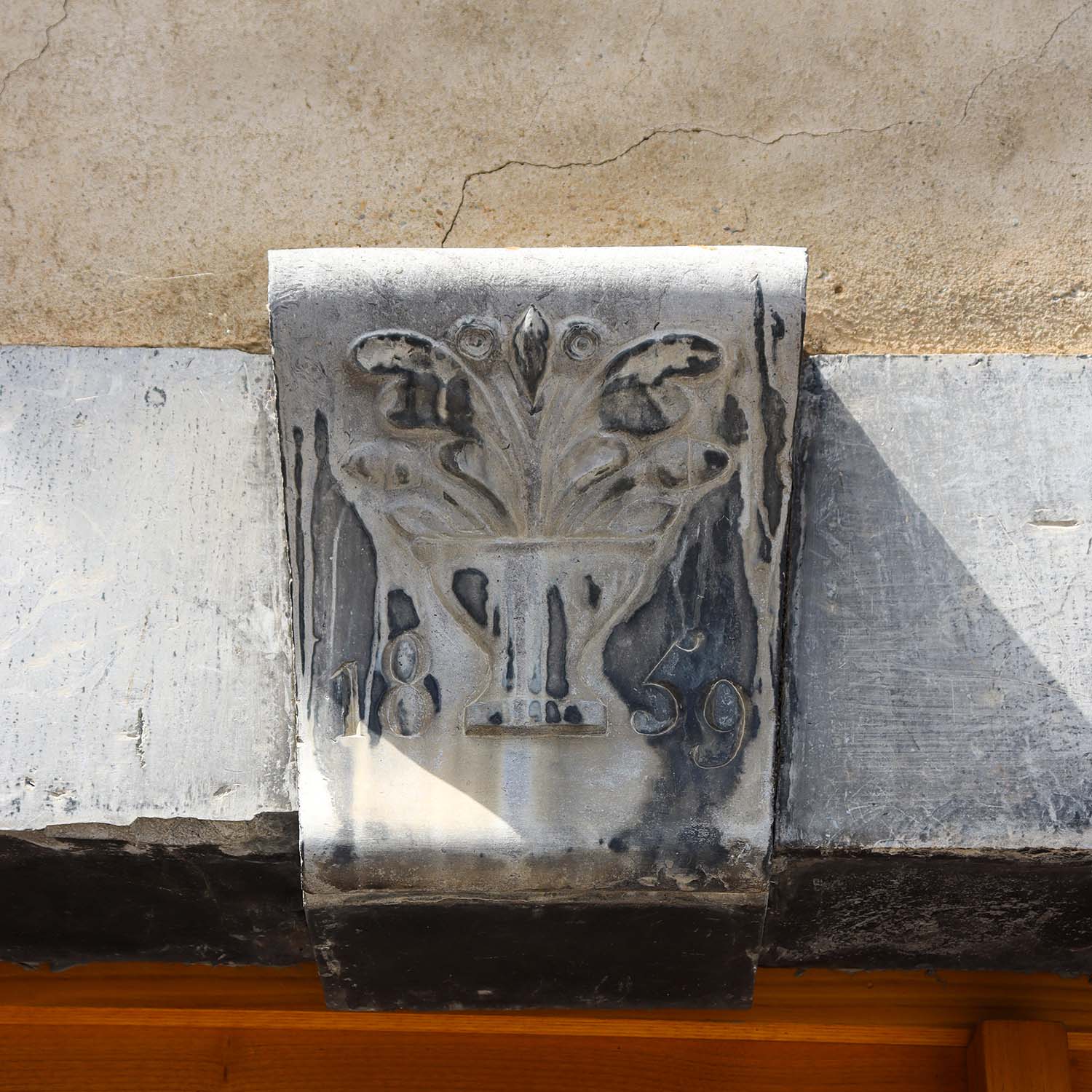
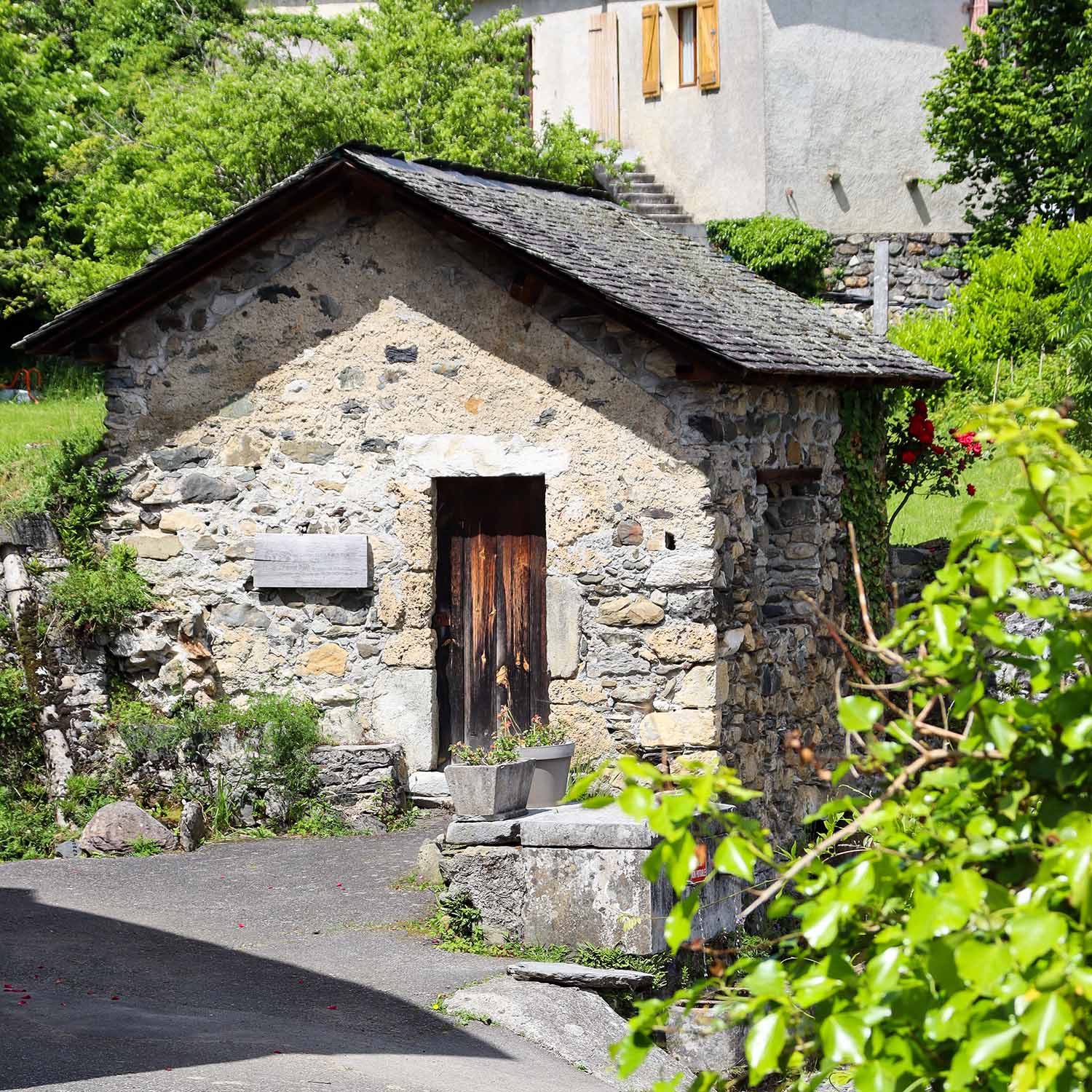
The village charms visitors with its authenticity; its old houses, with their characteristic façades, reveal superb 16th- and 17th-century doors adorned with decorative keystones.
Grouped around its church and the two former secular abbeys in the Lies district, Bilhères is also organised into several neighbourhoods, such as Arroust.The Church of Saint John the Baptist, a neo-Gothic gem
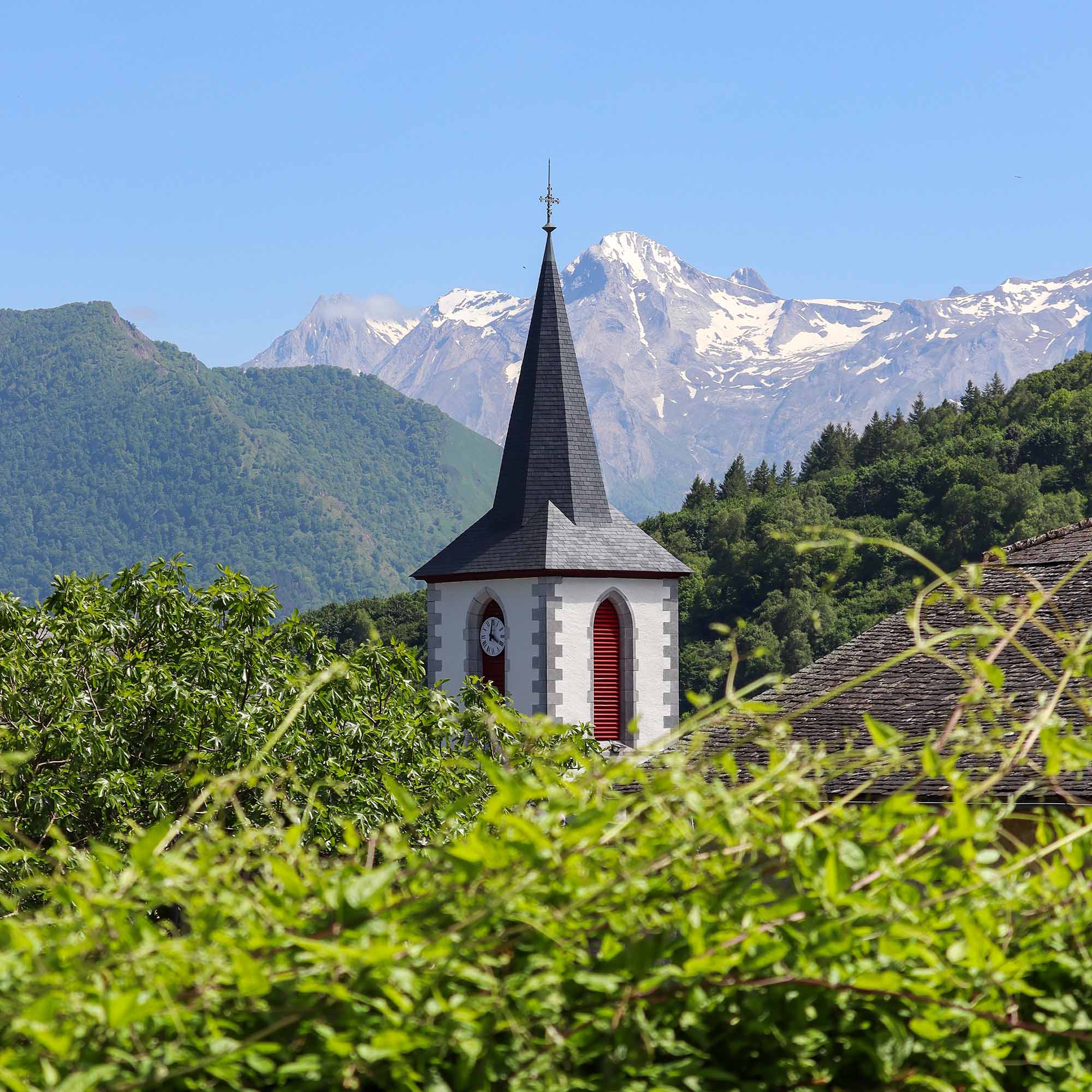
In the heart of the village, the Church of Saint John the Baptist, of medieval origin, stands out with its neo-Gothic silhouette.
Restored and extended from 1863 onwards, it is distinguished by its polygonal apse, its nave with four bays of ribbed vaults and its bell-tower porch topped by a slender spire.
Inside, the vaults painted by Paul Poublan in 1867 complement the stained-glass windows created in 1864 by Jules-Pierre Mauméjan.
The side chapels, dedicated to Saint Joseph and the Virgin Mary flanked by Saint Joachim and Saint Anne, complete this richly decorated ensemble. The eye is also drawn to the carved, polychrome and gilded wooden baldachin, with twisted columns adorned with vine leaves and birds, crowned by a statue of Saint John the Baptist.
A land of pastoralism and traditions
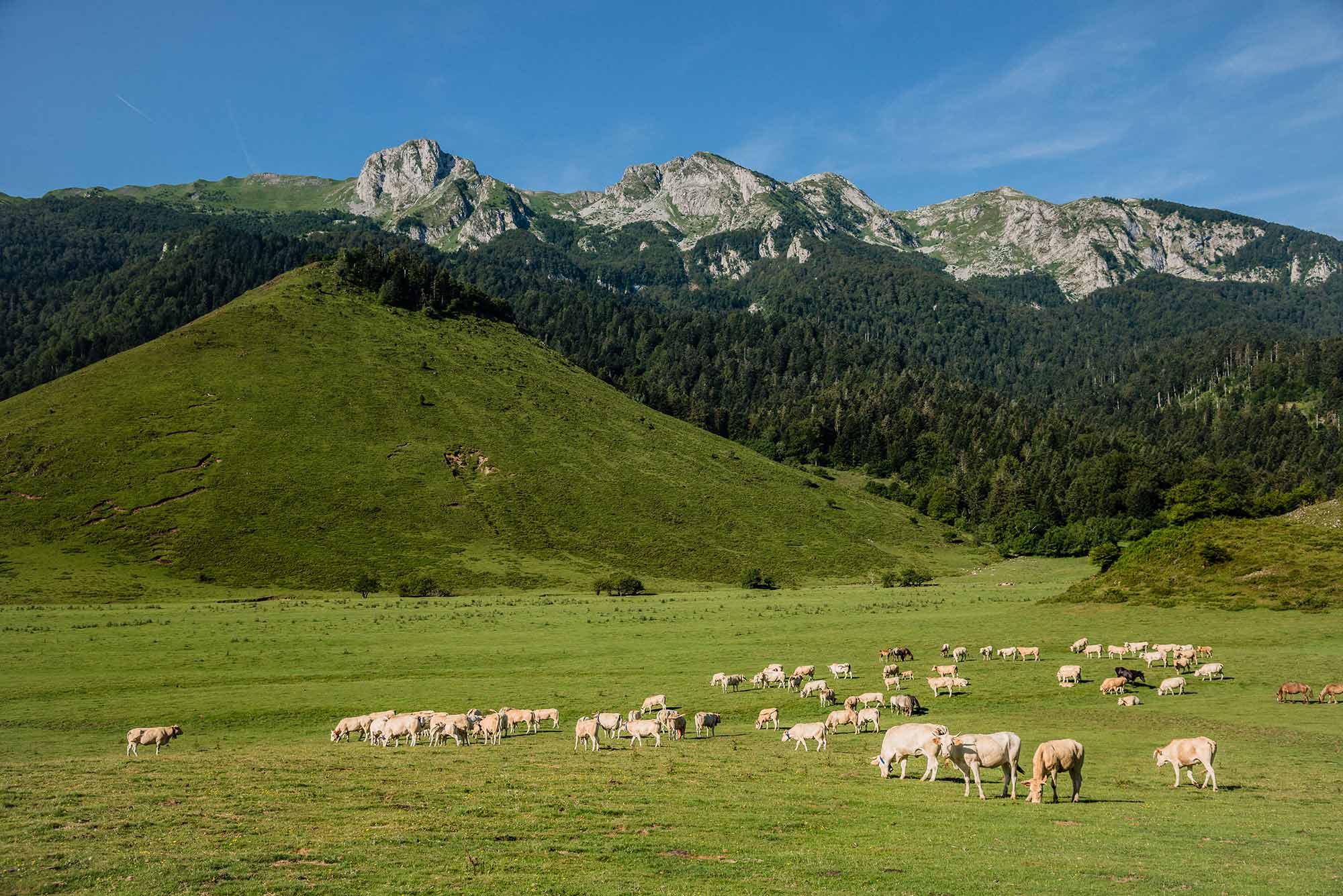
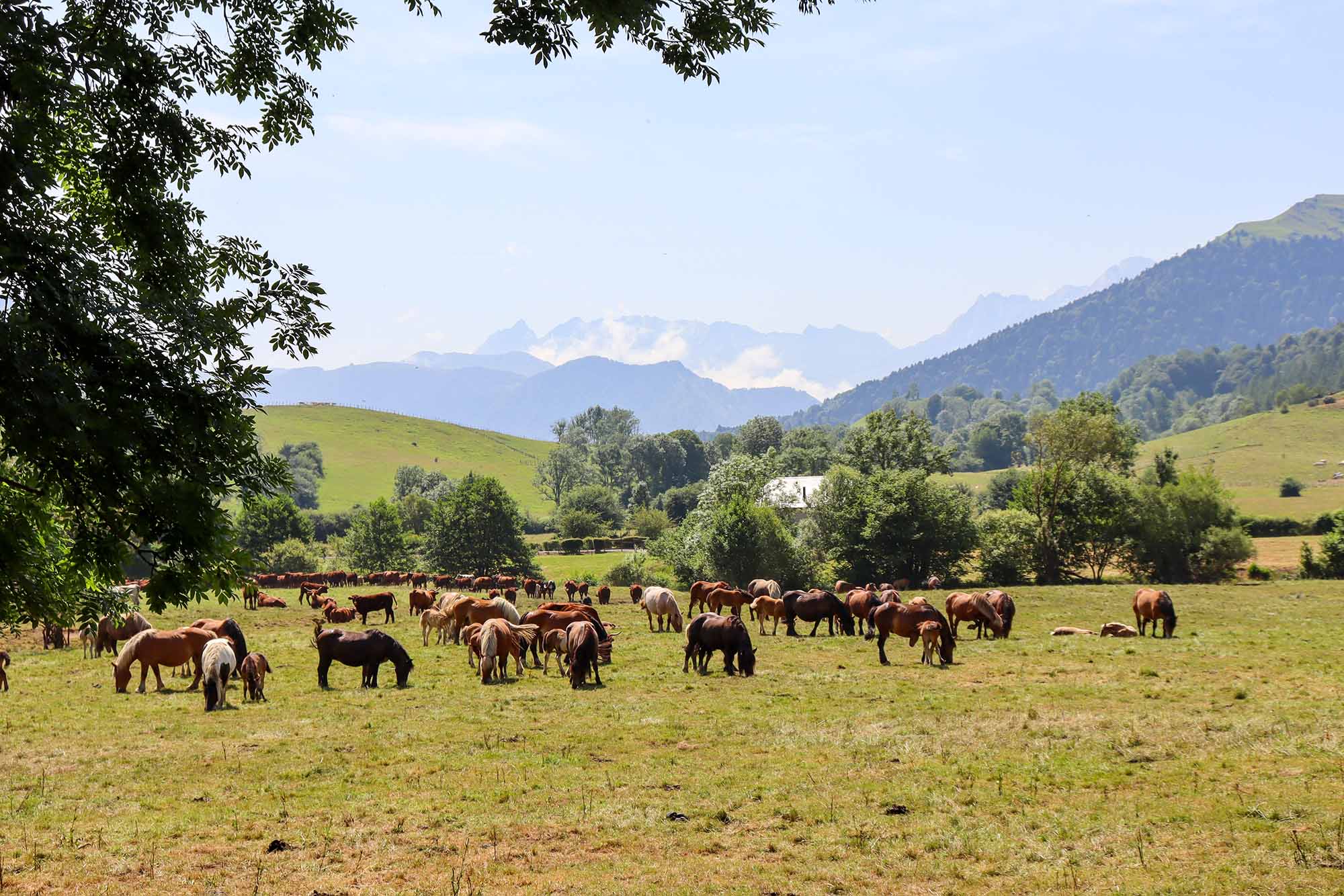
Bilhères-en-Ossau is a centre of pastoralism.
The Bénou plateau stretches out with its vast green pastures, a mix of meadows, grazing land, fern-covered glades and forests. This area is shared with the neighbouring commune of Bielle. The mid-mountain territory of the two communes comprises the Bénou plateau and the Aspeigt valley, bounded by the Marie-Blanque and Aran passes, the Lazerque and the peaks of Montagnon, MailhMassibé and Lauriolle.
On the heights, the cuyalas (mountain huts) still bear witness to the life of the shepherds.
This area, dedicated to the rearing of horses, cattle, goats and sheep, embodies the continuity of an ancestral tradition.
Water, a resource under control
The omnipresence of water has profoundly shaped the village.
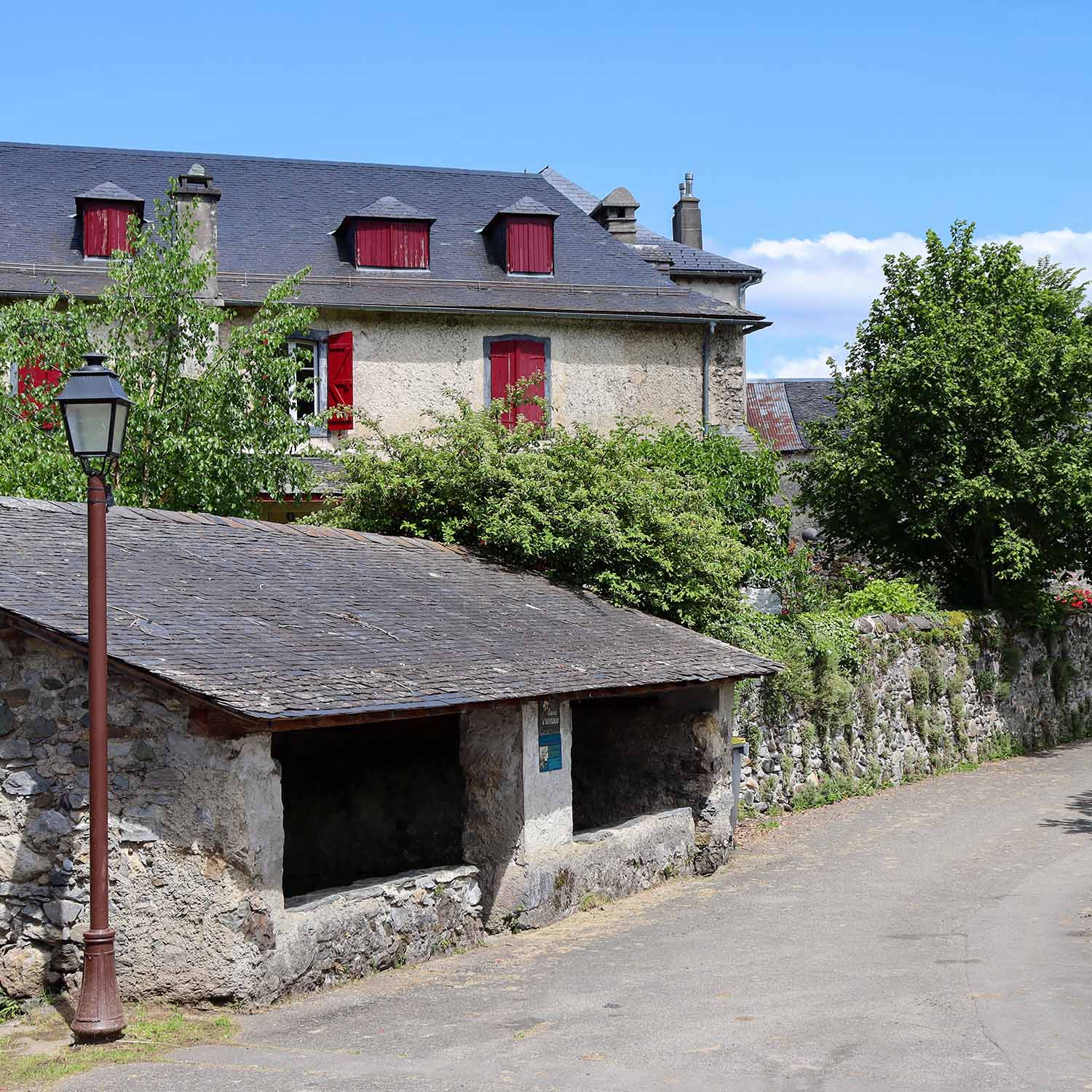
With its steep slopes and abundant rainfall, the inhabitants have developed an ingenious water management system. Five streams flow through Bilhères and once powered nine mills (five of which are still visible today), as well as several sets of wash houses and drinking troughs.