The history of marble in the Ossau Valley Arudy stone
The reason why we tend to refer to ‘Arudy stone’ rather than ‘Arudy marble’ is that, unlike the well-known metamorphic rocks from neighbouring quarries, Arudy stone is not marble, but a marble-like limestone.
It is, in fact, a rock with a very distinctive geological formation: a ‘Mud Mound’. ‘Mud Mounds’ consist of a bacterial film that allows them to harden rapidly. Their dense texture gives them the ability to ‘take a polish’, which is why Arudy stone takes on the characteristics of marble once polished.
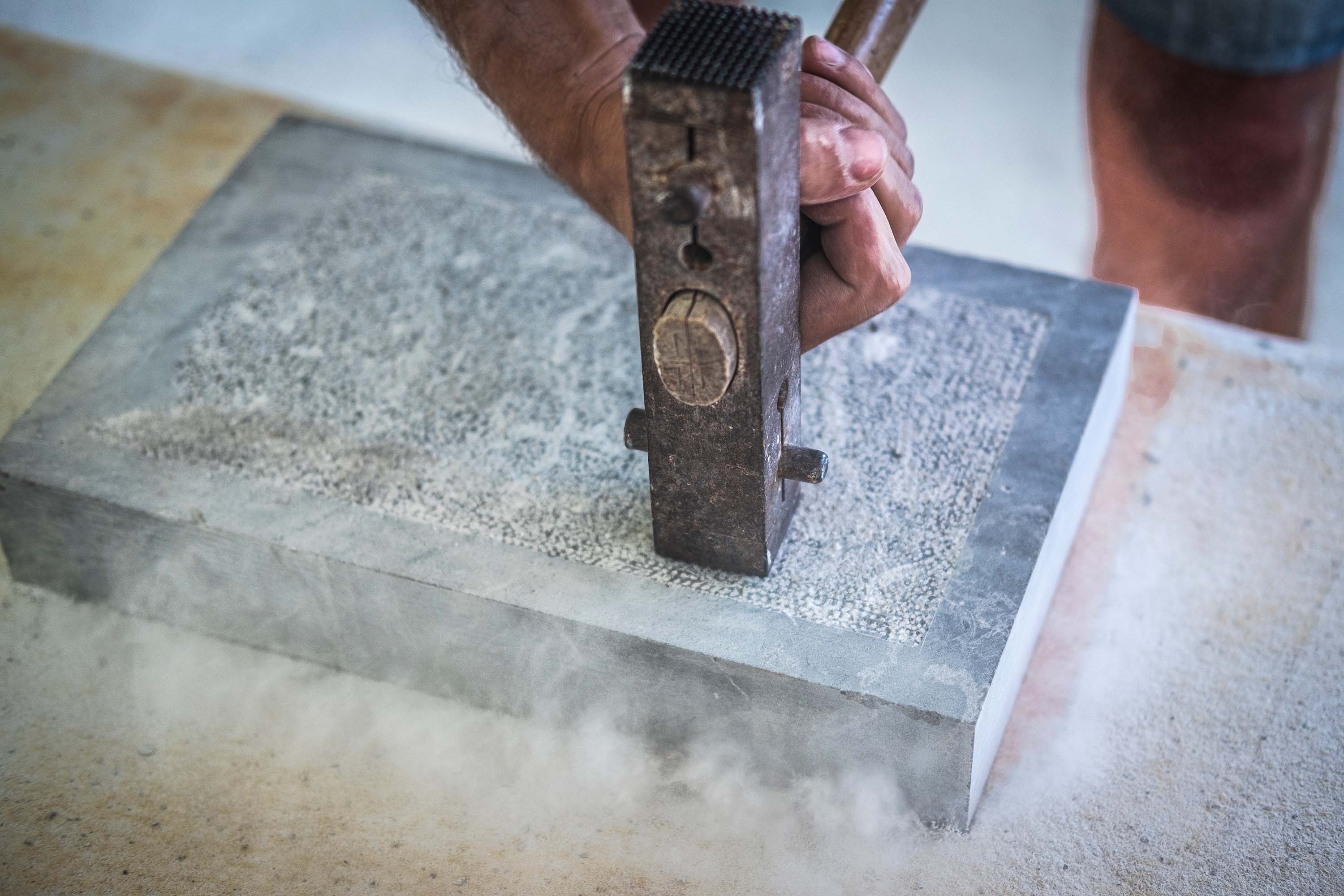
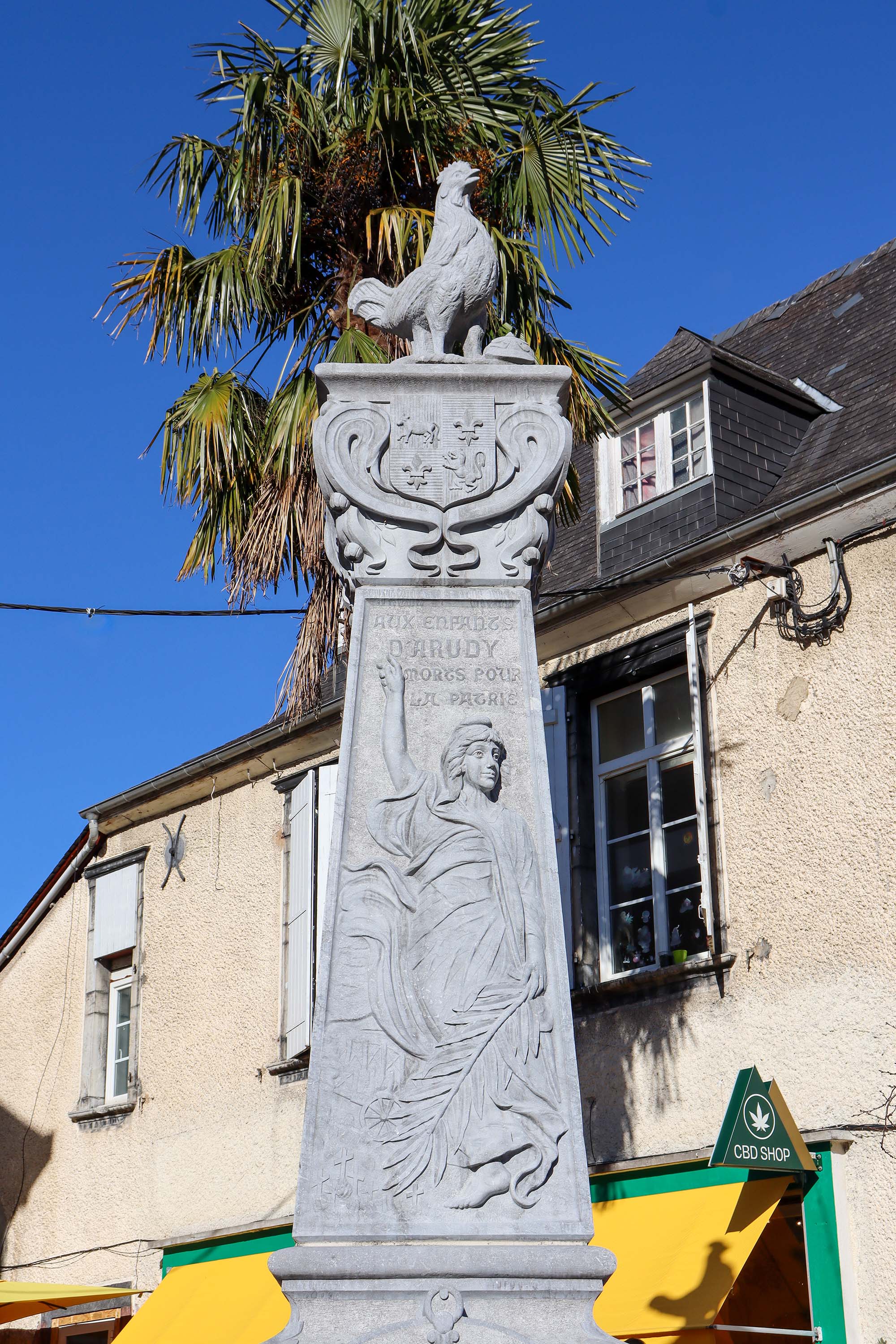
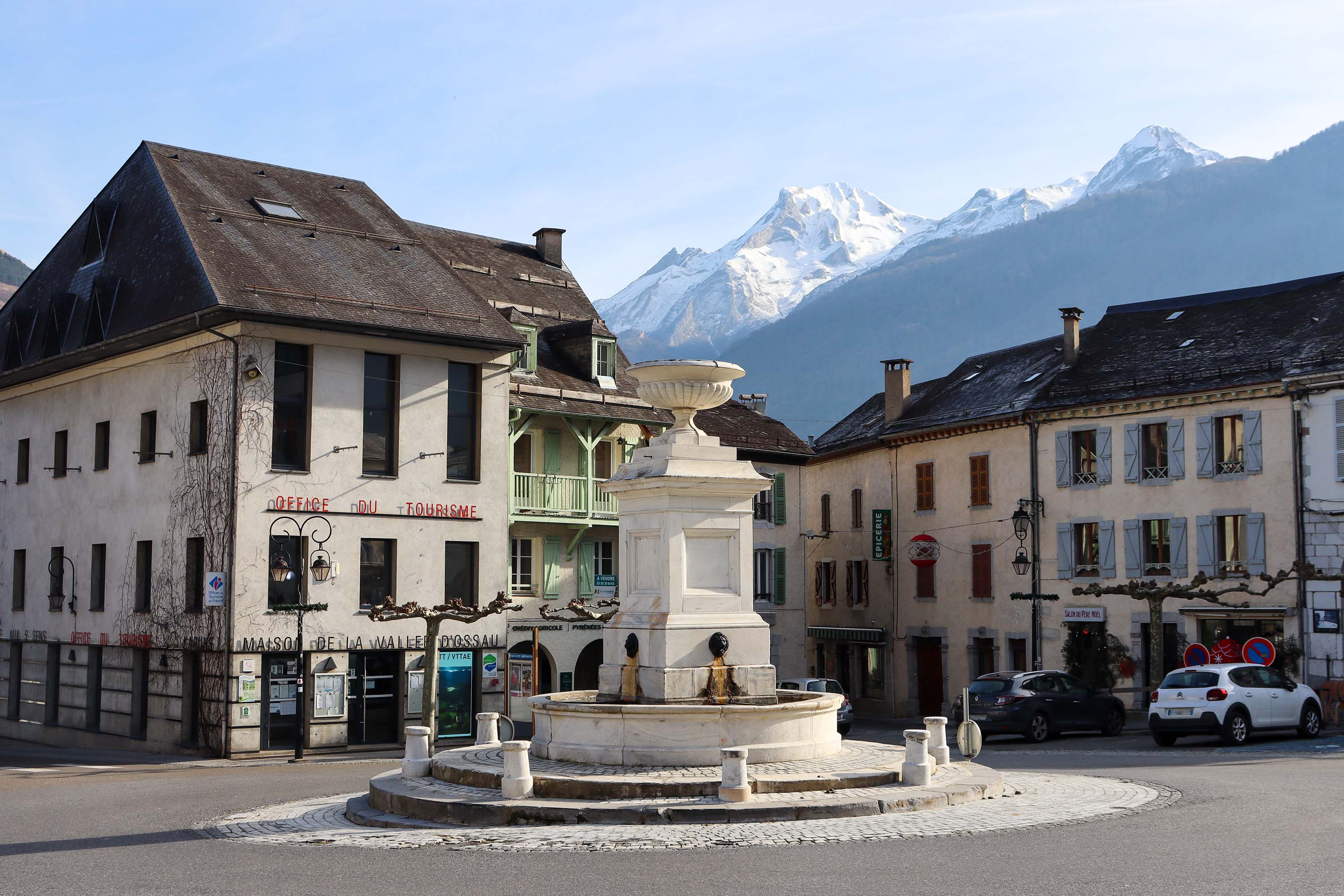
The company ‘Carrières Laplace’ is the sole operator of the three marble limestone quarries in the Ossau Valley. Durable, dense and attractive, Arudy grey stone is renowned for its quality and is used for a variety of purposes: architecture (bush-hammered lintels, door and window frames), street furniture (fountains, steps, benches), sculpture (works created for the Stone Biennales in 2017–2022)… To discover Arudy stone in all its forms, simply stroll through the streets of the village of the same name, a veritable open-air museum. As you pass through the Town Hall Square, take a moment to appreciate, for example, the beauty of the war memorial. Erected in 1922 in tribute to the people of Arudy who died during the 1914–1918 War, carved from Arudy stone and restored by the local stone-cutting firm Moncayola, it embodies, in its entirety, the symbolism of the famous local slogan: ‘Arudy, a soul carved in stone’.
Exported to Belgium, Germany, Japan and the United States, Arudy stone is as highly regarded locally as it is abroad. It can be found, for example, on the Empire State Building in New York, the Council of State in the Netherlands and the Opéra Garnier in Paris. To protect the ‘Pierre d’Arudy’ designation, highlight its heritage value and combat counterfeiting, quarriers and processors joined forces to secure the PGI label in 2020. A 34-tonne block standing proudly at the entrance to the village clearly illustrates the significance of the Pierre d’Arudy’s identity.
Sculptural marble from Louvie-Soubiron
Two types of marble were quarried from the rock of the Louvie-Soubiron quarries: ‘Turquin blue’ (veined with grey and blue) and the famous ‘white sculptural marble of Louvie-Soubiron’ (pure white). The latter, as its name suggests, was used primarily for the creation of statues and ornaments. The statue of Henry IV by Nicolas Raggi (Place Royale in Pau), “Cincinnatus” by Denis Foyatier (Jardin des Tuileries in Paris), “Talma contemplating the role of Sulla” by David d’Angers (collection of the Comédie-Française), bear witness to the major contribution of Louvie-Soubiron statuary marble to French sculpture.
This noble material was also used for more practical purposes locally, such as the threshold of a farm building in the valley, the frame of a barn door, or a village wash house… The white marble of Louvie-Soubiron is also found in the valley in various carved decorative features, such as the holy water font in Saint-Pierre Church in Laruns or the fountain in the village square: the purity of the white echoes the purity of the water (holy water, drinking water from the fountain, spring water drawn by the thermal baths in the villages a little further up).
Quarrying at Louvie-Soubiron came to an end in the mid-19th century, due to difficulties in accessing the sites and the lack of a bridge strong enough to carry the blocks of stone across the river. This was the original purpose of the stone-built bridge at Béost, but its construction was not completed until after the quarries had been abandoned.
Today, a 3 km interpretive trail above the village of Louvie-Soubiron invites visitors to discover the characteristics of this marble and the history of its quarrying.
Benou Breach
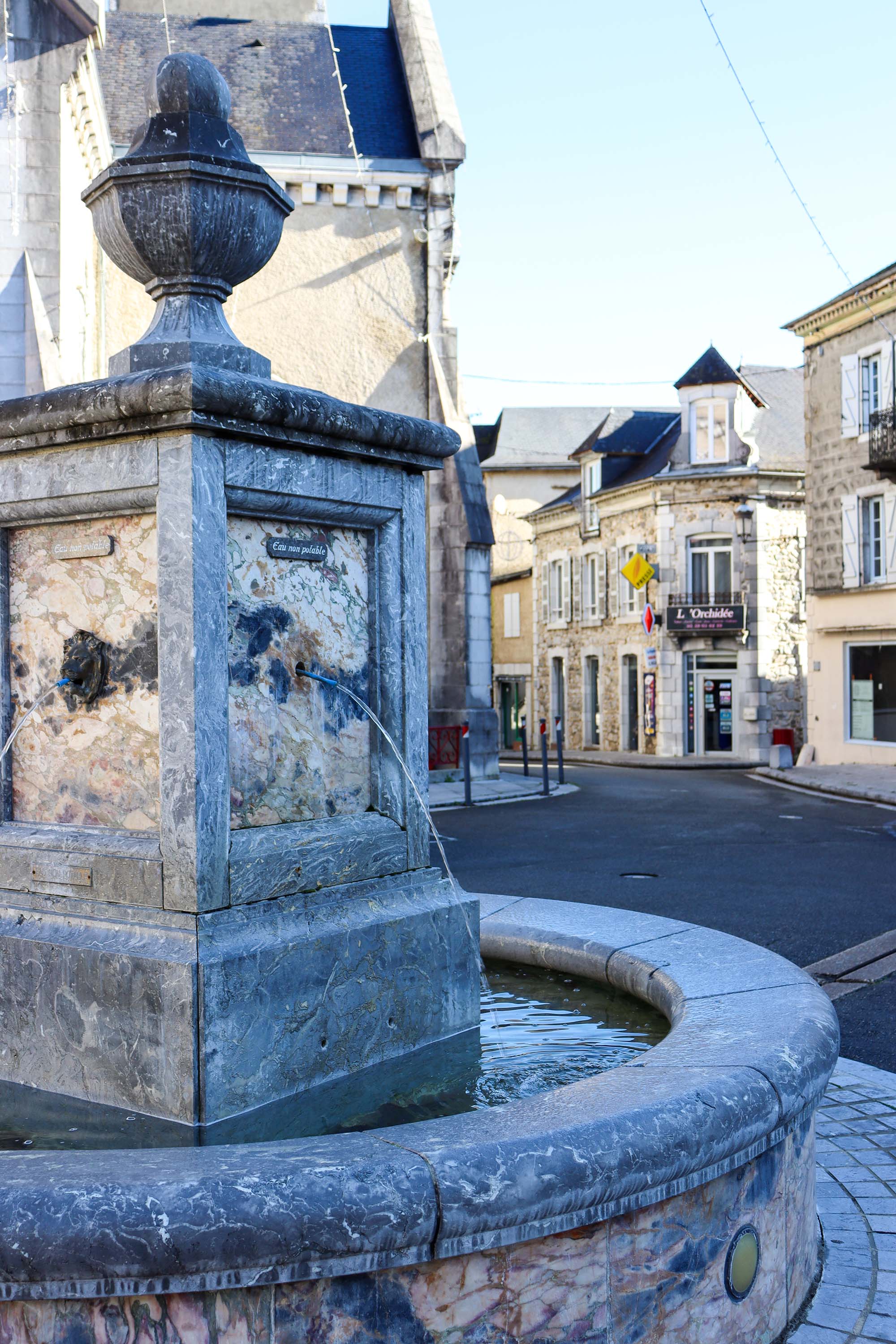
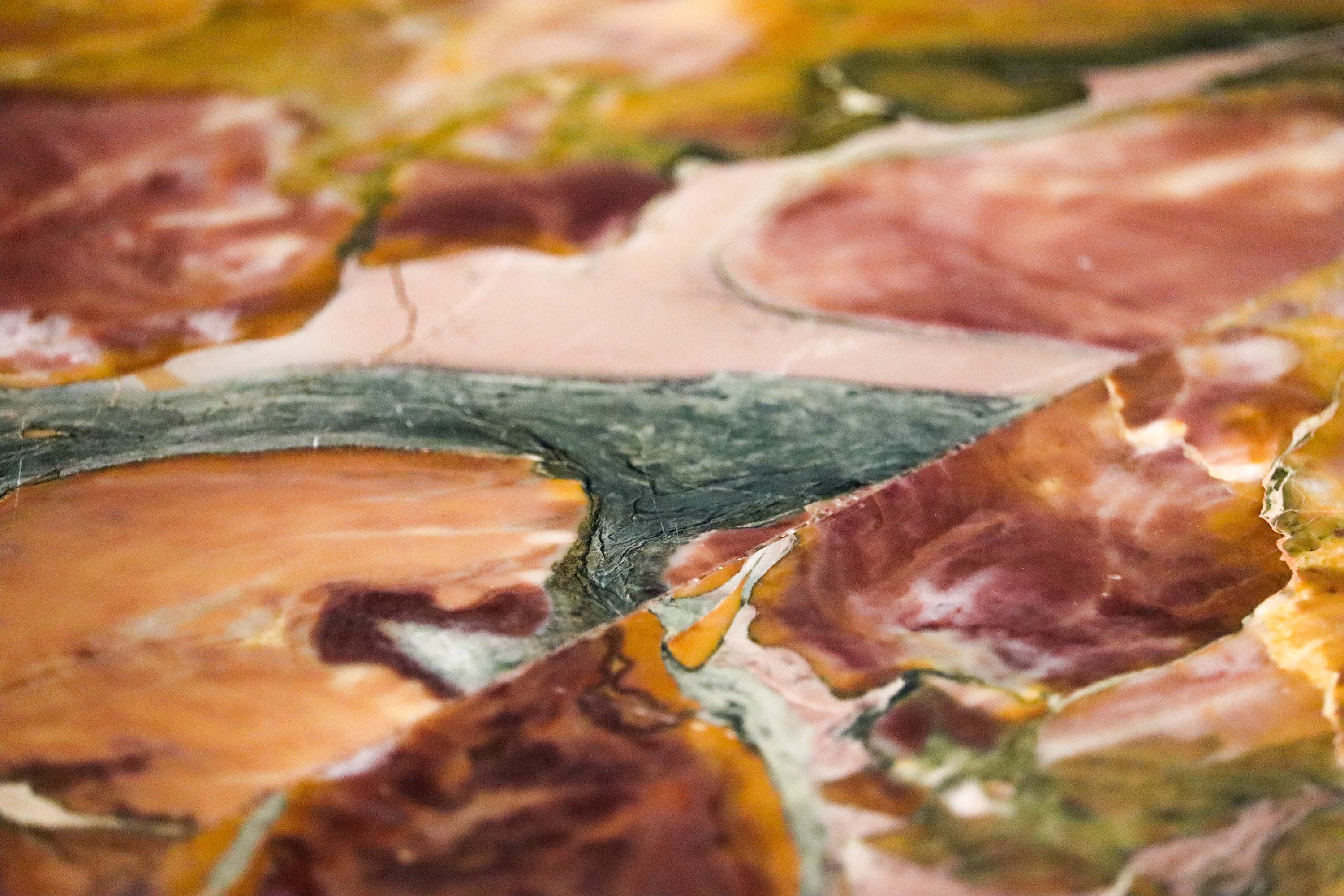
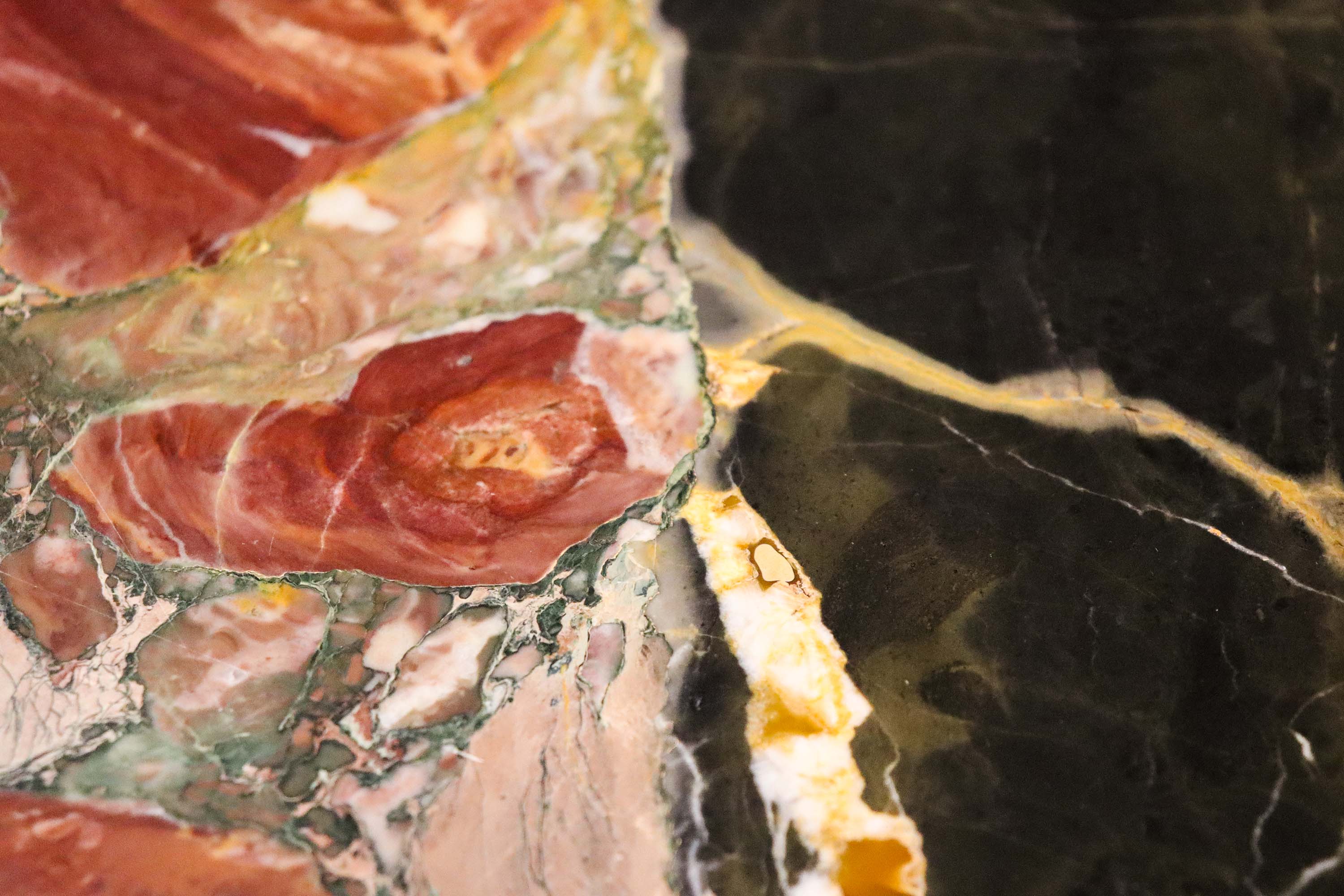
Quarried from the 17th century onwards, the Bénou quarry produces a unique polychrome marble: the Brèche de Bénou. Breccias are a category of marble formed from large elements that appeared at the time of the stone's geological formation: pressure and distortion in a tropical climate created a marble composed of a whole variety of colours. Tinged with dark purple, emerald green, golden yellow, pink and black, the Brèche de Bénou - as described by the concession's current owners - is reminiscent of Gustave Klimt's famous paintings. Used throughout the world, particularly for furniture and fireplace surrounds, it can be found in the Ossau Valley on the fountain at Arudy (a combination of grey polished stone from Arudy and marble from Bénou), or on the remarkable gift presented to the Bilhères en Ossau Town Hall in 1996 by the then operator, the famous Italian marble-maker Luigi Antolini (a concession formerly supervised by ‘Les Nouvelles Carrières du Béarn’).
Not used for several years, the Bénou quarry was recently taken over by the Italian company Escavamar SRL, a veritable treasure trove of abandoned nuggets (including the exclusive right to extract Grand Antique d'Aubert from the Ariege mountains: an extraordinary black and white marble that had disappeared from the market since the Second World War). Since May 2023, blocks of Brèche du Bénou have been travelling the world again.