In the Ossau Valley, song captures the spirit of Béarn, its history, traditions and legends… Ossau folk songs, a living tradition
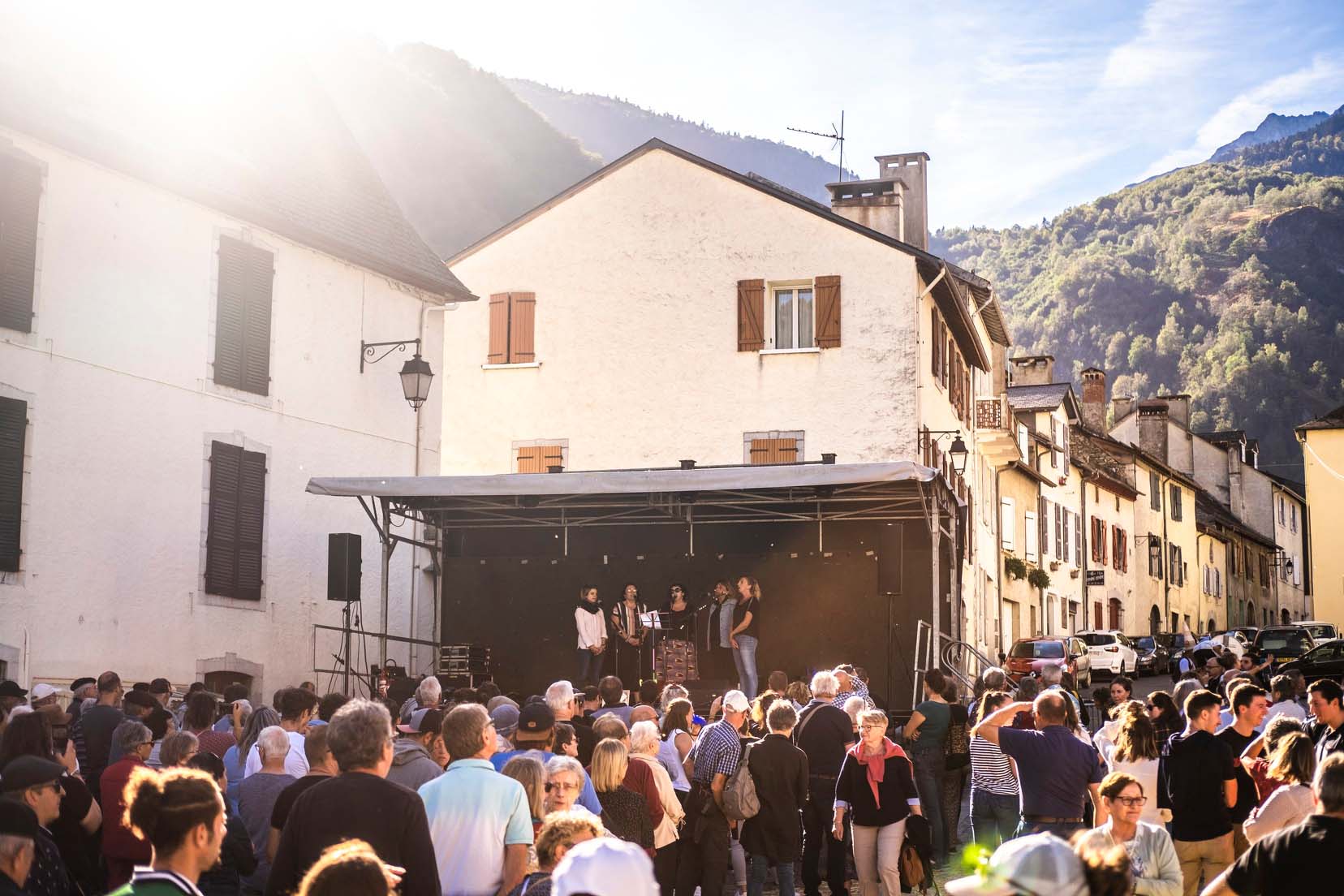
Ossau folk songs play a vital role in the cultural life of the Ossau Valley. Passed down from generation to generation, they accompany many moments of togetherness at village festivals, weddings, sporting events, or simply when friends and family get together.
The songs evoke love, nature, the mountains, pastoral life and even memories of war, and are often imbued with nostalgia and melancholy, reflecting a deep attachment to the region and its traditions.
Thus, Ossau singing remains a living, unifying element at the heart of local culture. Straddling tradition and renewal, it continues to bring generations together and fill the entire valley with the rhythm of its melodies.
From monophony to polyphony
Once performed in monophony until the mid-19th century, these songs gradually evolved towards polyphony, which is now a defining feature of this repertoire.
Generally sung by male choirs, they bring the local people together around a shared passion.
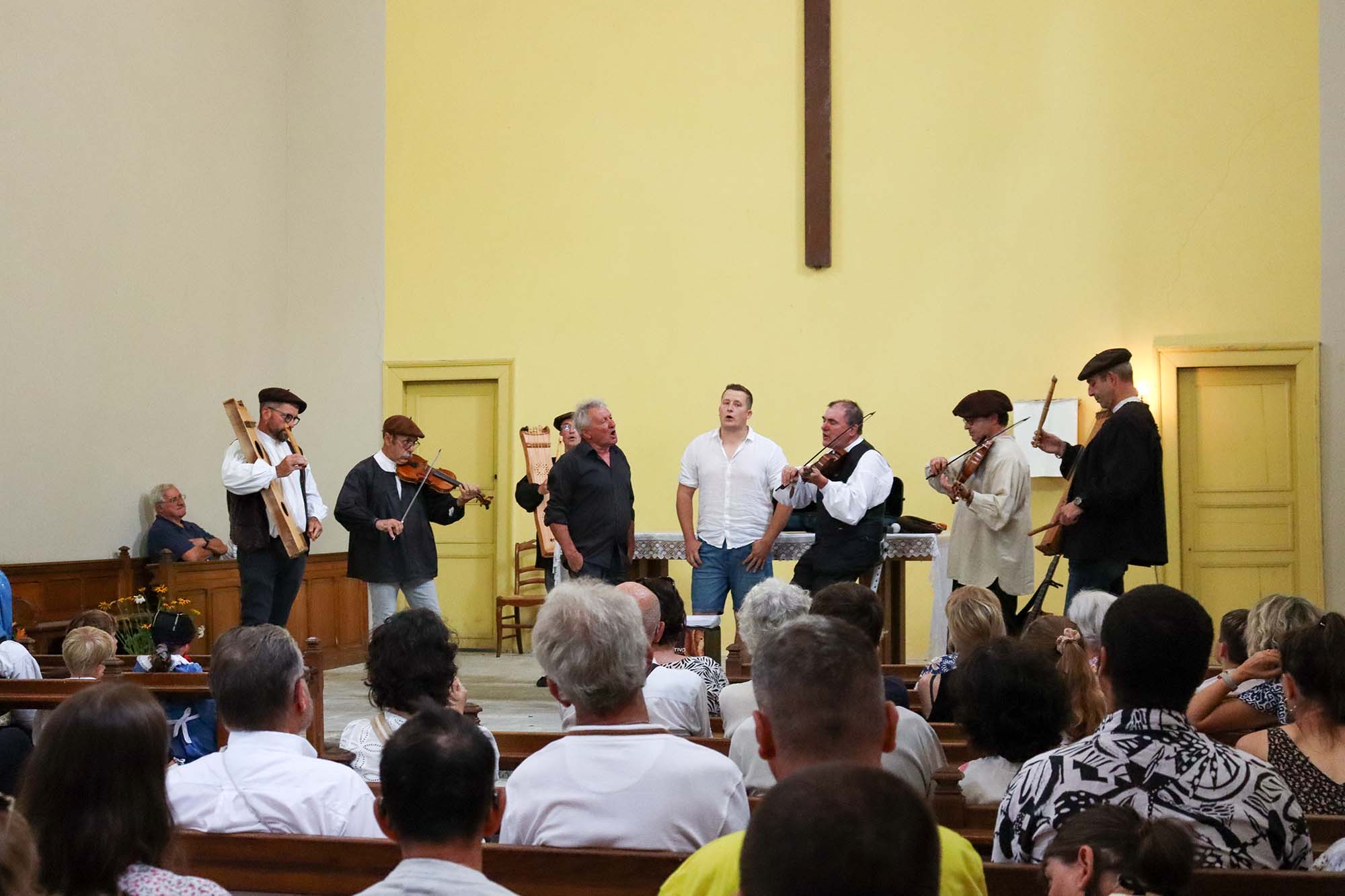
From the oldest Bearnese tunes to contemporary compositions, Ossalois singing is performed both a cappella and in more rhythmic versions accompanied by instruments.
Iconic groups and a cultural revival
Several iconic groups are keeping this tradition alive.
Among them, Los de Laruntz (from Laruns) and Lous Amics de Bielle are dedicated to keeping traditional songs alive. Other groups, such as Esta and Jean-Luc Mongaugé, perform original compositions in the local language, thereby enriching the repertoire.
Today, a genuine revival of polyphonic singing can be observed with the emergence of numerous youth groups such as Qui d’Ey, Arudy Cant’Aussau, Natseipas, Holia, Las Campanetas and Per Amor.
This new generation is actively helping to keep this tradition alive and evolving, thereby strengthening the valley’s cultural identity.
Singing at village festivals
Village festivals provide the ideal setting for this musical expression. Held mainly in the summer, they represent a living tradition that has been passed down uninterrupted for centuries.
Far from being mere folklore, they embody the valley’s deep-rooted identity. The way they unfold is generally similar from one village to another, although each locality retains its own distinctive features.
The Ossaloise dawn serenades
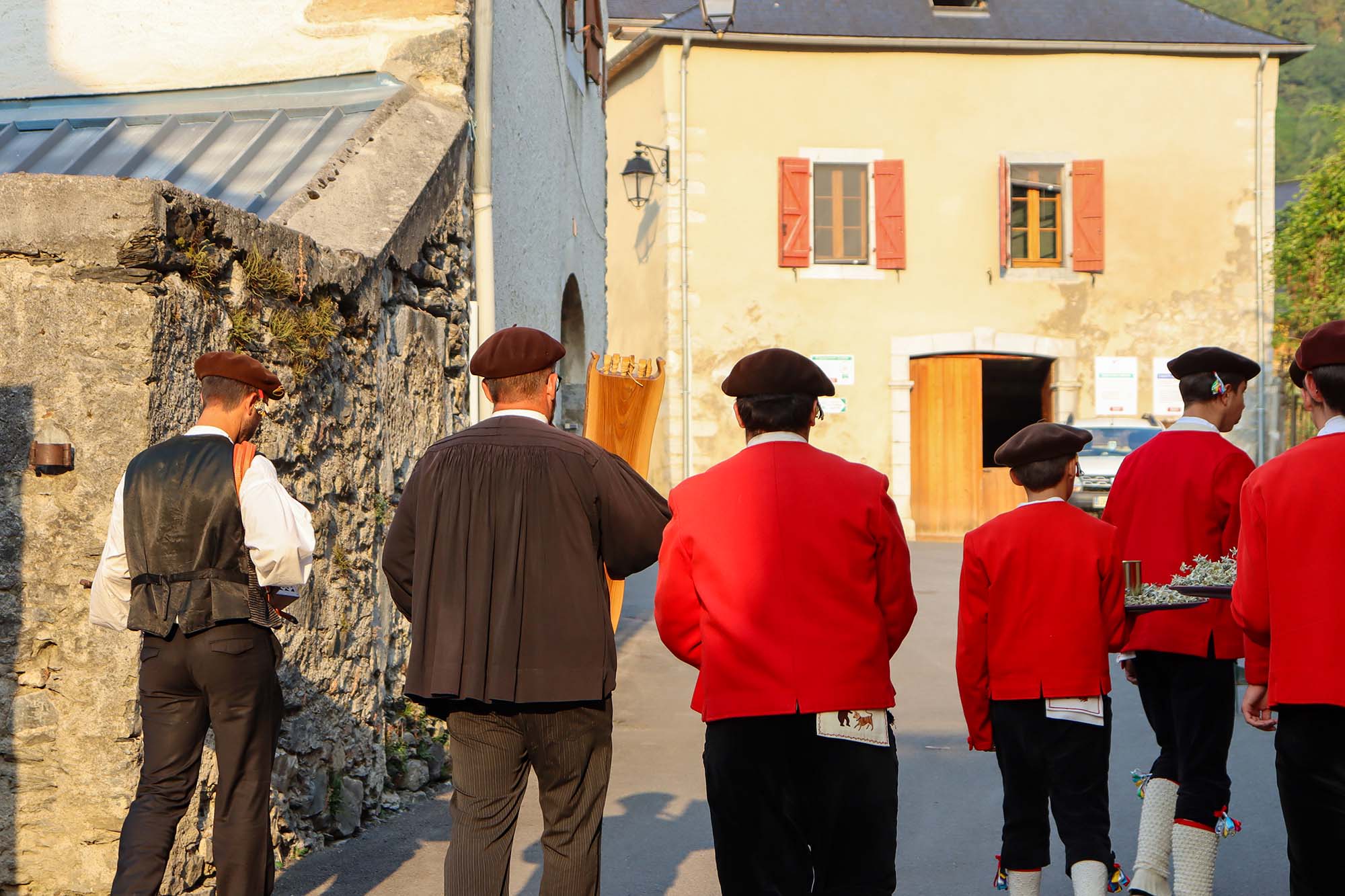
The day begins early with the ‘Ossaloise dawn serenades’.
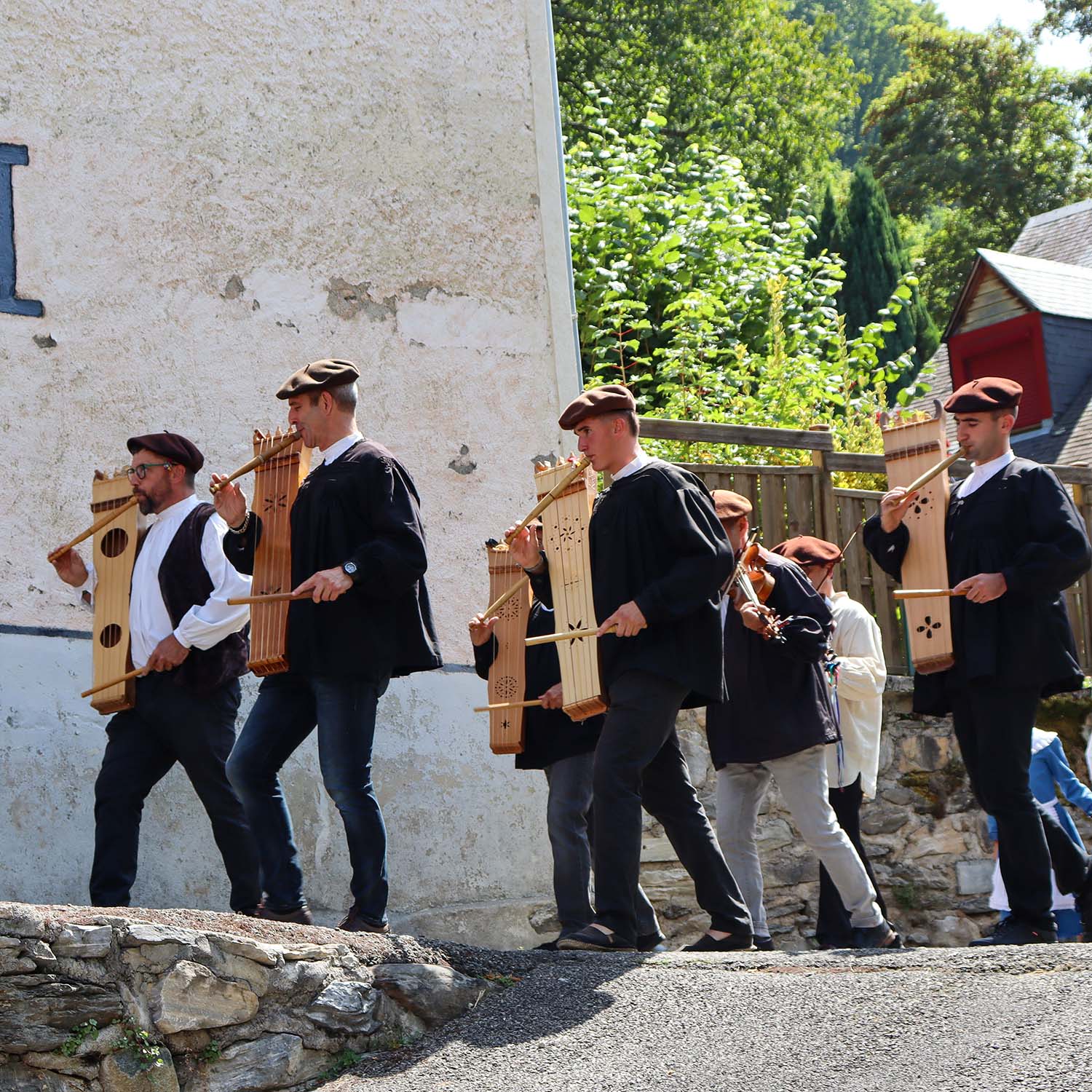
Young people, dressed in traditional costumes and accompanied by musicians playing flutes, tambourines and violins, make their way through the village from house to house.
In exchange for donations, they offer edelweiss, known locally as ‘las immourtèles’, picked in the mountains in the days leading up to the event.
Mass and traditional costumes
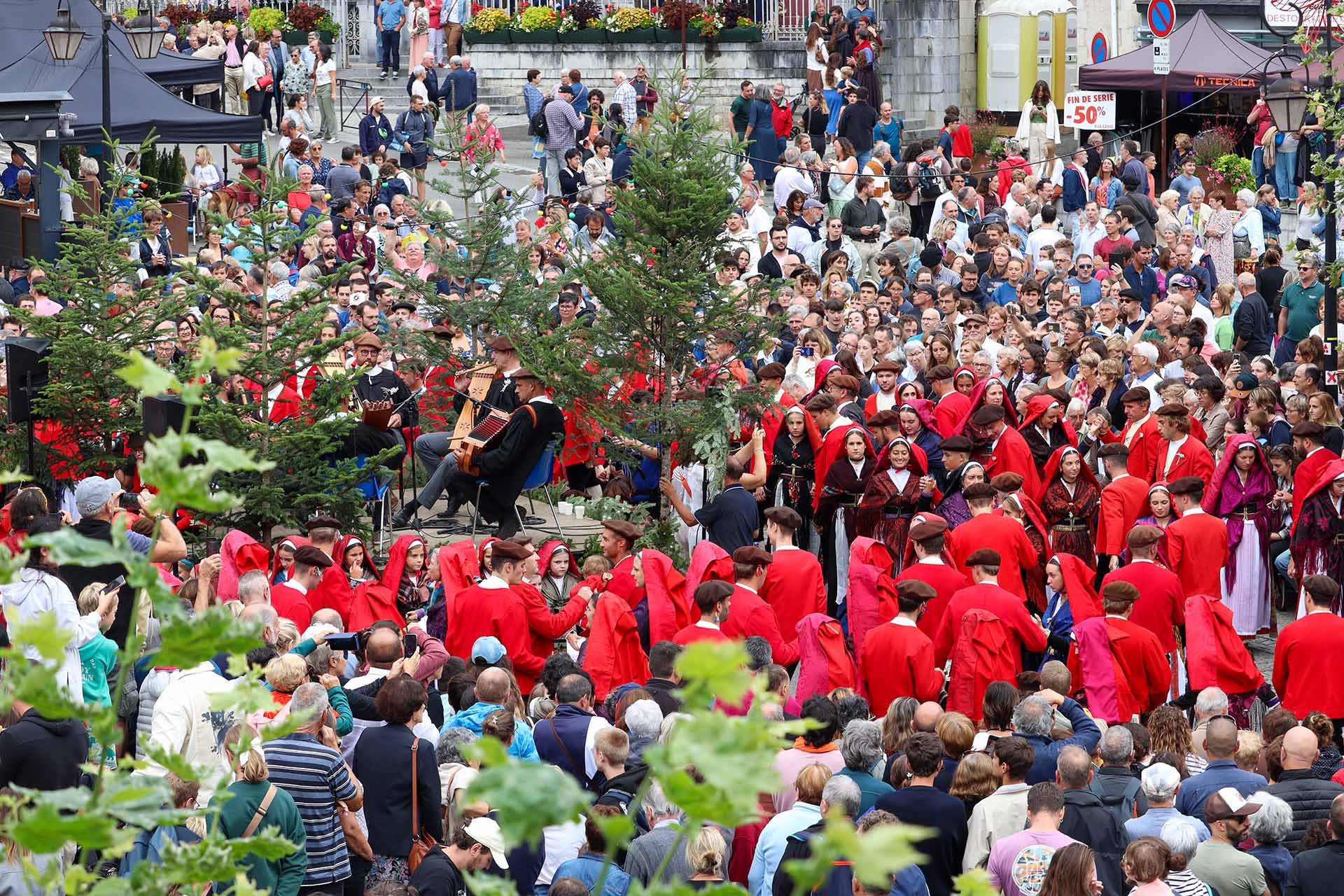
This is followed by the solemn mass, a highlight of the day where Ossaloise costumes take centre stage: black trousers, beige stockings and scarlet jackets for the men, and red silk capelets for the women.
The hymns are often sung in polyphony, reinforcing the spiritual and cultural dimension of the celebration.
Dances and festive processions
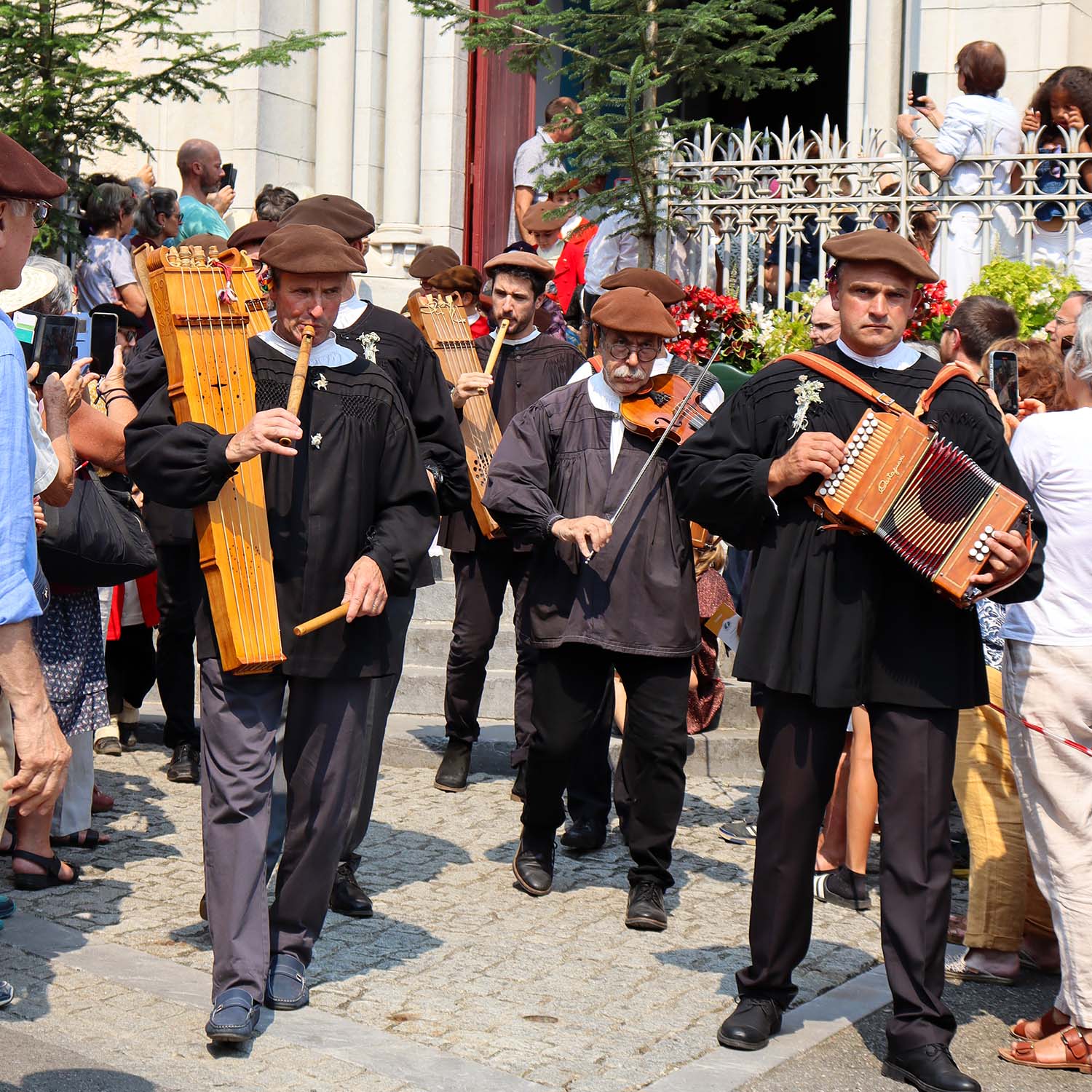
As people leave the church, a procession forms on the church square, led by the musicians. This marks the start of the Ossalois ball, where the traditional dances—the Monein, the Montchicou and the Crabe—are performed first, before continuing with the Baish.
In the evening, the festivities conclude with a street parade (or ‘passe-carrère’) where residents and musicians parade through the streets singing and playing music, converging on the village square in a convivial atmosphere.
The Grand Cantère of Laruns
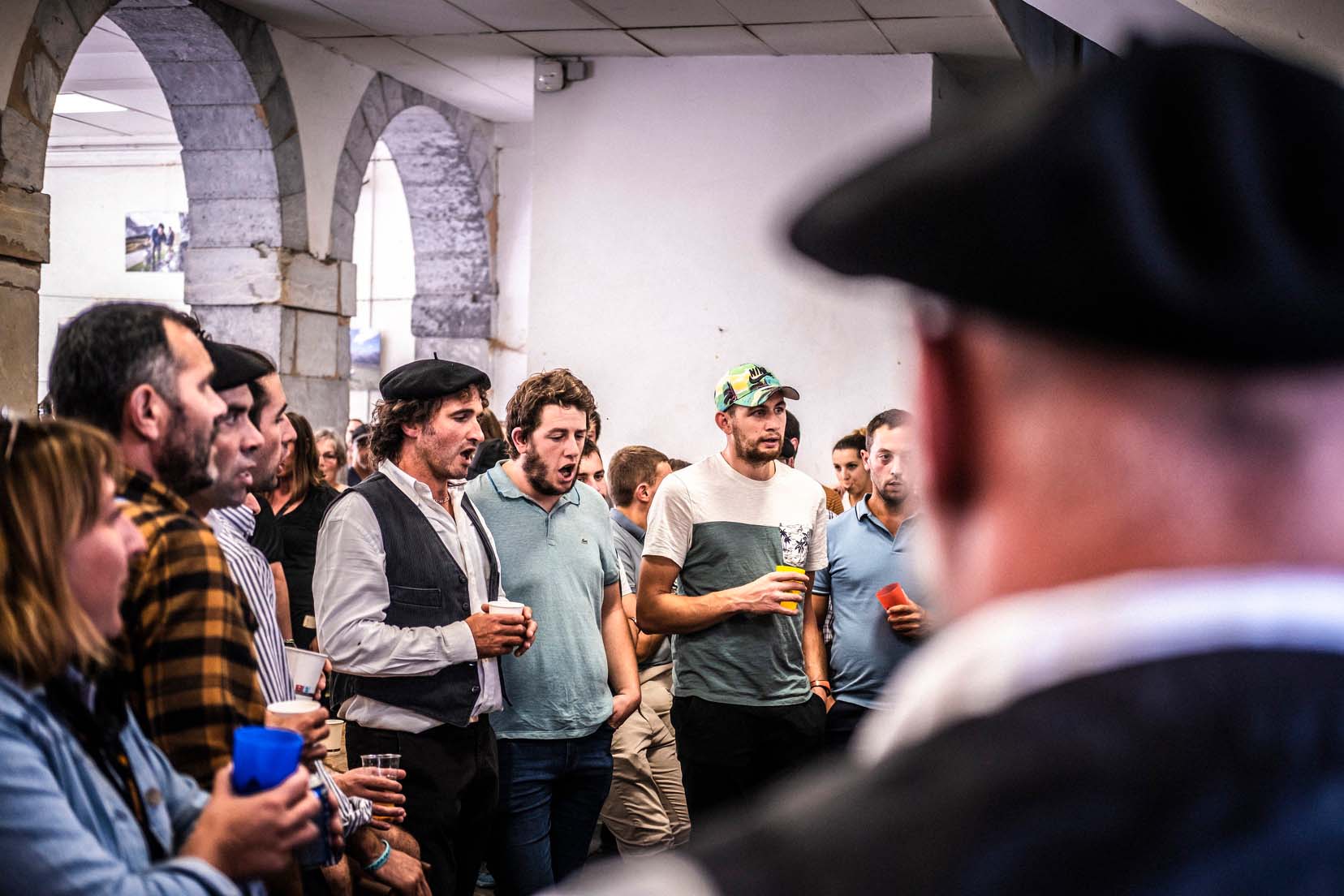
In the early afternoon, during the 15 August festivities, everyone gathers beneath the market hall for the Grand Cantère.
Voices rise in unison to celebrate the reunion and the Béarn identity, before the participants continue the festivities in cafés and homes, without ever stopping the singing.
The valley’s iconic festivals
Certain festivals are particularly representative, notably those of Aas, Bielle, Laruns and Béost, which have managed to retain a strong sense of authenticity.
In Laruns, 15 August marks an iconic moment, as the village becomes the capital of the ‘Pais de las cantes’ (the land of songs).
Traditional instruments of the Ossau Valley
The traditional music of the Ossau Valley is based on a set of iconic instruments, the use of which has been passed down through the centuries. An integral part of local festivals and gatherings, they accompany songs and dances, perpetuating a strong musical identity.
The flute and the tambourine, an ancestral duo
Widespread after the Second World War, the duo of flute and tambourine has retained its most ancient form in the Ossau Valley.
The flute, known as the ‘fleuto’, is a simple instrument steeped in history.
Made from a tube of boxwood, it has three holes and a whistle at the mouthpiece.
Discoveries made in the prehistoric caves of Oxocelaia, in the French Basque Country, suggest that this type of flute dates back to the Neolithic period, making it an instrument of great antiquity.
The tambourine, meanwhile, consists of a long soundbox carved from wood — often maple or fruit trees such as apple, cherry or walnut. Six strings, tuned to a fifth, are stretched across this body. Believed to have originated in the Middle Ages in the Ossau Valley, its construction and playing have been passed down from generation to generation. Today, there are various forms of tambourine, both larger and smaller, particularly in Soule and Upper Aragon.
The combination of these two instruments is known as a ‘tambouri’, and the musician who plays it is called a ‘tambourinayre’.
The violin, a long-standing companion
Present in Béarn since the early 12th century, the violin enriched this traditional ensemble by accompanying the tambourinayre. For a long time, it held an important place in the music of Ossau.
However, its use has gradually declined over time. Since the death in 1949 of Jean-Louis Haure, known as ‘Jean de Naügen’, considered the valley’s last great violinist, this instrument has become increasingly rare in local practice.
The diatonic accordion, a modern innovation
Invented in 1829 in Austria, the diatonic accordion has found its way into many musical traditions across the world. In the Ossau Valley, it first appeared around 1900 and was quickly integrated into existing ensembles, sometimes as a complement to the tambourine-violin duo.
Its popularity is largely due to its ease of use and stable tuning, which does not require frequent adjustments. Gradually, it supplanted the violin in local musical practice, becoming a central instrument in the Ossau repertoire.