Discover the Ossau Valley through the Pyrenees National Park, with its hiking trails around the Pic du Midi d’Ossau, its mountain lakes, and its wild flora and fauna. The Pyrenees National Park
Established on 23 March 1967, the Pyrenees National Park is one of the oldest of France’s eleven national parks.
The only national park situated on the French side of the Pyrenees mountain range, it stretches along the border with Spain, covering six major valleys, from the Aspe Valley in the west to the Aure Valley in the east.
Every year, this exceptional natural area welcomes around 1.5 million visitors who come to discover the richness of its landscapes and biodiversity.
In the Ossau Valley, nearly 8,000 hectares make up the park’s core zone, located entirely in the upper Ossau Valley. This protected area is marked on the ground by boundary stones adorned with a chamois’s head.
In the commune of Laruns, the National Park stretches from south of Gabas to the Spanish border, from the Col d’Ayous to Lake Artouste.
Here, it ensures the protection and management of the natural environment and all its biodiversity, whether it be wildlife, flora, landscapes or remarkable natural sites.
Situated at the crossroads of Atlantic and Mediterranean climatic influences, the Pyrenees National Park boasts a wide variety of natural, cultural and scenic environments. This location fosters a rich diversity of flora and fauna, including numerous endemic and iconic species.
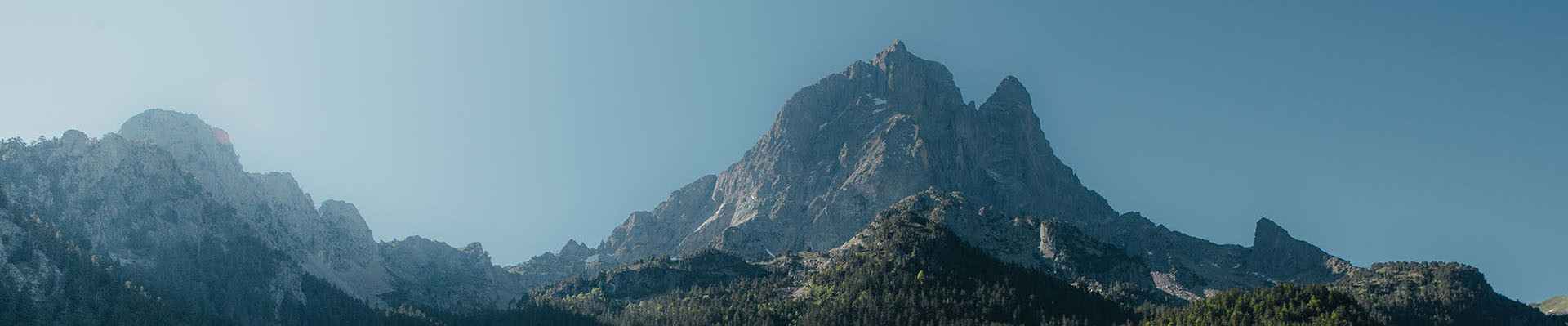
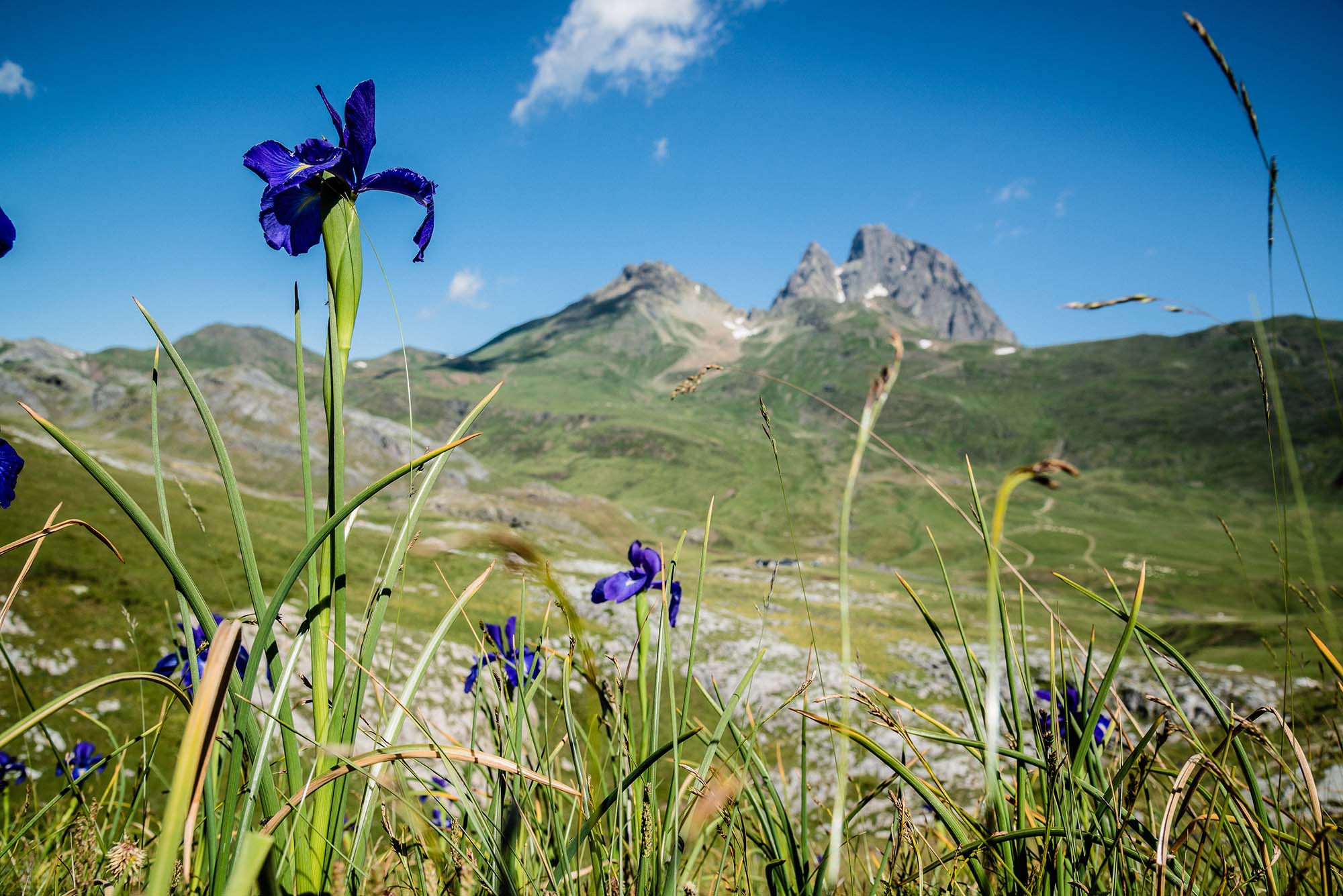
The park’s spectacular landscapes are the result of a long geological history; a mosaic of crystalline and sedimentary rocks, shaped by erosion and ancient glaciations, has given rise to exceptional sites such as the Pic du Midi d’Ossau.
Beyond the protection of this natural, cultural and landscape heritage, the National Park also plays an important role in welcoming and educating the public. It provides information to visitors and organises numerous activities, particularly during the summer season, including guided tours, meet-and-greet sessions with park rangers, exhibitions and events designed to help visitors better understand and appreciate this protected area.
Animals that can be spotted in the Ossau Valley
The area’s wildlife is notable for the presence of many iconic species, some of which have become rare in France and survive today only thanks to the conservation measures put in place.
These include, in particular, the brown bear, as well as several large birds of prey characteristic of the Pyrenees: the bearded vulture, the largest bird of prey in the range, the Egyptian vulture, the griffon vulture and the golden eagle.
Other animals are more frequently spotted by visitors, notably the Pyrenean chamois, a symbol of the Pyrenees, as well as marmots, easily recognisable by their characteristic whistling in the mountain pastures
Birds of prey
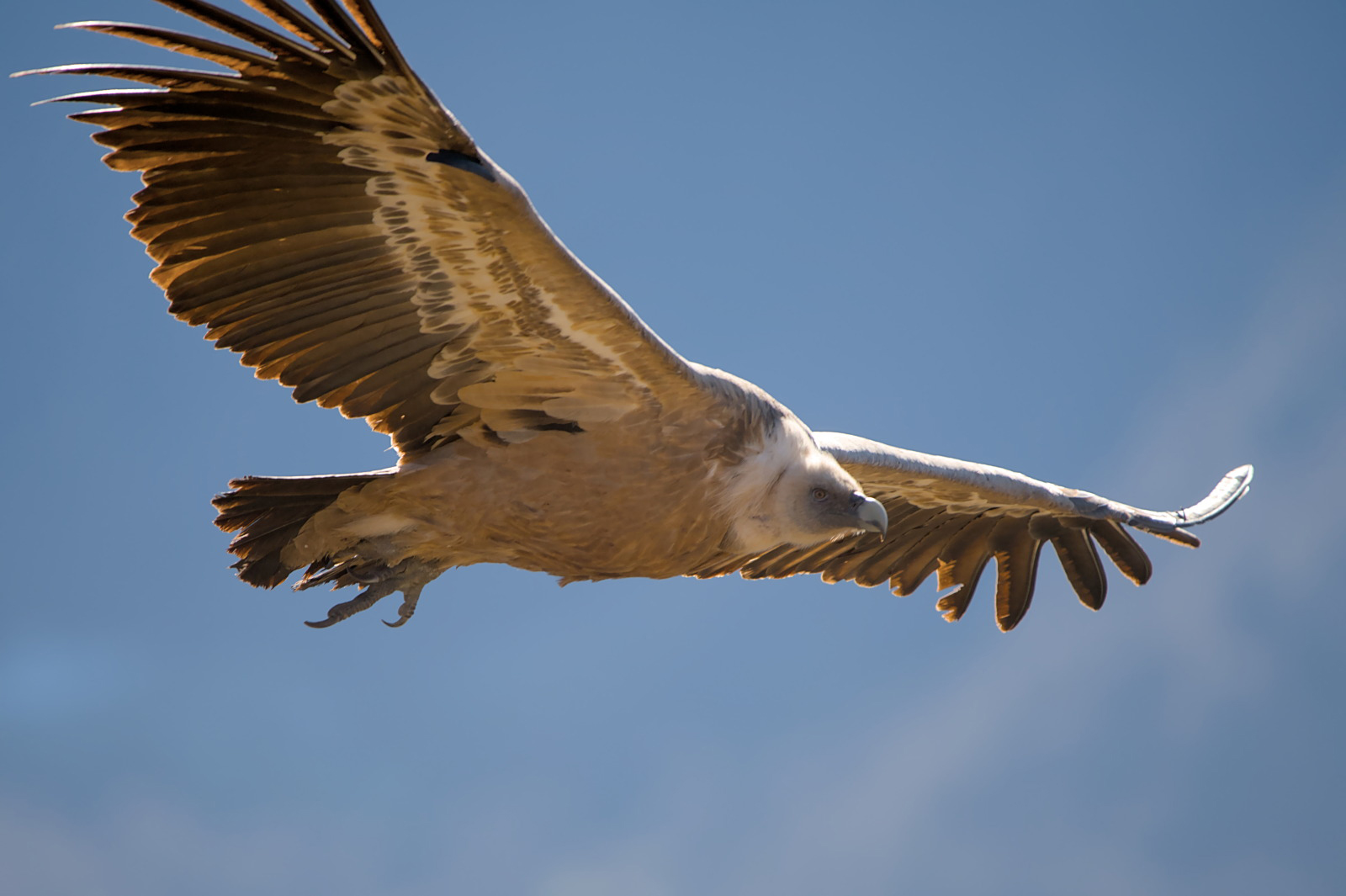
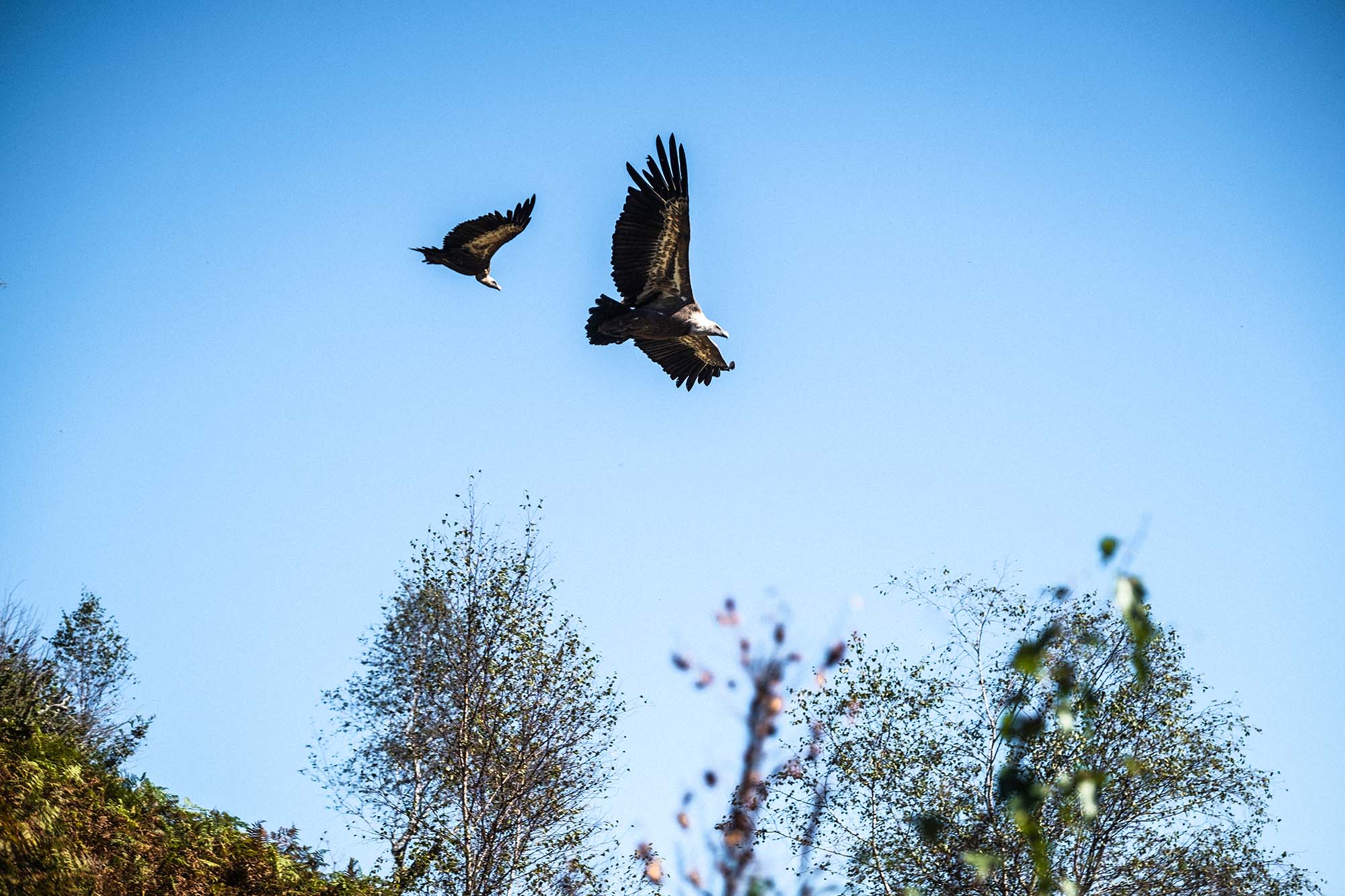
THE GRIFFIN VULTURE
Found in large numbers in the Pyrenees National Park, the griffin vulture is a sedentary species that nests mainly on the cliffs of the Pyrenees.
The Ossau Valley Nature Reserve is home to the largest colony of griffin vultures in France.
This large scavenging bird of prey feeds exclusively on dead animals, whether livestock from summer pastures (cows, sheep, goats) or wild animals.
Thanks to its particularly keen eyesight, it is able to spot carcasses from a great distance and at high altitudes.
By consuming these remains, it plays an essential role in the ecosystem by contributing to the natural disposal of carcasses, both in the mountains and in lowland areas.
With around a third of the French population present within its boundaries, the Pyrenees National Park is one of the species’ main habitats.
Easily spotted due to its large wingspan and impressive gliding flights, the griffon vulture can travel long distances to feed, sometimes up to 20–30 km, even crossing the border into Spain in search of its daily meal.
Weight: 6 kg to 10 kg
Wingspan: 240 cm to 280 cm
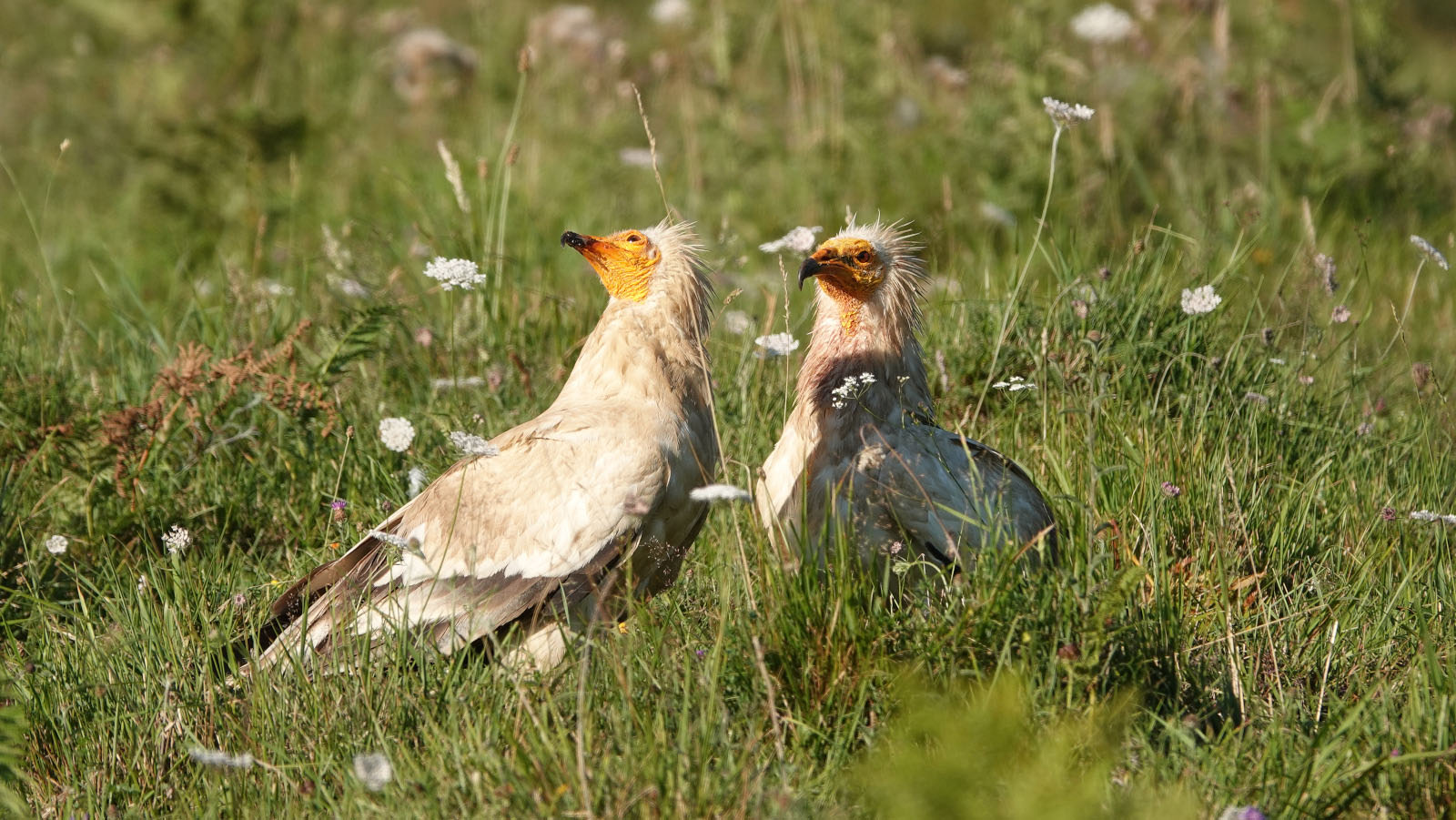
THE EGYPTIAN VULTURE
This is the smallest vulture in Europe, known in the Pyrenees as the ‘Marie Blanque’.
It is a migratory bird found in our region from March to September. It lives in pairs and nests on cliffs. It feeds on animal carcasses and various types of waste.
Weight: 1.6 kg to 2.4 kg
Wingspan: 160 cm to 170 cm
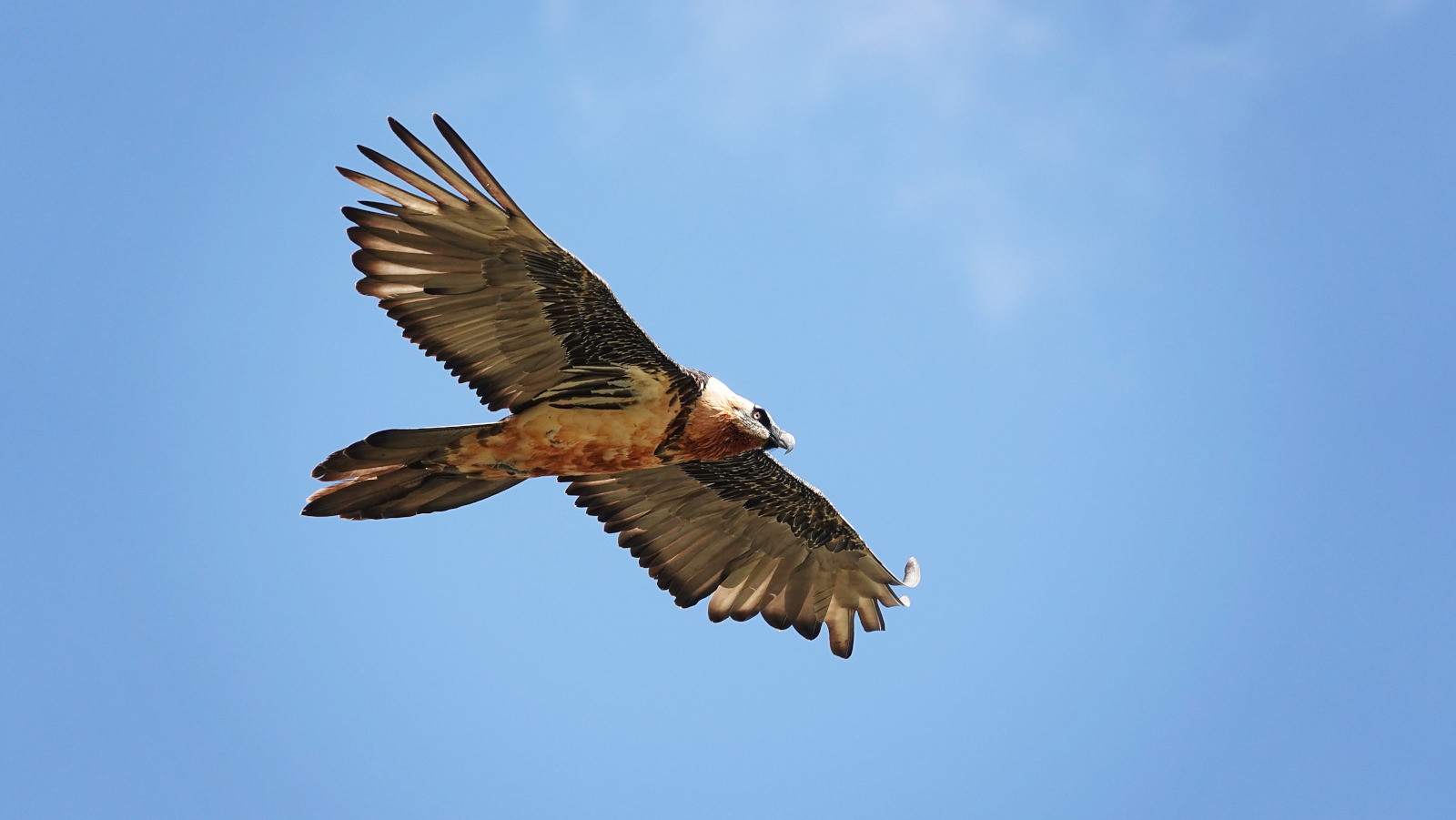
THE BEARDED VULTURE
This is the largest and rarest resident raptor in Europe. It nests in high mountains, preferably on cliffs and rocky faces.
It is an osteophagous bird, meaning it feeds on bones, hence its nickname ‘bone-breaker’.
Its technique involves dropping bones onto scree slopes so that they shatter. It repeats this process as many times as necessary.
It helps to remove carcasses from the mountains and thus performs a sanitary function in the wild.
Weight: 3 kg to 6.5 kg
Wingspan: 260 cm to 300 cm
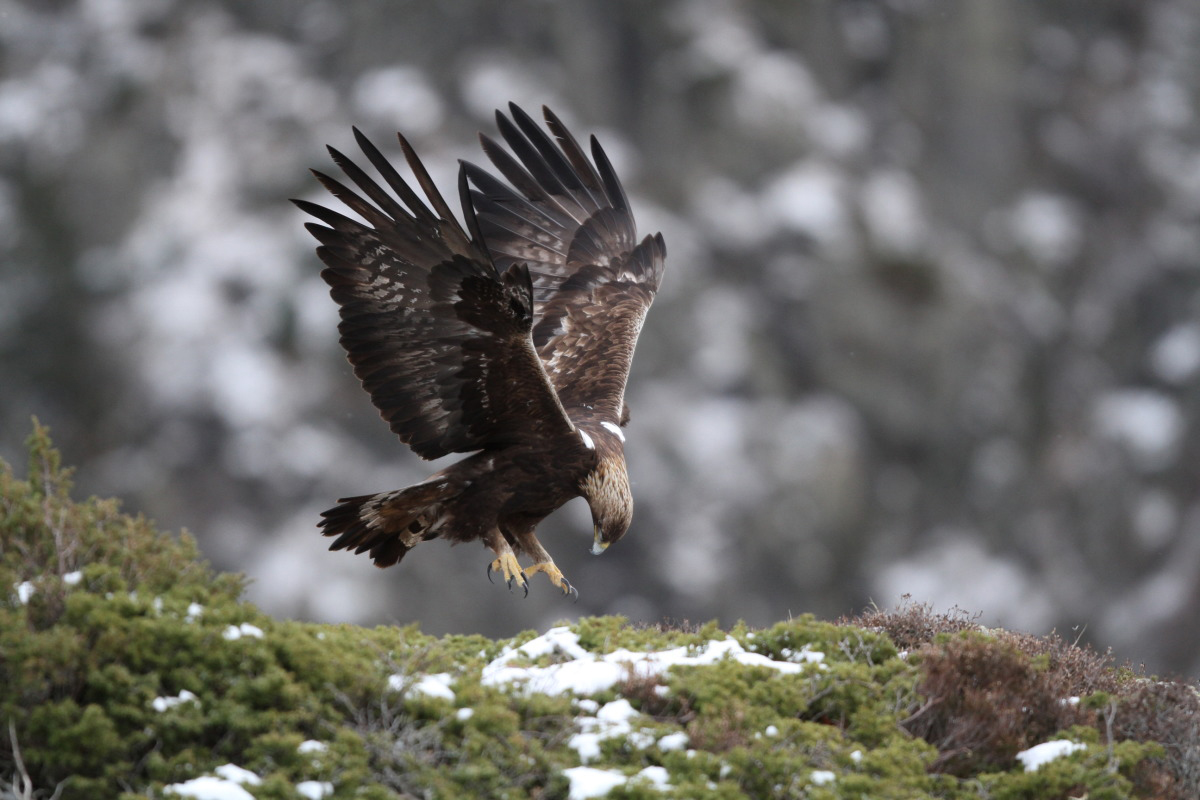
THE GOLDEN EAGLE
It is a sedentary bird and nests in the mountains, where it builds its nests in rocky cliffs. It often hunts by lying in wait at the top of a cliff and then swooping down on its prey, either on the ground or in flight.
It feeds on mammals and birds, which it catches alive or feeds on as carrion.
Weight: 3 kg to 5 kg
Wingspan: 200 cm to 220 cm
THE RED KITE
This is a migratory bird of prey, beautiful and elegant. It nests in trees, where it builds a large nest of twigs.
The red kite feeds on all kinds of living or dead animals: small rodents, amphibians, fish... Most prey is caught by surprise, but it will sometimes chase an insect or a bird in flight.
Weight: 0.800 kg to 1.3 kg
Wingspan: 150 cm to 180 cmMust-sees
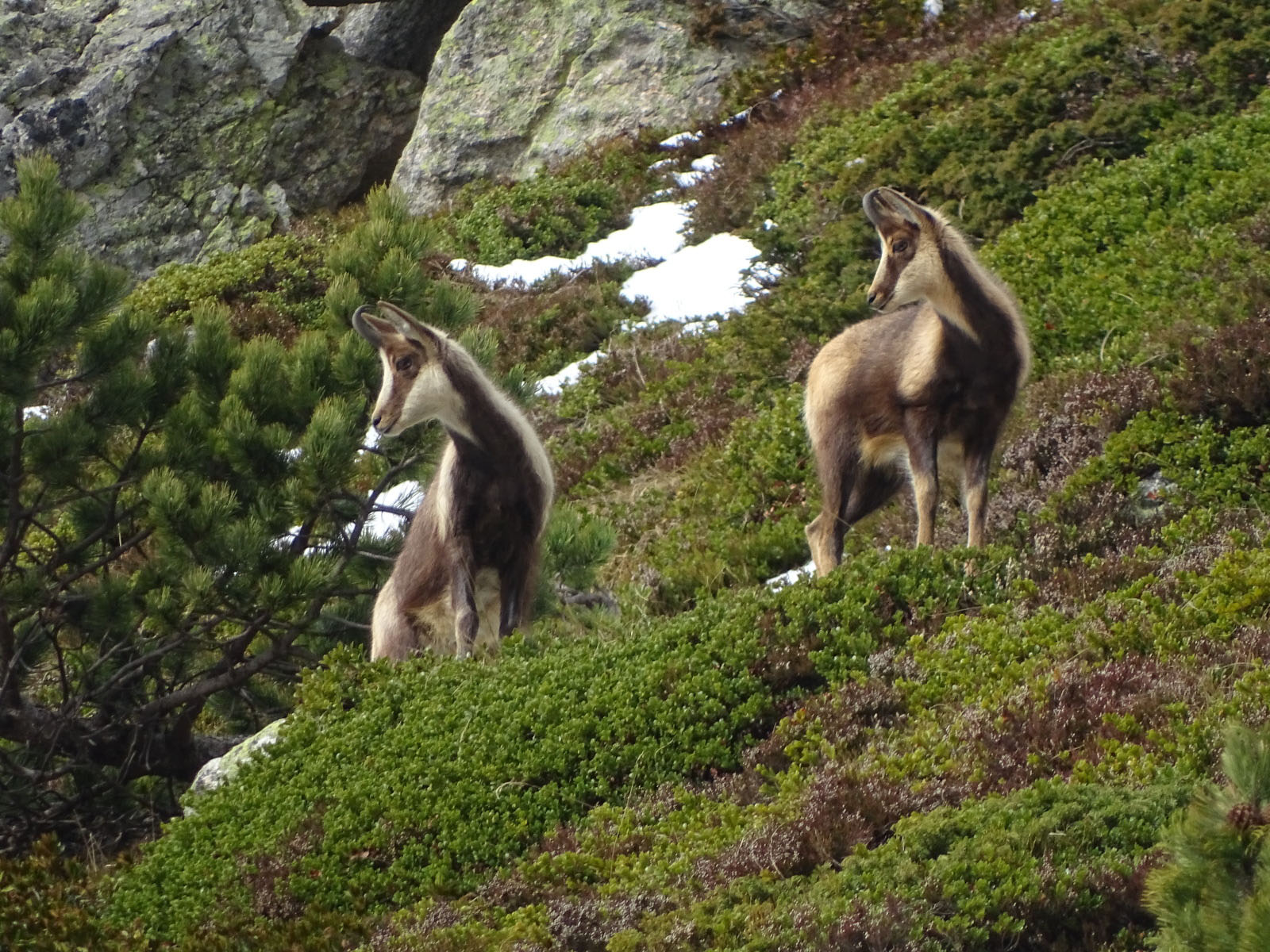
THE ISARD
The isard is a wild mammal that lives in the Pyrenees mountains. It closely resembles the chamois and has small, curved horns.
Highly agile, it moves easily over rocky slopes and cliffs. It feeds mainly on grasses and mountain plants. It can be spotted in protected natural areas such as the Pyrenees National Park.
Weight: 20 to 35 kg
Height: 70 cm
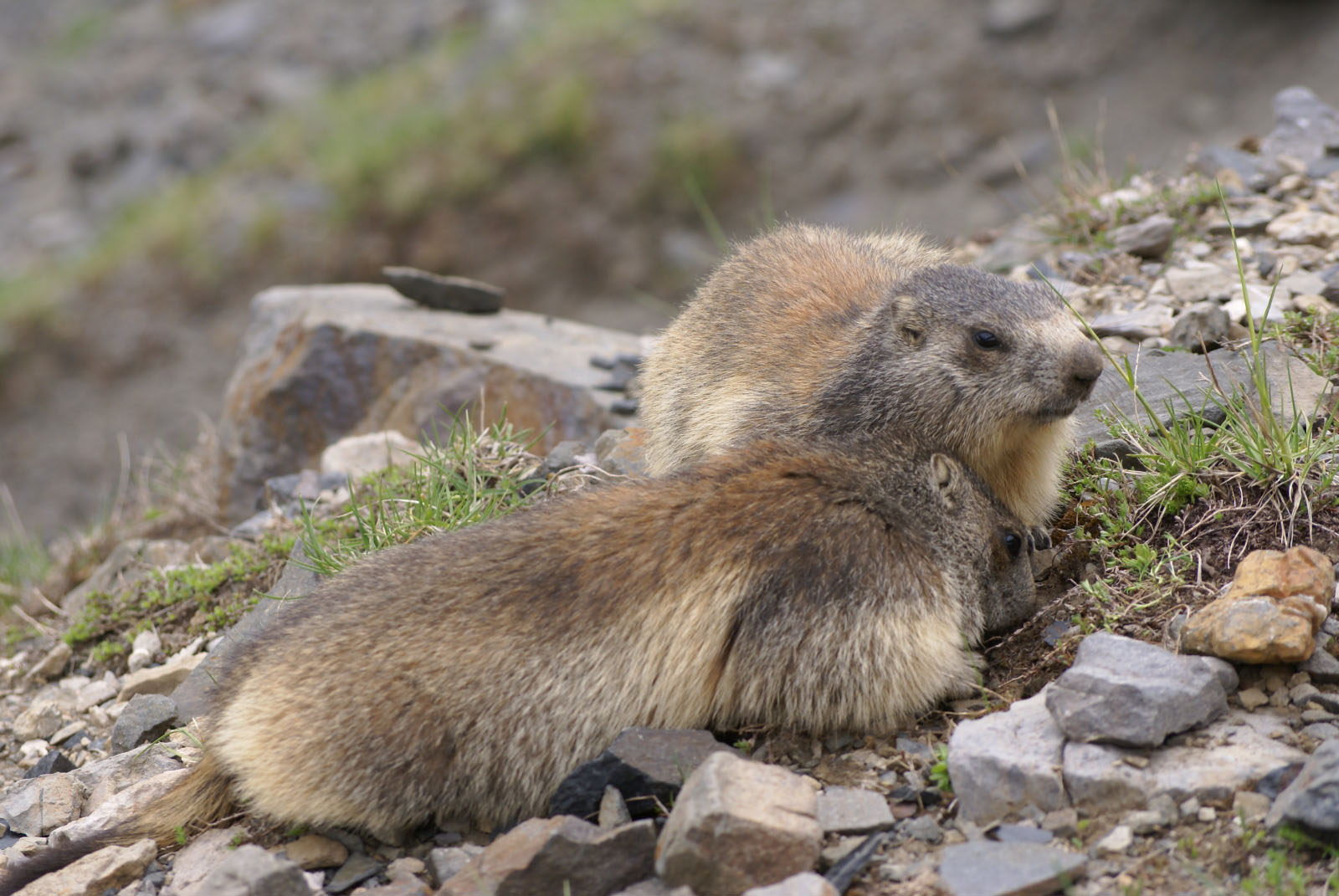
THE MARMOT
The marmot is a rodent that lives in the mountains, particularly in the Alps and the Pyrenees.
It digs burrows in the ground where it lives in groups.
As a herbivore, it feeds mainly on grasses and flowers. In winter, it hibernates for several months in its burrow.
Weight: 2.5 to 5 kg
Size: 50 to 60 cmSmall animals
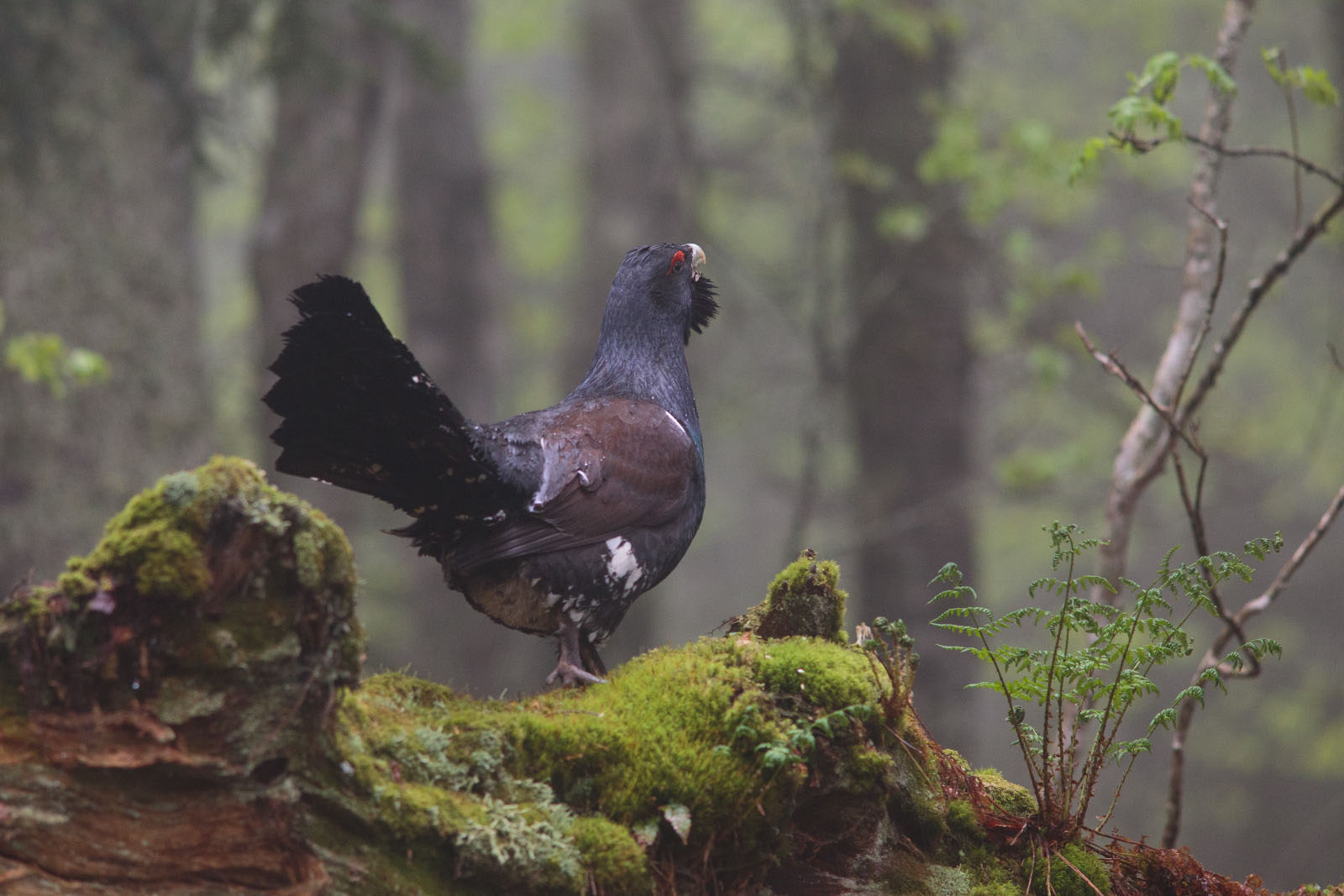
The park is also home to more elusive but equally remarkable species, such as the Pyrenean desman, a small endemic semi-aquatic mammal, the midwife toad, and the Pyrenean newt, an amphibian typical of the Pyrenean streams. The capercaillie, an iconic bird of the mountain forests, can also be found here.
LARGE AND SMALL BAT
The Ossau Valley is home to a wide variety of bat species, which find ideal habitats in barns, cliffs and caves. One such example is the Espalungue Cave in Arudy, which is home to up to several thousand bats.
An animal that deserves our appreciation given its high consumption of insects, particularly mosquitoes, which it is very fond of, feeding on several hundred to several thousand mosquitoes in a single night.
Weight: 20 g to 45 g.
Wingspan: 35 cm to 45 cm.
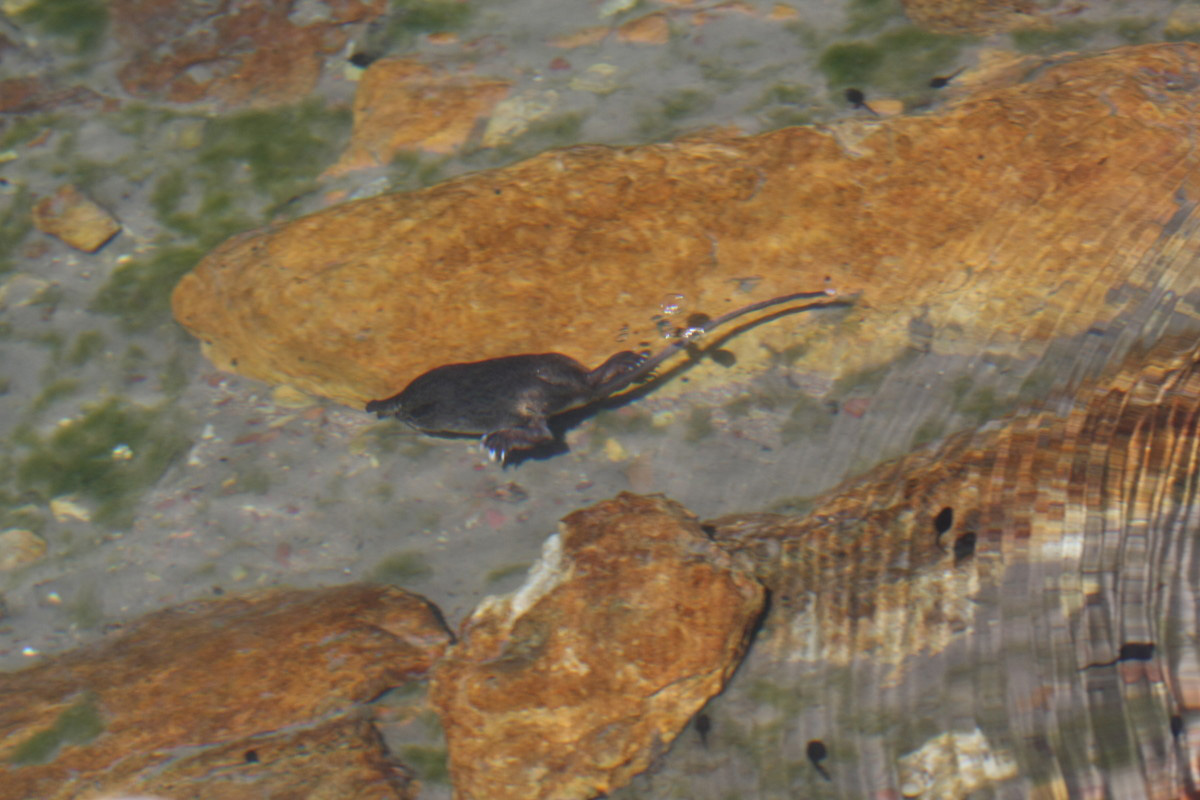
THE PYRENEAN DESMAN
A vulnerable and protected species, the Pyrenean desman lives in high mountains at altitudes of up to 2,200 metres, near small rivers where it digs burrows. It feeds on aquatic larvae and insects carried by the current (mayflies, stoneflies, caddisflies, etc.). The Pyrenean desman is currently at risk of extinction. This is because the insects and larvae on which it feeds are highly sensitive to pollution, and changes in river flow rates observed in the mountains are having a significant impact on its habitat. Nicknamed the ‘trumpet rat’ because of its snout, which it uses to search for food and perceive its surroundings, it is a small, mainly nocturnal mammal, so it is very rare to spot one.
Weight: 50 g to 60 g.
Size: 25 cm long.
GROUSE
A forest dweller, the capercaillie usually inhabits coniferous forests at altitudes ranging from 700 to 2,200 metres. It is in this environment that it finds the pine and fir needles essential for its survival in winter. Highly sensitive to disturbance in winter, the species benefits from increased monitoring by the National Park, which encourages the creation of winter quiet zones to minimise disruption to its habitat.
Weight: 2.5 kg to 4 kg.
Size: 115 cm to 130 cm.
TENGMALM'S OWL
Recognisable by its round head and large yellow eyes, the Tengmalm's owl is not very common in France, but one of its main breeding grounds is in the Pyrenees.
As a strictly nocturnal bird, the Tengmalm's owl is difficult to spot; nevertheless, you can still hear its call at dusk and, with a bit of luck, even in broad daylight. This is, in fact, the best method that the National Park rangers can use to survey the species.
Weight: 100 g to 160 g.
Wingspan: 54 cm to 62 cm.
WALLCREEPER
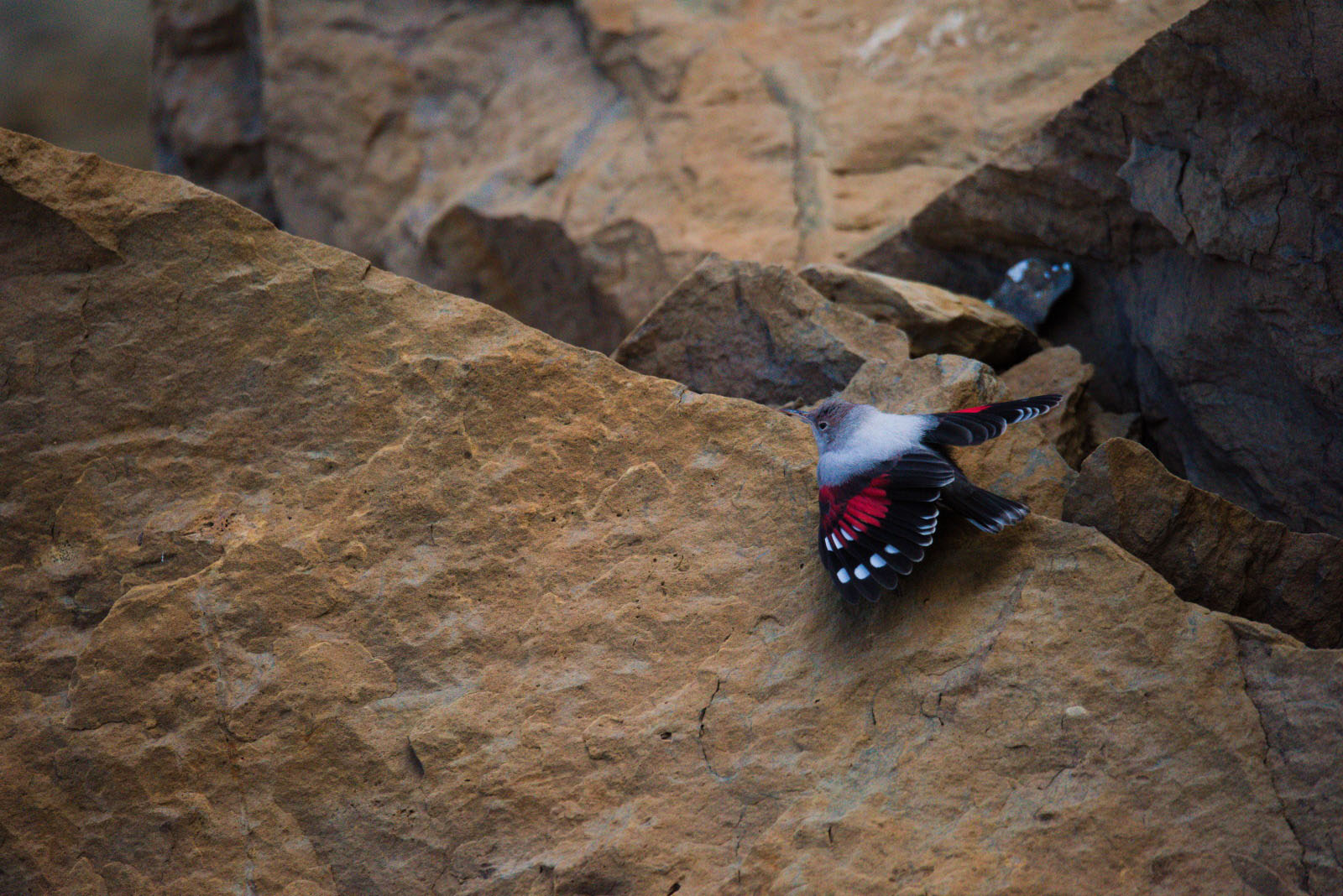
Although rare in the Ossau Valley, the wallcreeper can be easy to spot thanks to the red feathers on its wings, which contrast with its surroundings. An excellent climber, it spends most of its time clinging to rock faces using its long talons, searching for beetles, fly larvae or spiders found in rock crevices. Its erratic flight and bright colours have earned it the nickname ‘butterfly bird’.
Weight: 16 g to 22 g.
Wingspan: 17 cm to 26 cm.
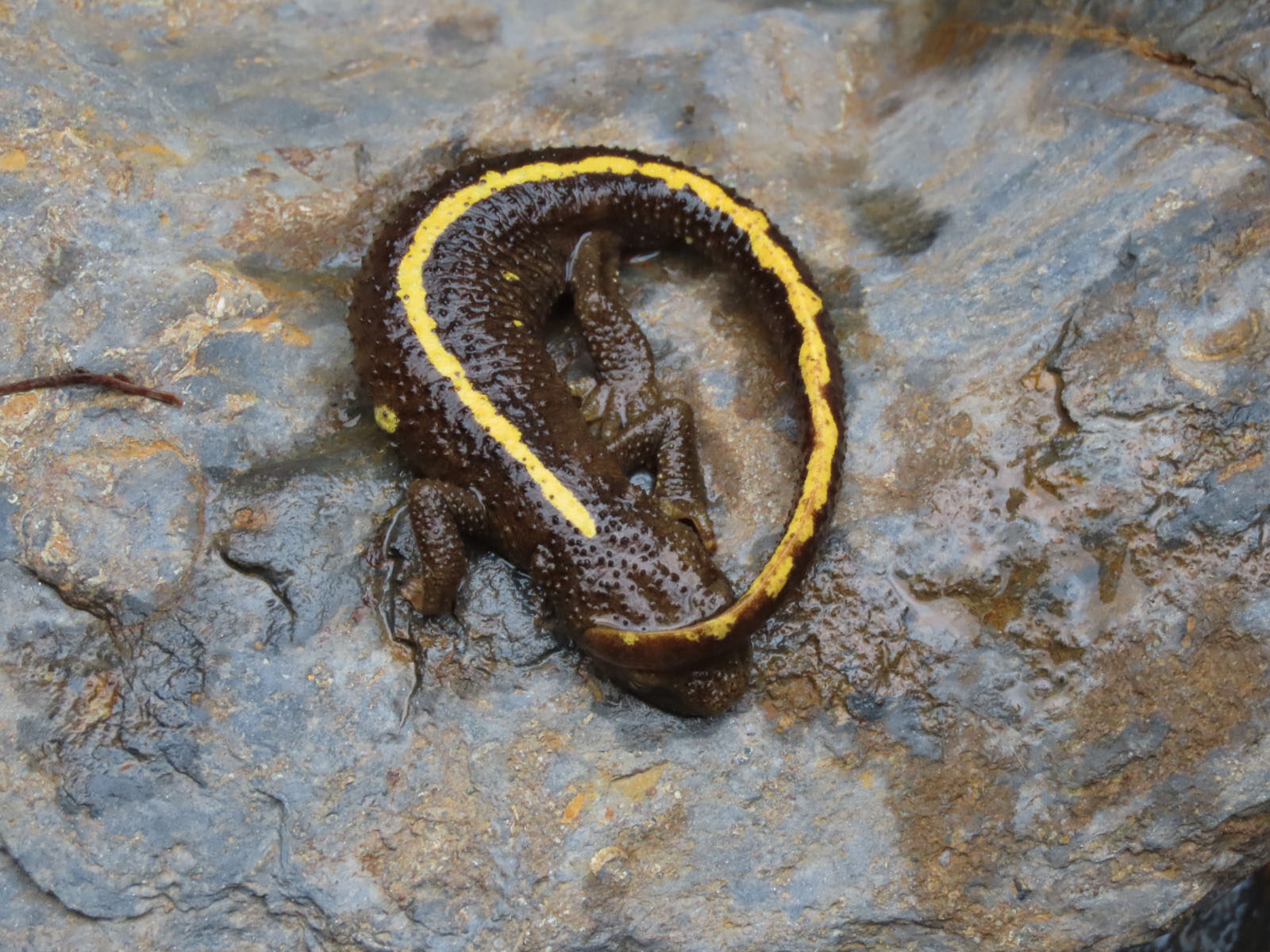
THE CALOTRITON
Also known as the Pyrenean newt, this descendant of the dinosaurs is widespread throughout the Pyrenees and thrives in the cold waters of high-mountain streams. As an amphibian, it is often found on the stony beds of watercourses, where it feeds on crustaceans, molluscs and insects.
With grey skin as an adult, it can easily be mistaken for its cousin the salamander due to the black colour and yellow markings on its skin when young.
Weight: 20 g to 35 g.
Size: 10 cm to 16 cm.The flora we can admire
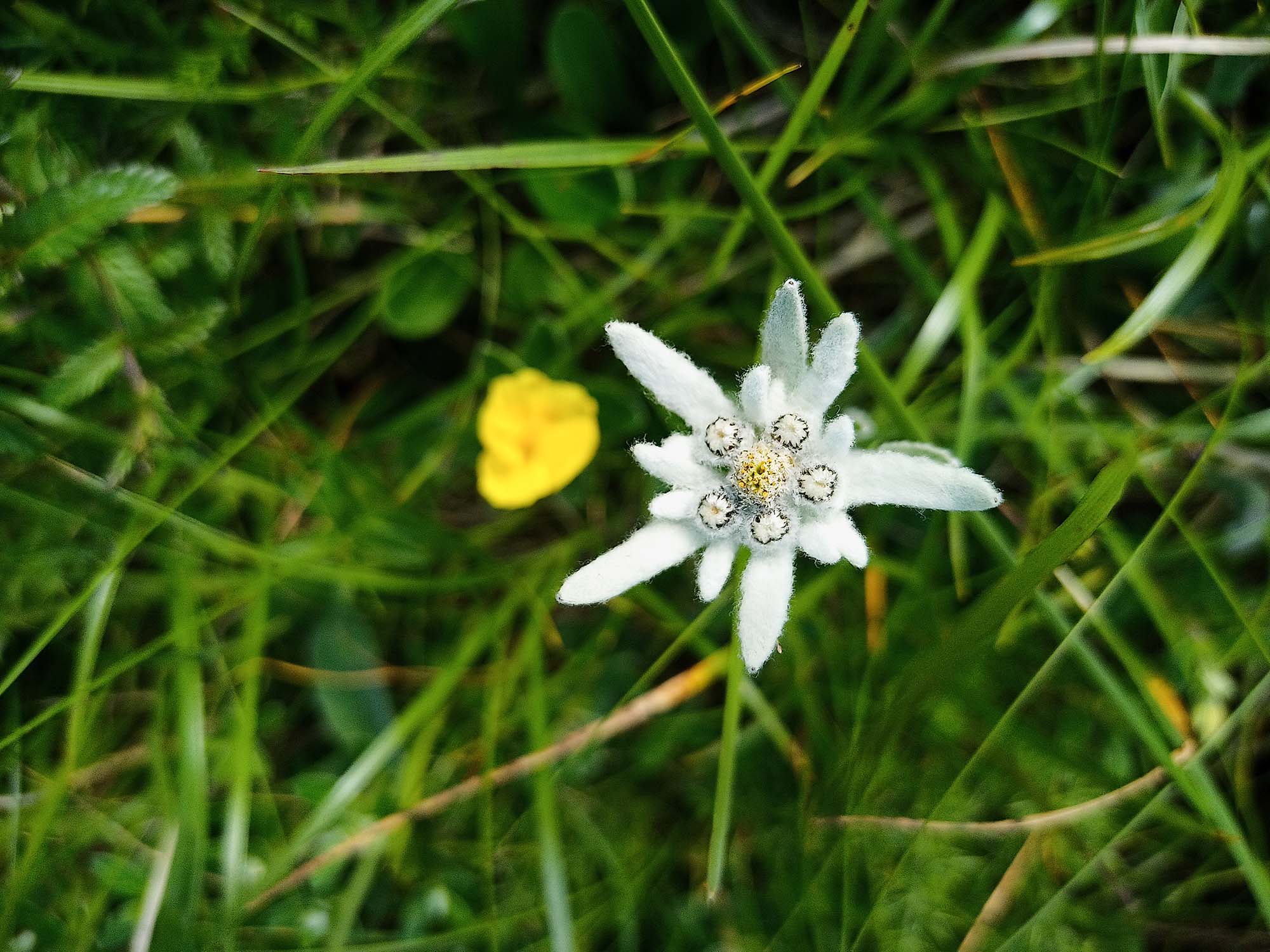
The geological history of the formation of the Pyrenees, combined with the major climatic variations that have characterised past eras — alternating between tropical and glacial periods — has shaped a particularly rich and unique flora. These conditions have encouraged the emergence and preservation of a large number of endemic species, that is to say, species found only in the Pyrenees mountain range.
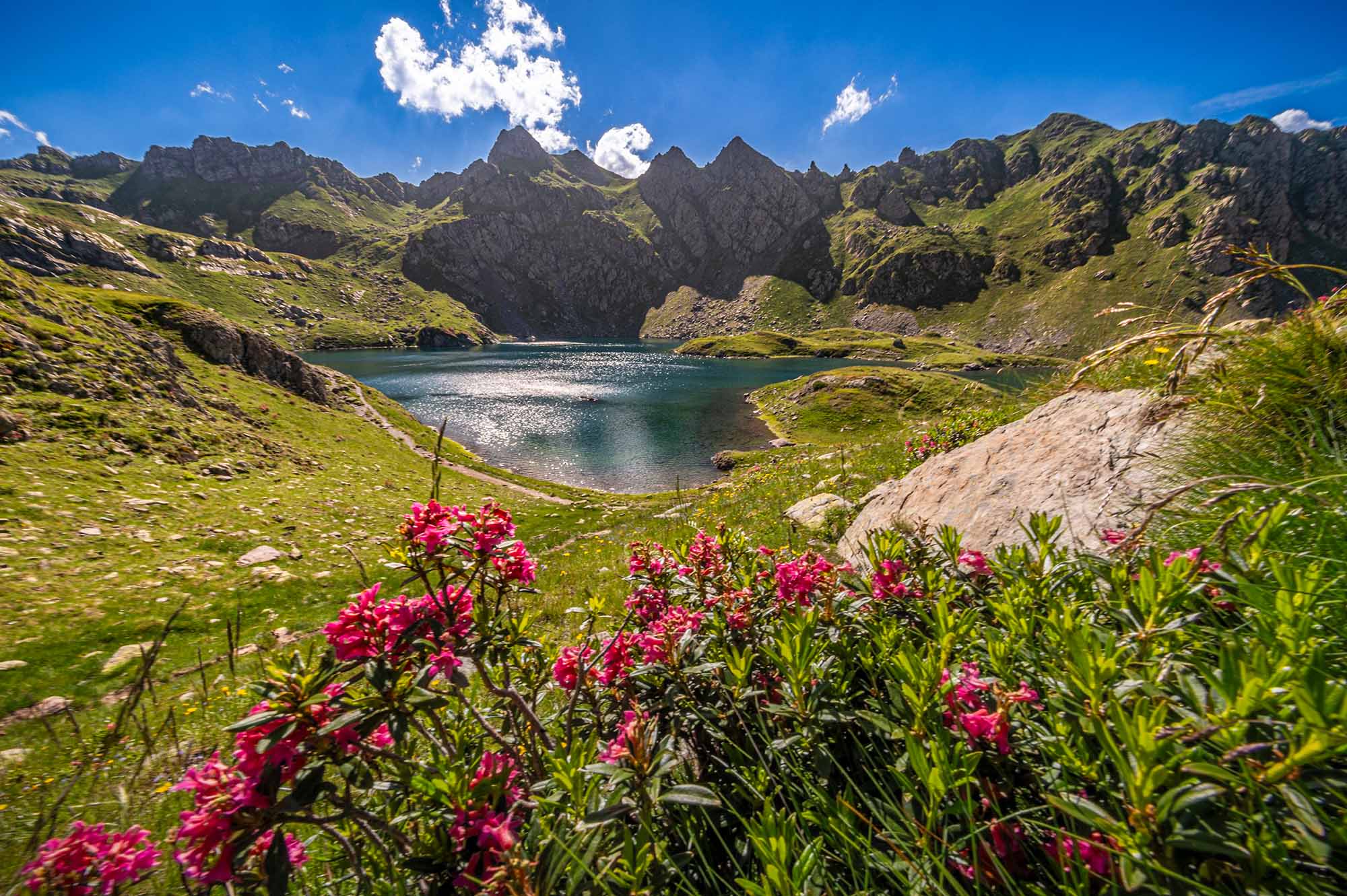
Among these remarkable plants is the ramonde, a true remnant of the warm climates of the Tertiary period. This rare plant is often regarded as a ‘relic plant’, a living witness to very ancient periods in the Earth’s history. Other iconic species also add colour to the mountain landscapes, such as the Pyrenean lily, the rhododendron, which forms vast pink carpets in the high-altitude moors, and the ciliate androsace. The latter has a remarkable ability to adapt to the extreme conditions of the high mountains: it grows in rock crevices and withstands the cold, wind and drought thanks to its compact form, which limits water loss and protects it from harsh temperatures.
Flowering in the mountains follows the rhythm of altitude and snowmelt. In mid-altitude areas, the peak flowering season is generally between June and July, when the alpine meadows are blanketed with a multitude of colourful species. In the high mountains, where snow lingers longer, flowering occurs later and reaches its peak in August, offering particularly spectacular landscapes rich in plant diversity.
The roles of the Pyrenees National Park
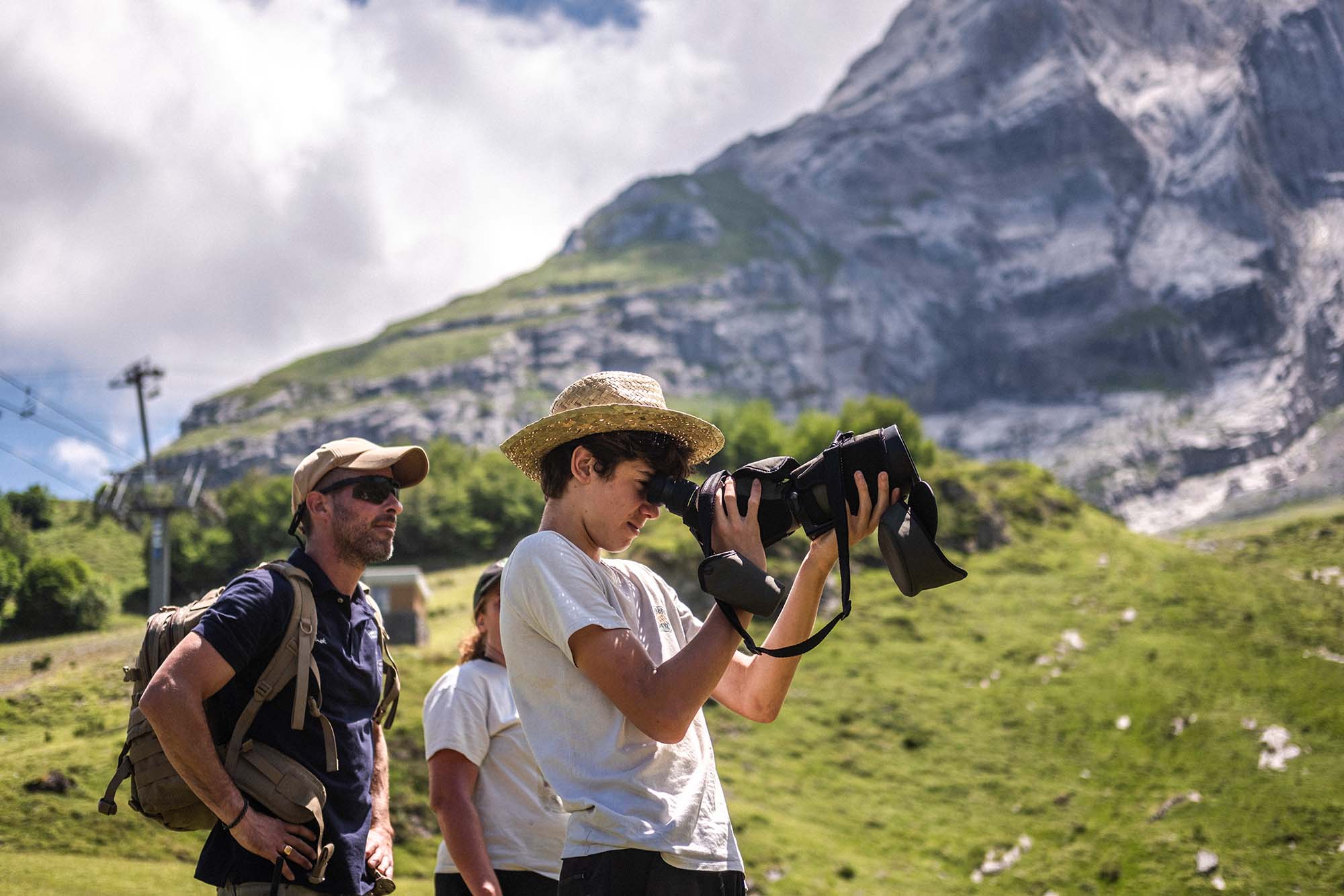
During the summer months, particularly in July and August, the park rangers offer a varied programme of activities designed to help visitors explore the area. These activities enable visitors to gain a better understanding of the park’s natural and cultural heritage through excursions and talks focusing on wildlife, flora and traditional pastoralism. Meet-up points are also organised directly in the field, offering the chance to chat freely with park staff and observe certain iconic species such as birds of prey, marmots or chamois in their natural habitat.
The Laruns National Park Visitor Centre also opens its doors to visitors during the summer season. Here, visitors can explore exhibitions dedicated to wildlife, flora and life at high altitude, as well as film screenings designed to deepen their understanding of this mountain environment. A programme of temporary exhibitions and talks on themes related to the area’s nature, culture and heritage is also on offer.
The National Park also offers a wide range of hiking opportunities thanks to its many kilometres of well-maintained or signposted trails. These routes allow visitors to explore varied landscapes and discover the natural treasures of the Ossau Valley.
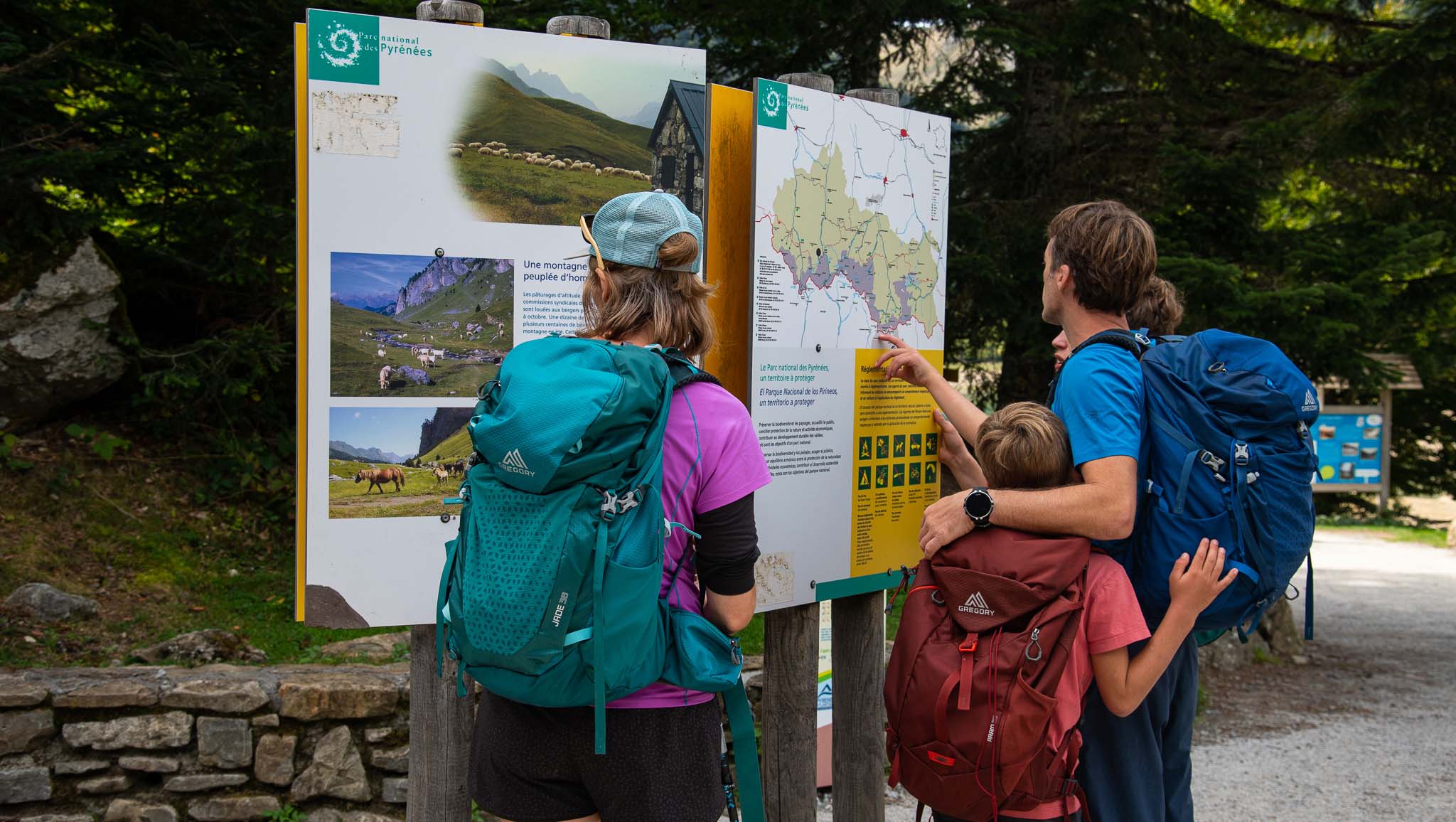
Whilst this area is freely accessible to all, it remains, above all, a protected natural area subject to specific regulations designed to preserve its flora, fauna and landscapes. As such, certain activities are prohibited, such as bringing dogs (even if kept on a lead), picking plants, carrying weapons, littering, lighting fires, camping, the use of motor vehicles and mountain bikes, as well as paragliding and other aerial sports.
The National Park is therefore a place open to exploration, but it also relies on respect for simple rules, guided by common sense and consideration for others and for nature, in order to sustainably preserve this exceptional natural heritage.
Rules for the Pyrenees National Park
- No dogs, even on a lead: to ensure the peace and quiet of both wild and domestic animals (only sheepdogs are permitted).
- No picking or collecting: animals, plants and fossils are part of the landscape.
- No weapons: all animals are protected here.
- No camping or campervans: to preserve the beauty of the sites and prevent pollution.
- No fires: to prevent fires and soil degradation.
- Regulated bivouacking: permitted more than an hour’s walk from the park boundaries or a road access point. Tents must be dismantled between 9.00 am and 7.00 pm.
- Bivouac areas in the core zone of the National Park are marked out or prohibited around certain mountain huts. You can also ask the hut wardens to specify the locations.
Please do not hesitate to enquire at the Tourist Offices, as certain mountain areas may be subject to restrictions during the summer season.
- No vehicles: this area is best explored on foot; traffic is prohibited outside authorised routes (including mountain bikes). In the Ossau Valley, only the Brousset track (Pont de Camps) is accessible by mountain bike.
- No noise or disturbance: for everyone’s peace and quiet.
- No drones
- No paragliding or other aerial sports: flying within 1,000 metres of the ground is prohibited to ensure the peace and quiet of the wildlife.
Key responsibilities
At the initiative of schools in the valley, the gamekeeper regularly works with pupils, incorporating educational projects on nature into the curriculum.
He also works with sixth-form colleges specialising in land-use planning, nature interpretation, environmental assessment, and so on.
For example, they supervise work to reopen mountain pastures and improve the habitat of the capercaillie, or train secondary school pupils in the census of chamois and vultures.
In summer, the rangers meet with tourists twice a week at the information points in Bious-Artigues and Anéou, where they chat with them, share their knowledge and spark their curiosity about the valley’s natural, cultural and landscape heritage.
- Knowledge of flora and fauna
Protection requires understanding. The park ranger participates in numerous scientific studies, particularly concerning species such as flora, the desman, the bearded vulture, the chamois, the ibex, the bear...
Park rangers are commissioned and sworn in, which enables them to enforce National Park regulations within the core zone. They are also authorised to record offences relating to hunting, fishing and the environment more generally. They also take part in joint operations with the gendarmerie, the OFB (French Office for Biodiversity) and the ONF (National Forestry Office).
- In addition to these three core responsibilities
The gamekeeper is responsible for maintaining the trails, installing signage and liaising with other mountain users, such as shepherds, hunters, mountain hut wardens and hikers. Within their area, they are tasked with recording damage caused by large predators to livestock and patrol their territory on foot in summer and on skis in winter.