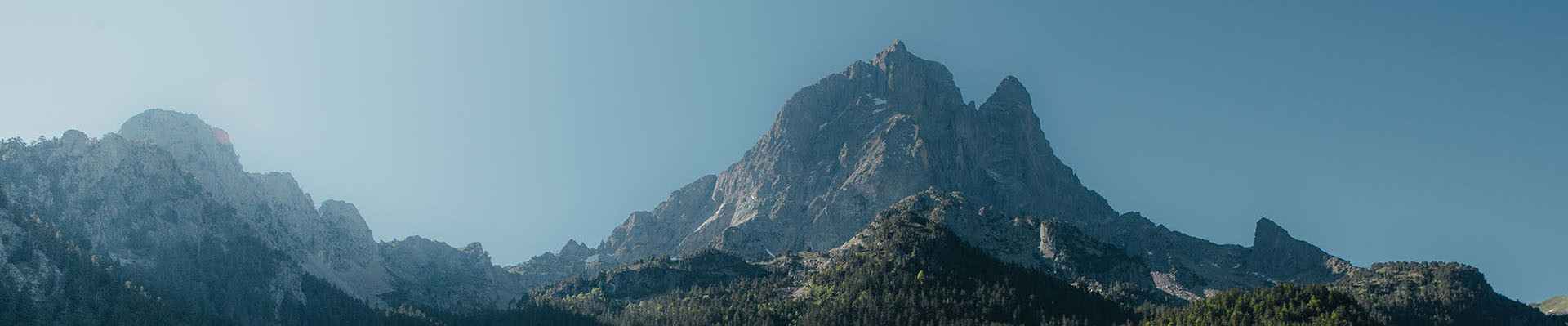
Sévignacq-Meyracq, a first viewpoint overlooking the valley
Sévignacq-Meyracq, a village born from two historic entities
Sévignacq-Meyracq arose from the merger of two former secular abbeys, those of Sévignacq and Meyracq, which were officially united in the 19th century to form a single commune (although as early as the Middle Ages, these two territories already formed a single community, as evidenced by a document from 1414).
The origin of their names is thought to date back to the Gallo-Roman period, referring to the estates of landowners named Sabinus and Macer, or to features of the local landscape, such as dense vegetation and wet land. To avoid any confusion with another commune of the same name, the official name of Sévignacq-Meyracq was adopted in 1866.
Situated on a terminal moraine, the village offers one of the finest views over the Ossau Valley.
This privileged position provides sweeping panoramic views of the surrounding countryside.
In the past, an inscription even invited travellers to take a break: ‘au soum, me répaüsi!’ (‘at the summit, I rest’).
To the north, near Rébénacq, the Bains de Secours district nestles in a green valley.
A rich religious and territorial history
Following the French Revolution and the reorganisation of parishes, Sévignacq and Meyracq were merged into a single religious entity. The parish priest then served both churches until the mid-20th century, illustrating the enduring ties between the two communities.
Over the centuries, several noble families and lay abbots succeeded one another in Meyracq, playing an important role in the organisation and management of the area.
A rich and varied architectural heritage
The village preserves many reminders of its past.
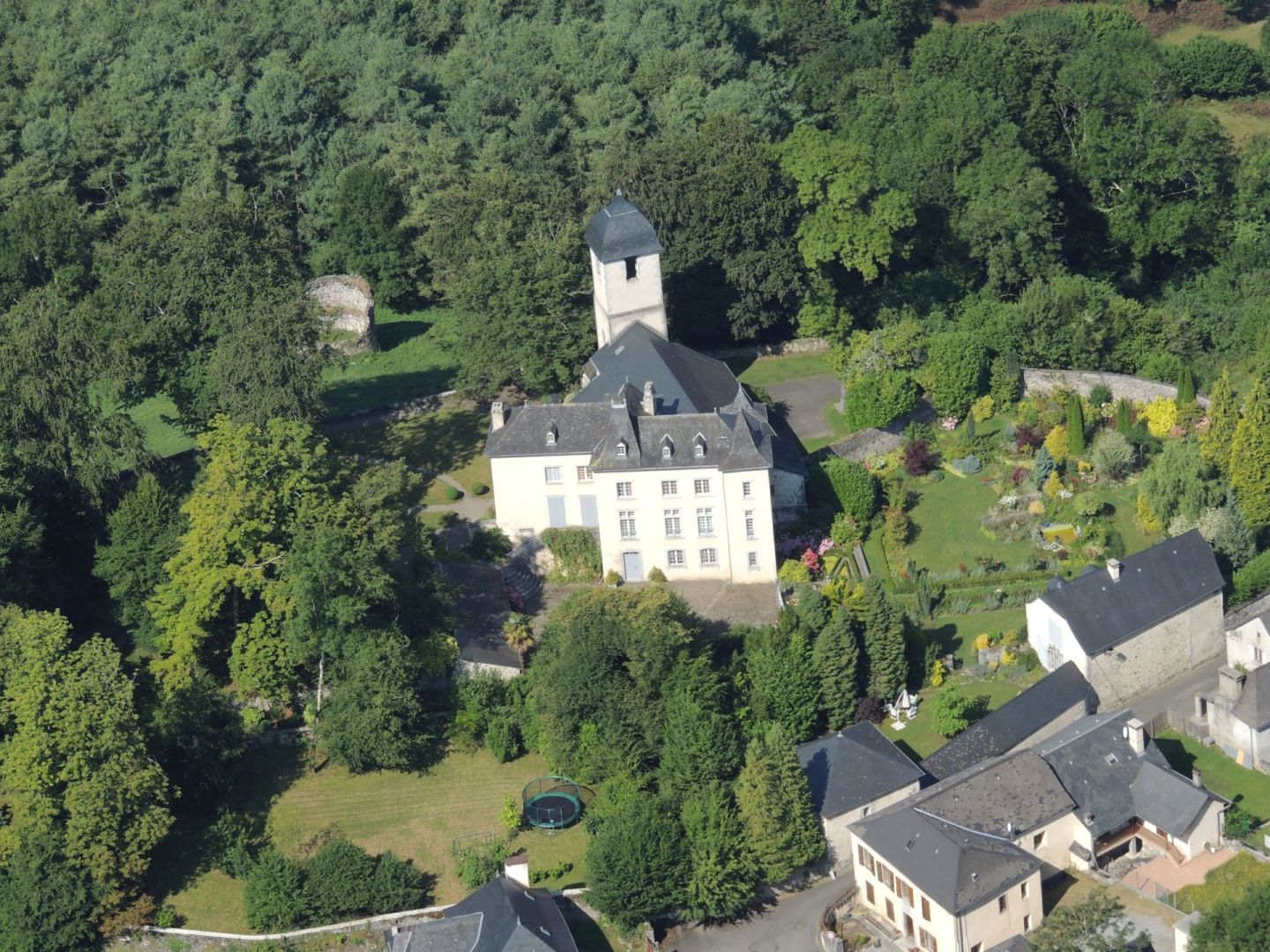
In Sévignacq, the 17th-century Étigny Castle stands adjacent to Saint-Pierre Church, forming a closely linked architectural ensemble.
Saint-Pierre Church
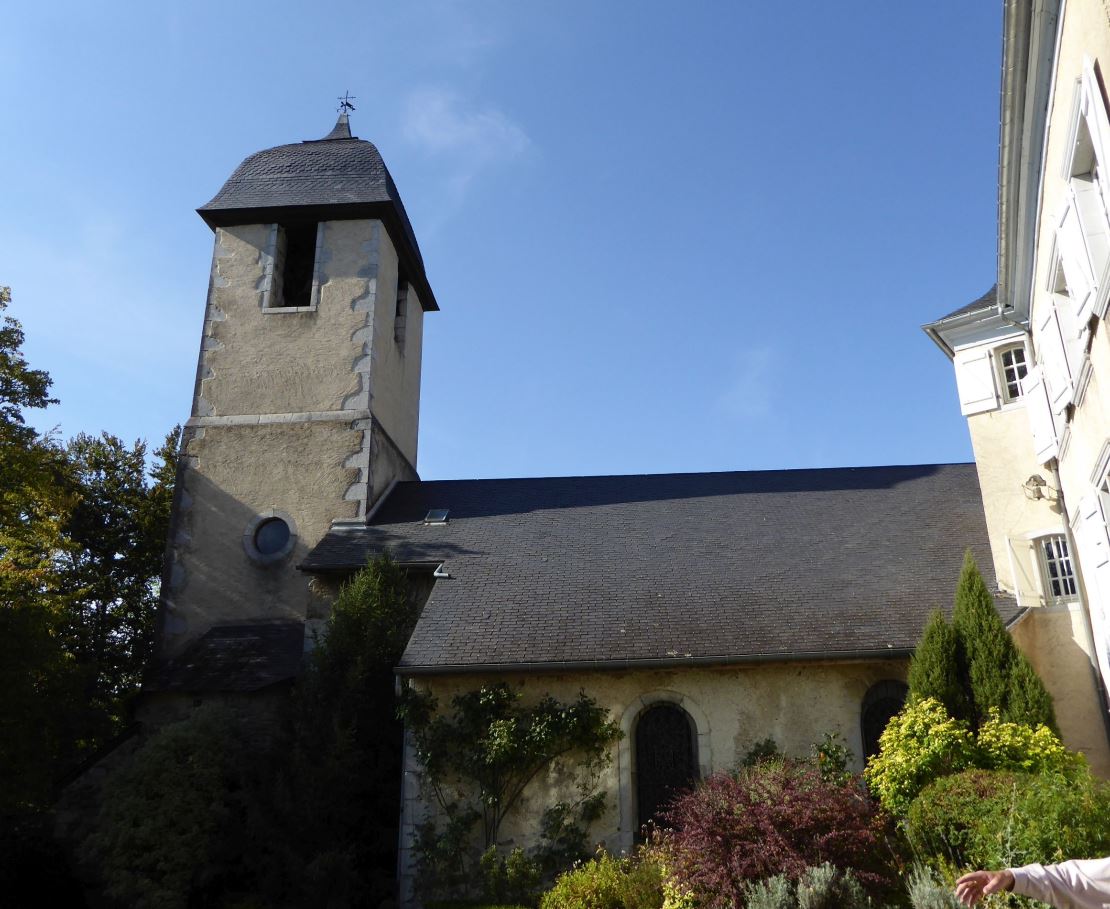
Saint-Pierre Church, rebuilt in the early 17th century and listed as a ‘Historic Monument’ since 1997, features a distinctive bell-tower porch, beneath which important moments in community life—such as oaths, agreements or rituals of entry into the Church—once took place.
Inside, the nave, simple and elegant, rests on ashlar stone structures. The older sacristy is a remarkable example of Gothic architecture with its ribbed vault. The church also houses fine decorative features, such as a gilded wooden altarpiece and an 18th-century statue of the Virgin and Child.
Saint-Saturnin Chapel
In Meyracq, the former Saint-Saturnin Chapel (now privately owned) stands in a picturesque setting. Probably founded in the Middle Ages, it enabled the hamlet’s inhabitants to worship locally. Dedicated to Saint Saturnin, an important figure on the pilgrimage to Santiago de Compostela, it bears witness to the influence of the Way of St James routes in the region.
Druon Castle
Druon Castle (private property), built in 1877 by Fernand Druon, reflects the influence of the chalet-style architecture that was in vogue in the late 19th century.
Once surrounded by extensive grounds, it has had several owners over the years before being used, in the mid-20th century, as a holiday camp.
Today, the renovation of its grounds showcases remarkable century-old trees, including a giant sequoia, one of the most imposing in the Ossau Valley.
Since 2018, it has been possible to stay overnight in this château.
Numerous 16th- and 17th-century Béarn-style houses complete this heritage complex.