The Ossalois costume, an important part of tradition The traditional Ossau costume
Traditional costumes vary from one valley in the Béarn region to another.
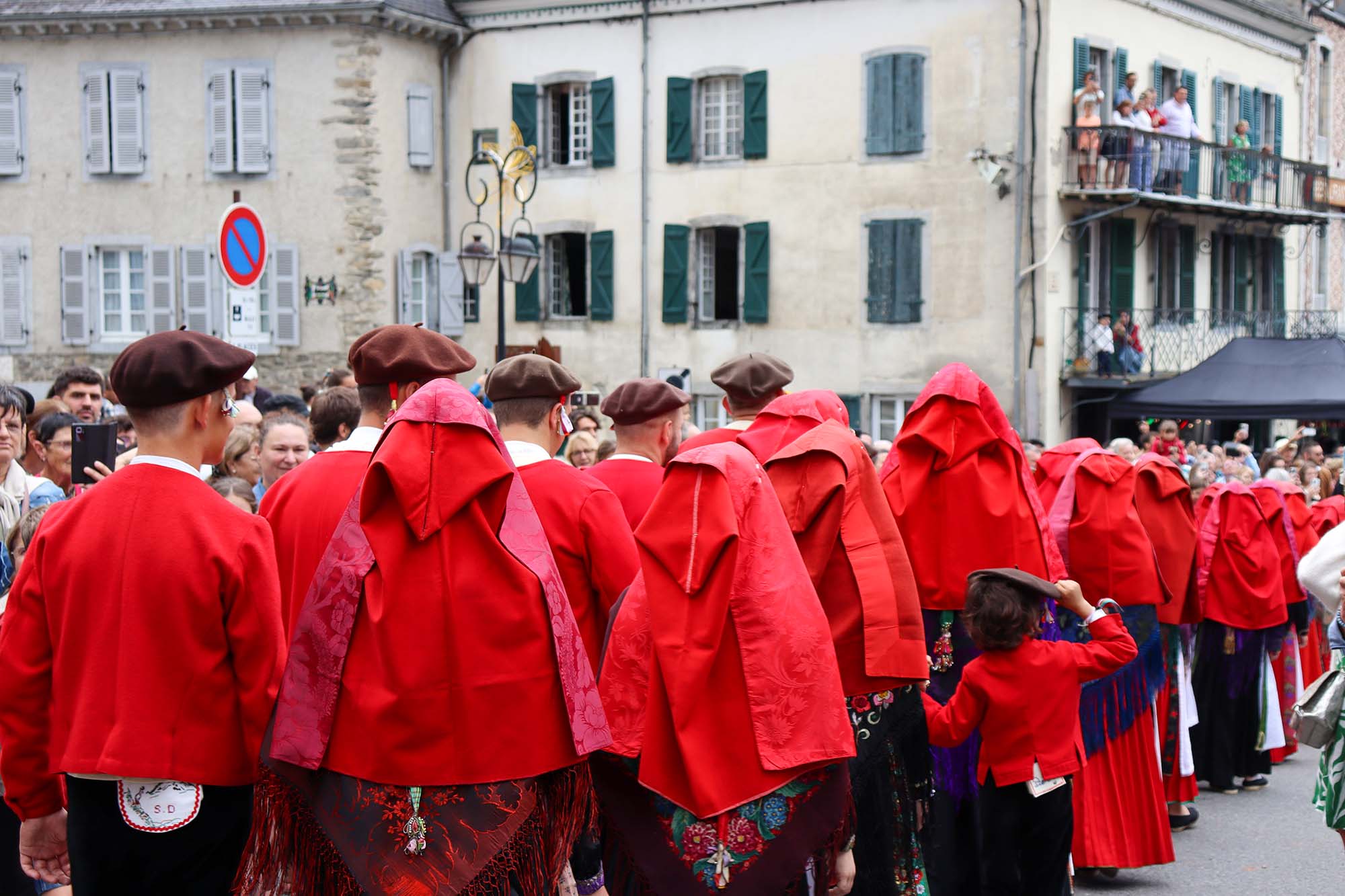
In the Ossau Valley, the traditional costume is distinguished by its richness and vibrant colours. It is, in fact, considered one of the most beautiful and remarkable in the French Pyrenees.
Over the centuries, it evolved in line with local fashions before gradually becoming established from the late 19th century onwards.
Until the early 20th century, it was still commonly worn, particularly among the peasantry, at patron saint’s festivals, weddings (the last woman from Ossau to marry in traditional costume did so in 1945 in Laruns) and at certain religious ceremonies, such as processions.
Today, these costumes are worn only during traditional village festivals.
Women’s traditional dress
The traditional dress of the women of Ossau is particularly elaborate and rich in symbolism.
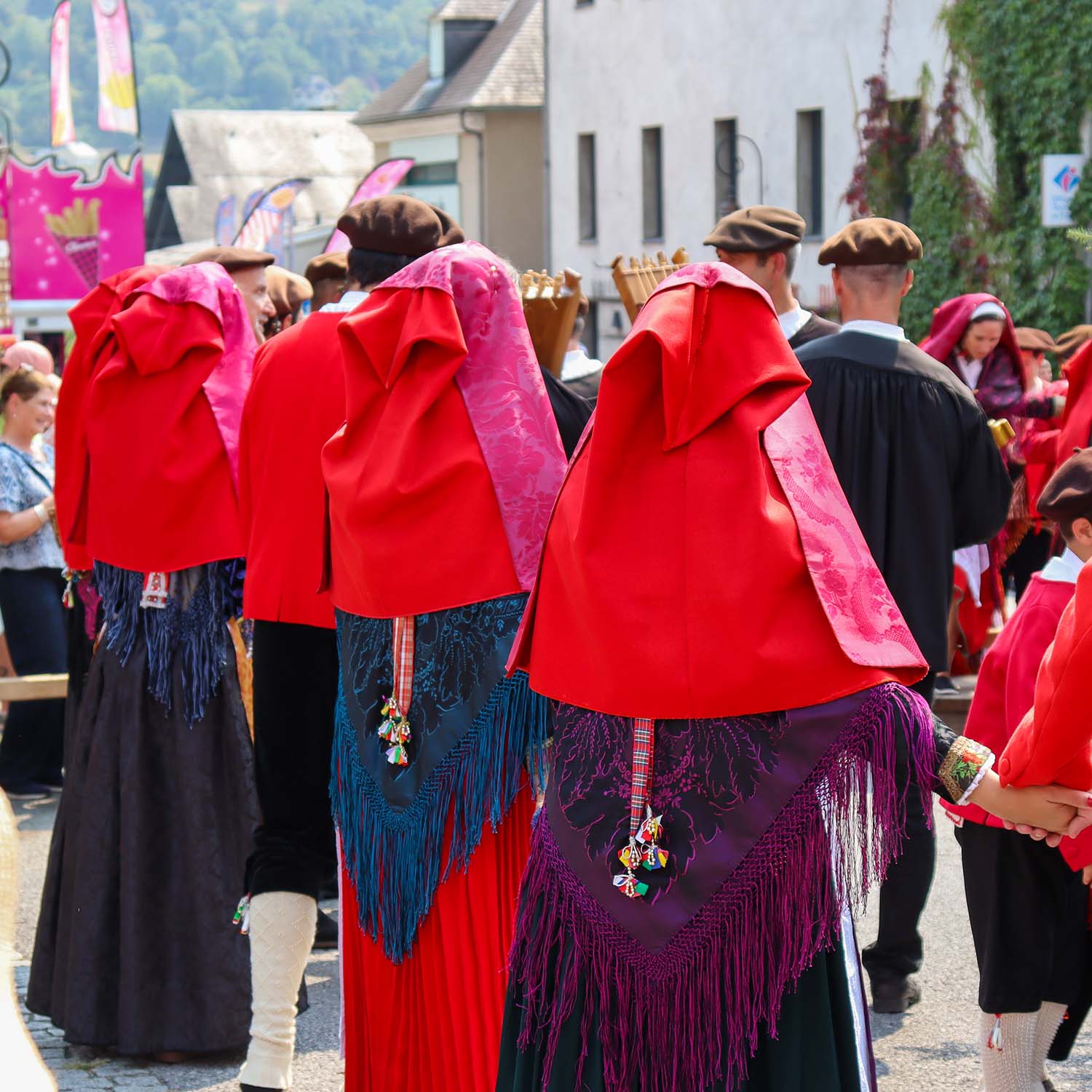
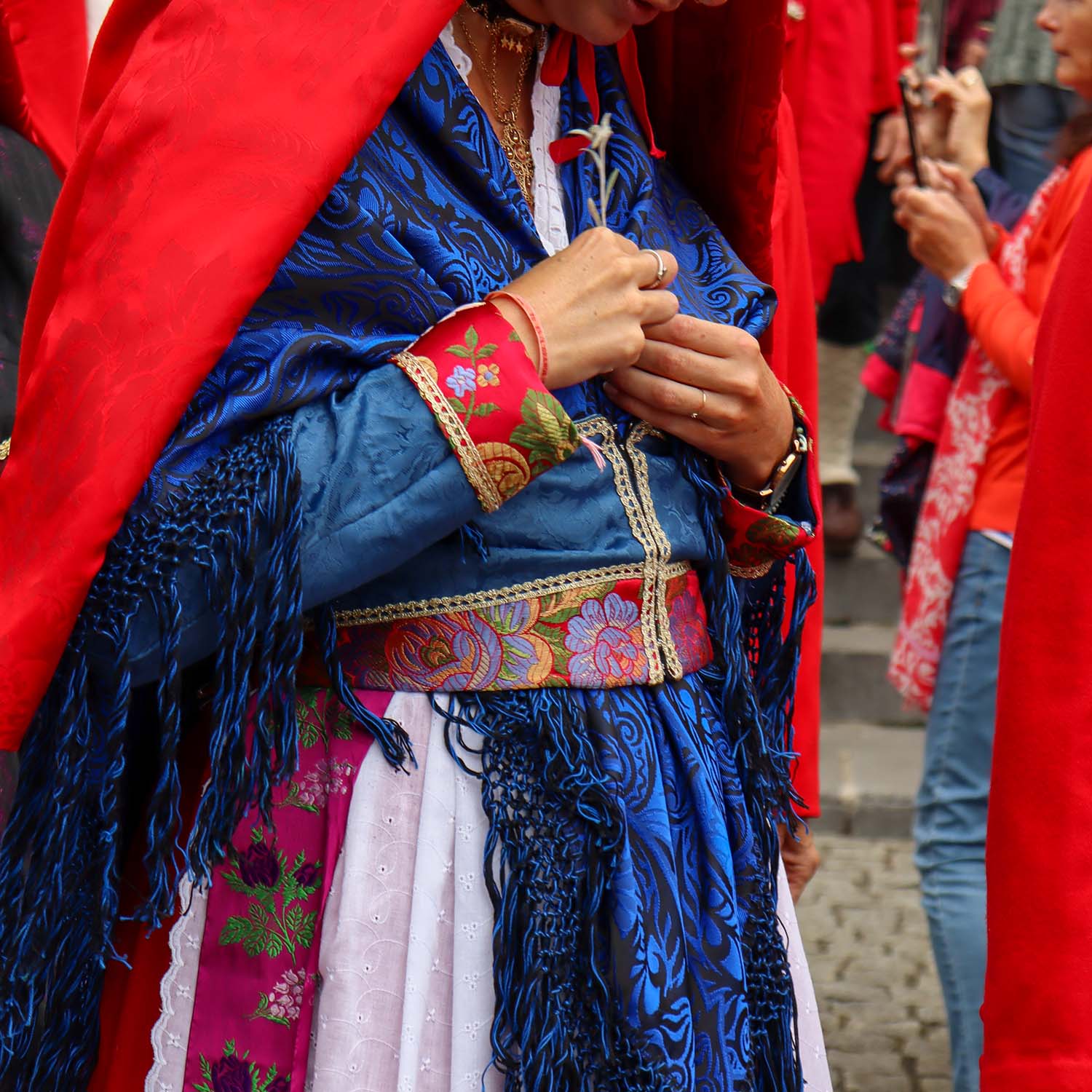
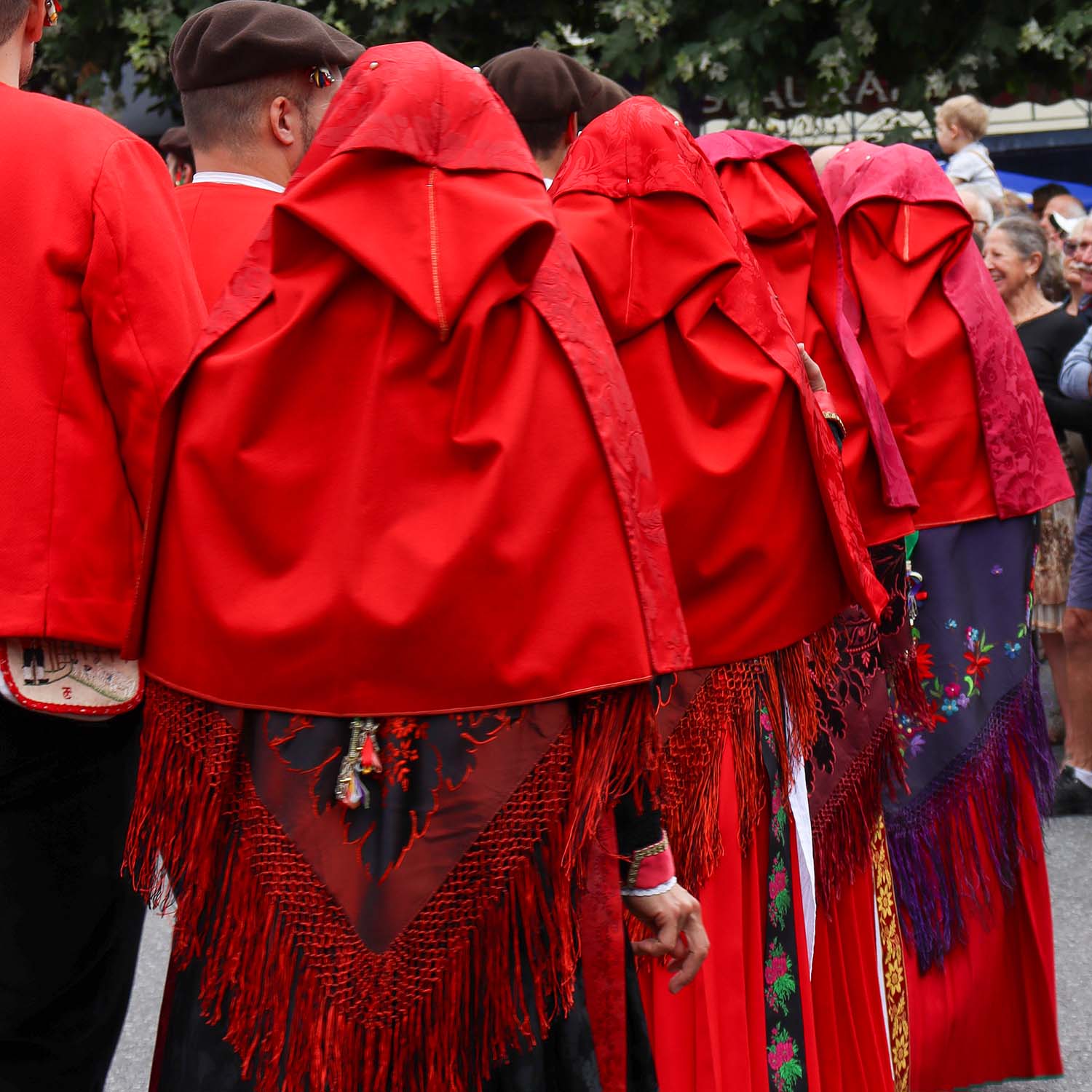
During festivals, the women wore a red capulet on their heads, whereas in everyday life it was made of linen or white wool. It was fastened to a round muslin bonnet known as ‘la cohe’, tied around the neck.
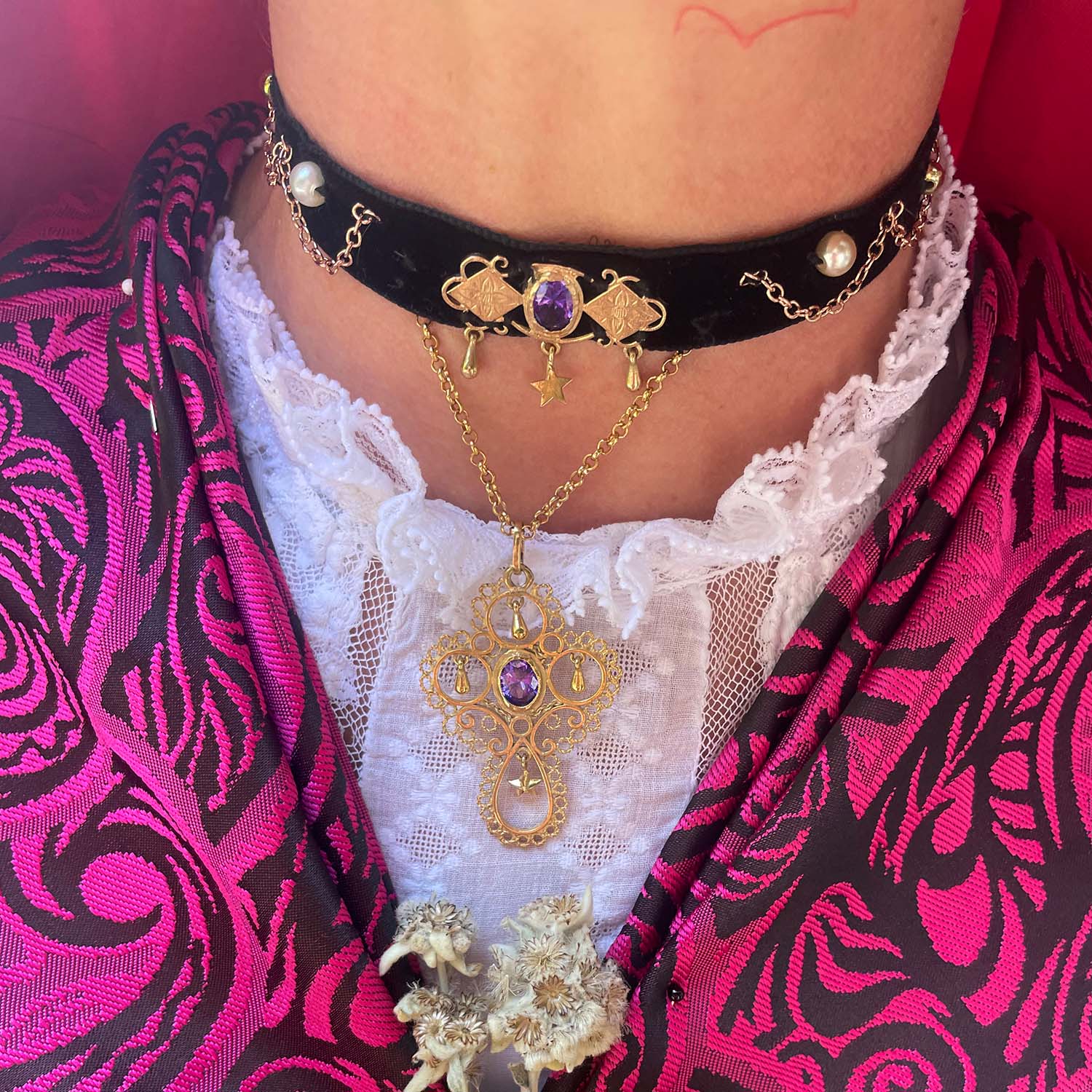
Around their necks, they wore a piece of jewellery, usually made of gold, called a ‘saint-esprit’, set on a black velvet choker.
A triangular shawl of wool or silk, featuring floral patterns and bright colours, rested on their shoulders, held in place by the bodice’s waistband.
The outfit also included simple undergarments: a linen shirt reaching down to the knees, a wimple—often made of lace—and a petticoat (‘coutilhou’) of wool, silk or cotton.
In winter, women covered themselves with a black cloak that revealed ‘la cohe’ at the hairline. During periods of mourning, they wore a long white woolen cape, pleated and embroidered with traditional motifs, adorned with tassels at the hem.
The costume also included two woollen skirts, gathered in ‘organ pipes’ (‘arrupes’), as well as an apron, rarely removed, a symbol of their peasant status. For work, a thick skirt of blue or brown woollen fabric was preferred.
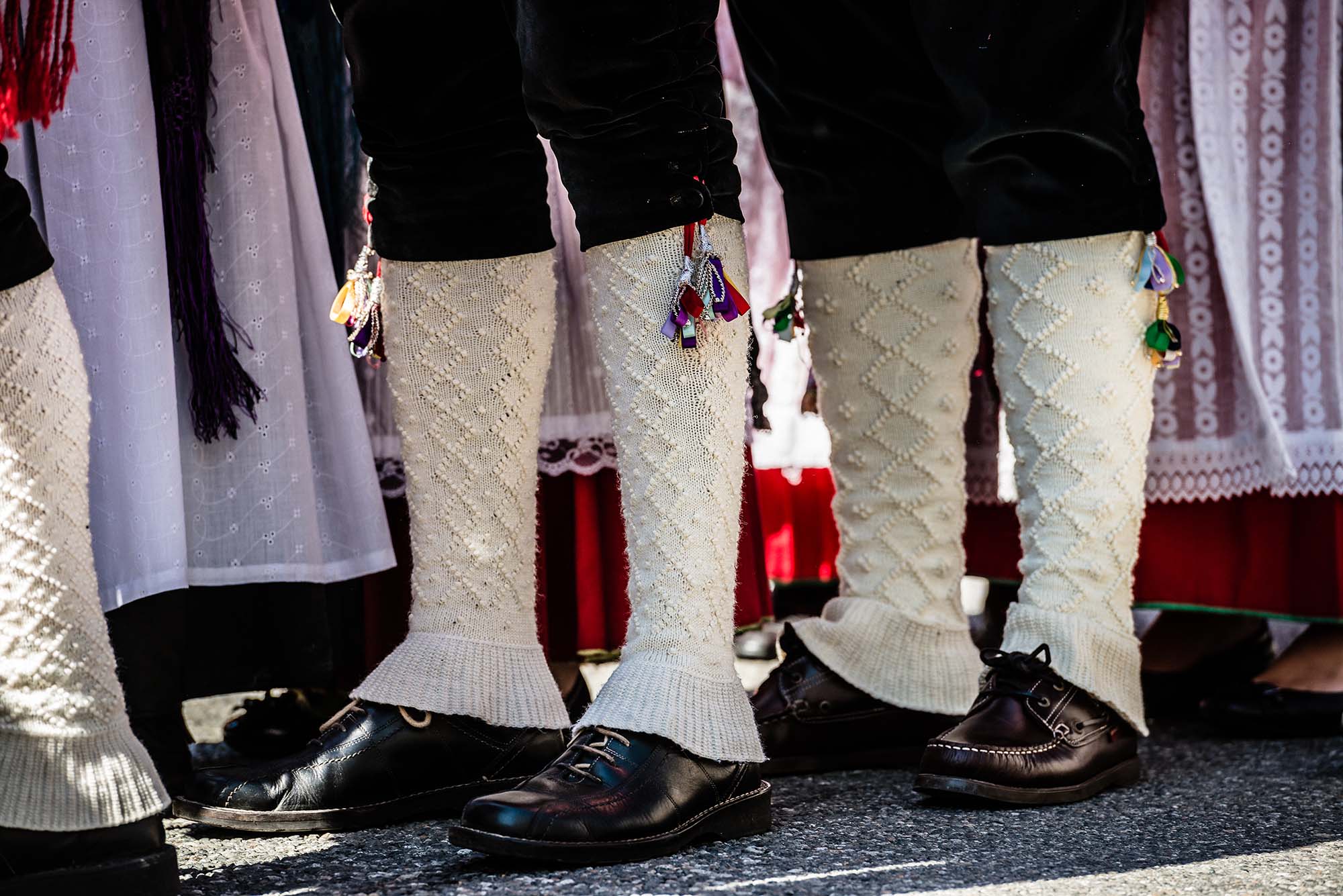
The calves were protected by gaiters (footless leggings). The lower part covering the clog, known as a ‘gansoü’, was crocheted by the men whilst tending the flocks. On their feet, the women wore wooden clogs, sometimes carved, with leather covering the top (‘lous esclops’).
Men’s traditional costume
The men’s traditional costume, both practical and symbolic, reflects the pastoral life of the valley.
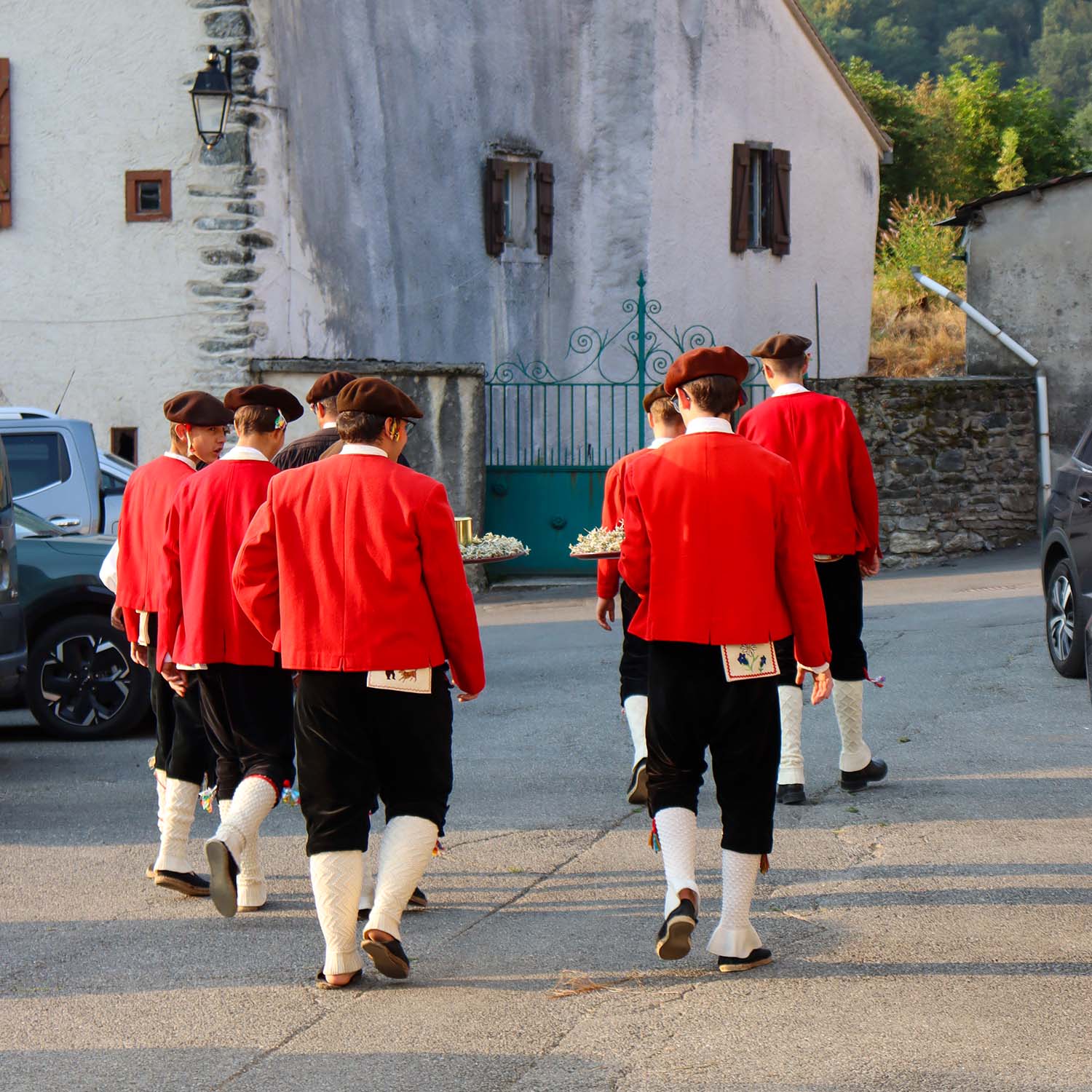
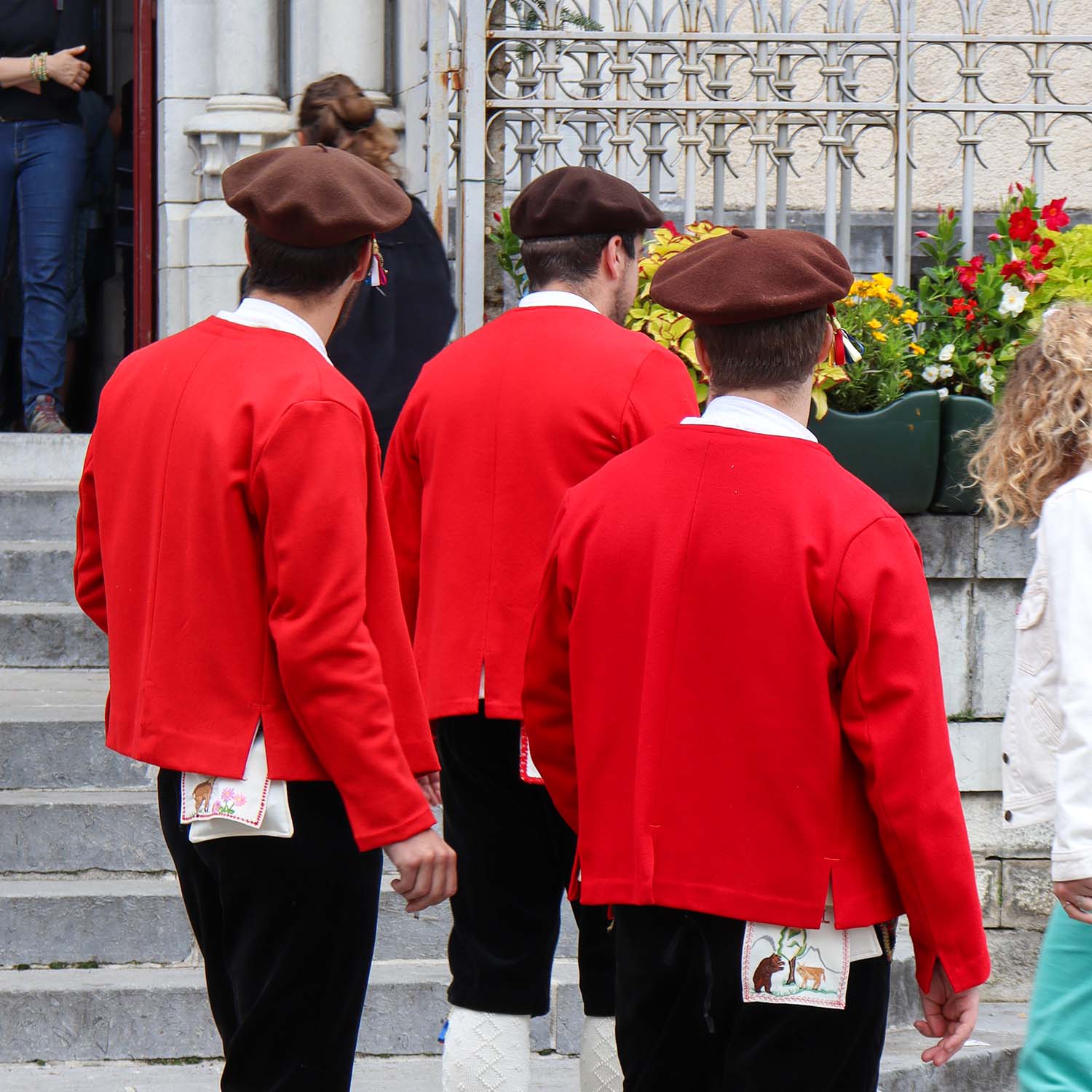
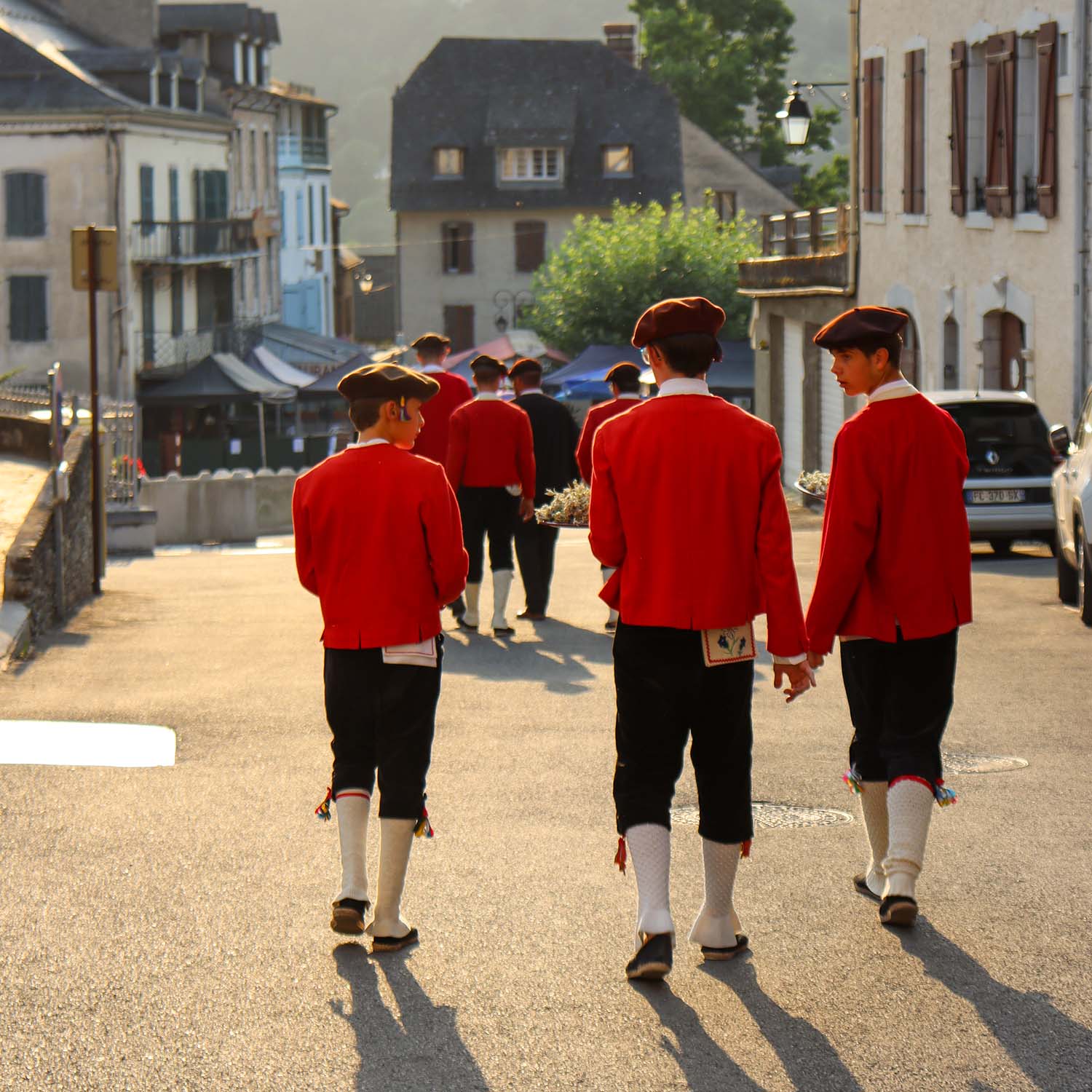
It consists of a brown felted wool beret, which is supple and offers protection from the elements, and is an iconic feature of the Ossalois costume. On festive occasions, it was decorated with tassels and beads (‘lou floc’).
Men wore a white pleated shirt, made of linen for formal occasions and of coarser cloth for everyday wear. Over this, a white waistcoat with wide lapels, always buttoned up; for work, it could have long sleeves and be held in place by a martingale.
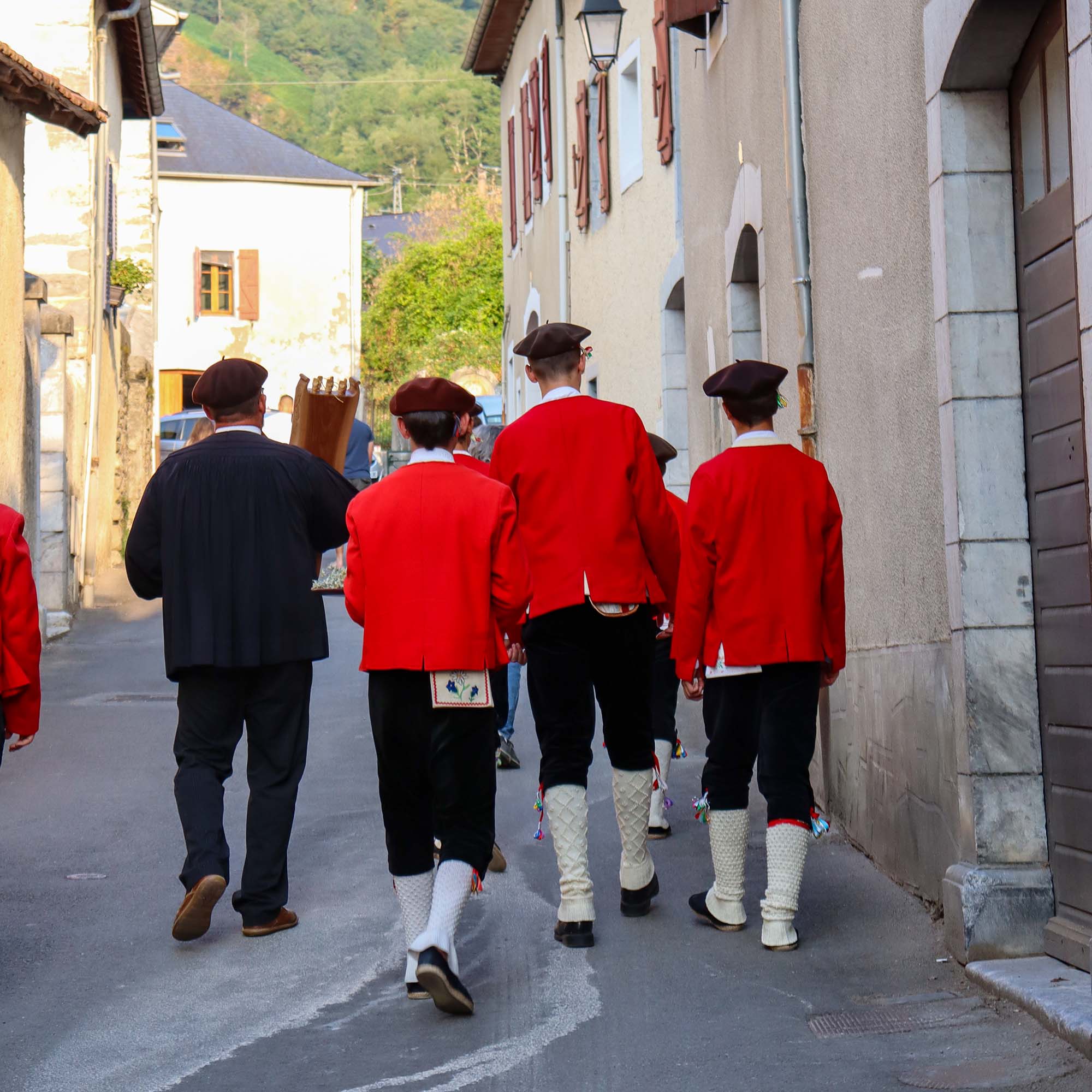
At festivals, a red jacket completed the outfit. This garment was also worn by mountain guides during the spa era so that they could be easily identified.
Until the end of the 19th century, men wore black velvet knee-length breeches, which were later replaced by trousers.
A wide red belt, made of wool or silk, sometimes over two metres long, was worn around the waist to keep out the cold.
In winter, they protected themselves with a loose-fitting, semi-circular, sleeveless cape made of brown or reddish-brown cloth, waterproofed in fulling mills.
Like the women, they wore stockings, either white or brown. On their feet, they wore either ‘abarcos’ (laced leather sandals) or pointed-toe clogs, the tips of which were used to scrape off mud or snow.
Before the 19th century, it was not uncommon to walk barefoot, even in the mountains.
Children’s clothing
Children’s clothing also reflected traditional customs.
Infants were swaddled in a ‘bourrassette’, made up of several layers of fabric sewn together – a rather unhygienic practice.
From their very first steps, girls wore a silk hooded cap trimmed with a wide red ribbon, as well as a shawl and an apron. They only wore the capulet from the time of their confirmation.
Boys, for their part, wore a dress until the age of five, accompanied by a cap made up of six parts (compared to three for girls).
A costume rich in symbolism
The Ossalois costume was a veritable code, revealing the social status and personal circumstances of the wearer.
For example:
- the number of ribbons at the bottom of the skirts indicated wealth
- the colour of the skirts distinguished heiresses (red) from younger daughters (blue, green or brown)
- the capulet varied according to the occasion: red for celebrations, purple for Lent, black for mourning
- the way the garments were worn could reveal social rank, particularly by showing the silk linings
- the length of the pointed toe on men’s clogs reflected romantic attachment
- finally, the presence of tassels on the beret signalled a single man